micro-community-banner
 
Profile Image
  • Saved
AHA Scientific Sessions 2025: Transformative advances in cardiovascular care

Dr. Joanna Chikwui, Chief of Cardiac Surgery at Cedars-Sinai and Chair of AHA Scientific Sessions, spotlighted significant breakthroughs across cardiology. Updates included novel therapies for hyperlipidemia, gene-editing tools for inherited cardiovascular risk, innovations in atrial fibrillation management, and compelling lifestyle findings—including a surprising inverse relationship between moderate coffee intake and AF incidence.

Dr. Heidi May, Epidemiologist at Intermountain Health, presented results from the Target-D randomized trial, which found that personalized vitamin D dosing after myocardial infarction significantly reduced the risk of recurrent heart attack. These findings underscore the importance of individualized supplementation strategies and signal a broader shift toward precision prevention and risk stratification in cardiovascular care.

Share your thoughts

Profile Image
  • Saved
Use of intravenous lipid emulsions in drug-induced toxicities: a 2025 narrative review - PubMed

Use of intravenous lipid emulsions in drug-induced toxicities: a 2025 narrative review - PubMed

Source : https://pubmed.ncbi.nlm.nih.gov/41247632/

Intravenous lipid emulsions (ILE) were first proposed in 1998 as a treatment for bupivacaine-induced cardiac arrest. Since then, their use has expanded to include poisonings by various lipophilic drugs such...

ILEs treat lipophilic drug toxicities through lipid sink, shuttle, and cardiotonic mechanisms; benefits shown in select poisonings, but mortality impact, optimal dosing, and indications remain uncertain, requiring higher-quality evidence.


Profile Image
  • Saved
infographic
Profile Image
  • Saved
Evaluating the impact of testosterone replacement therapy on carotid atherosclerosis: a systematic review and meta-analysis - PubMed

Evaluating the impact of testosterone replacement therapy on carotid atherosclerosis: a systematic review and meta-analysis - PubMed

Source : https://pubmed.ncbi.nlm.nih.gov/39183456/

Aim: This meta-analysis investigates the association between testosterone replacement therapy [TRT] and carotid artery atherosclerosis. Methods: 3 databases were searched for studies up to June 2023 per the PRISMA guidelines....

Testosterone therapy shows no association with carotid atherosclerosis or lipid/inflammatory markers, though it raises testosterone levels, suggesting safe use in hypogonadal men without increasing CIMT risk.

Profile Image
  • Saved
case study

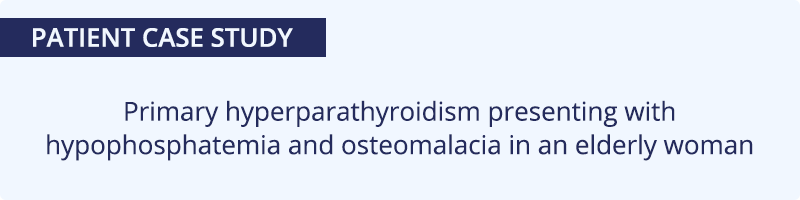
Patient Background: A 79-year-old woman presented with persistent hypophosphatemia (serum phosphorus 0.8 mg/dL) and multiple stress fractures involving the ribs, spine, and pelvis, consistent with osteomalacia. Her medical history included type 2 diabetes mellitus, hypertension, obesity, osteoarthritis, and anxiety disorder.

Assessment and Diagnosis: Initial evaluation revealed severe hypophosphatemia (0.8 mg/dL; NR: 2.5–4.5 mg/dL), elevated parathyroid hormone (PTH, 169 pg/mL; NR: 10–65 pg/mL), and normal serum calcium levels. Despite vitamin D supplementation, hypophosphatemia persisted (1.7 mg/dL in 2023), and hypercalcemia developed later (10.9 mg/dL; NR: 8.5–10.2 mg/dL). Renal studies showed phosphate wasting (tubular reabsorption of phosphate [TRP] 56.2%) and elevated fibroblast growth factor 23 (FGF-23, 1694 kRU/L). In 2024, ^18F-fluorocholine PET-CT imaging identified two right parathyroid adenomas, confirming a diagnosis of primary hyperparathyroidism (PHPT).

  1. How can chronic hypophosphatemia signal early-stage PHPT?
  2. Why is postoperative monitoring vital in PHPT care?
Profile Image