



INDICATION AND LIMITATIONS OF USE
TRADJENTA is indicated as an adjunct to diet and exercise to improve glycemic control in adults with type 2 diabetes mellitus.
TRADJENTA is not recommended in patients with type 1 diabetes mellitus.
TRADJENTA has not been studied in patients with a history of pancreatitis, and it is unknown if using TRADJENTA increases the risk of developing pancreatitis in these patients.
IMPORTANT SAFETY INFORMATION
CONTRAINDICATIONS: Hypersensitivity to linagliptin or any of the excipients in TRADJENTA, reactions such as anaphylaxis, angioedema, exfoliative skin conditions, urticaria, or bronchial hyperreactivity have occurred.
WARNINGS AND PRECAUTIONS
Pancreatitis: Acute pancreatitis, including fatal pancreatitis, has been reported in patients taking TRADJENTA. Take careful notice of potential signs and symptoms of pancreatitis and, if suspected, promptly discontinue and initiate appropriate management. It is unknown whether patients with a history of pancreatitis are at increased risk for the development of pancreatitis while using TRADJENTA.
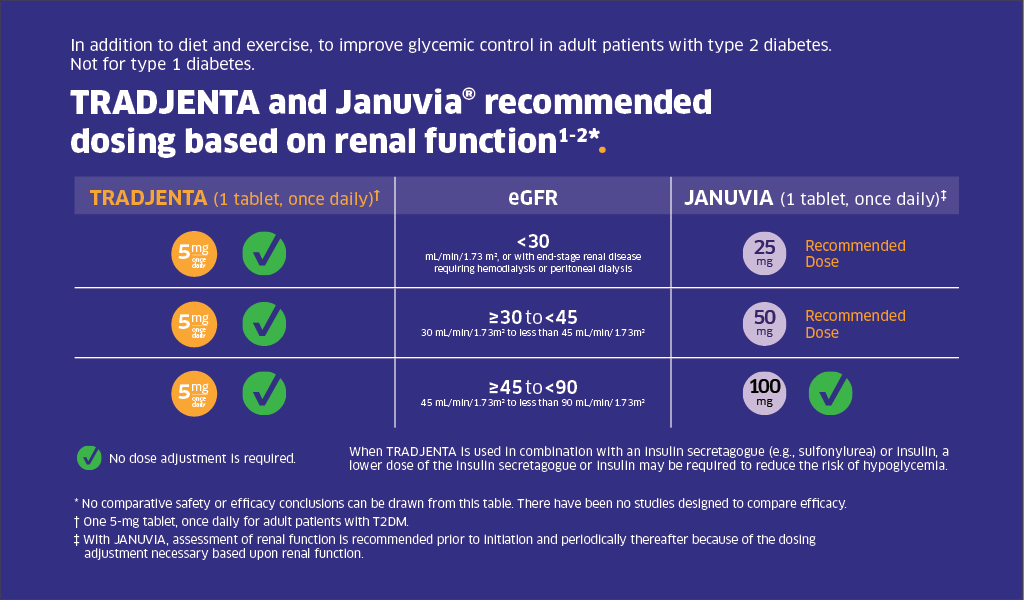
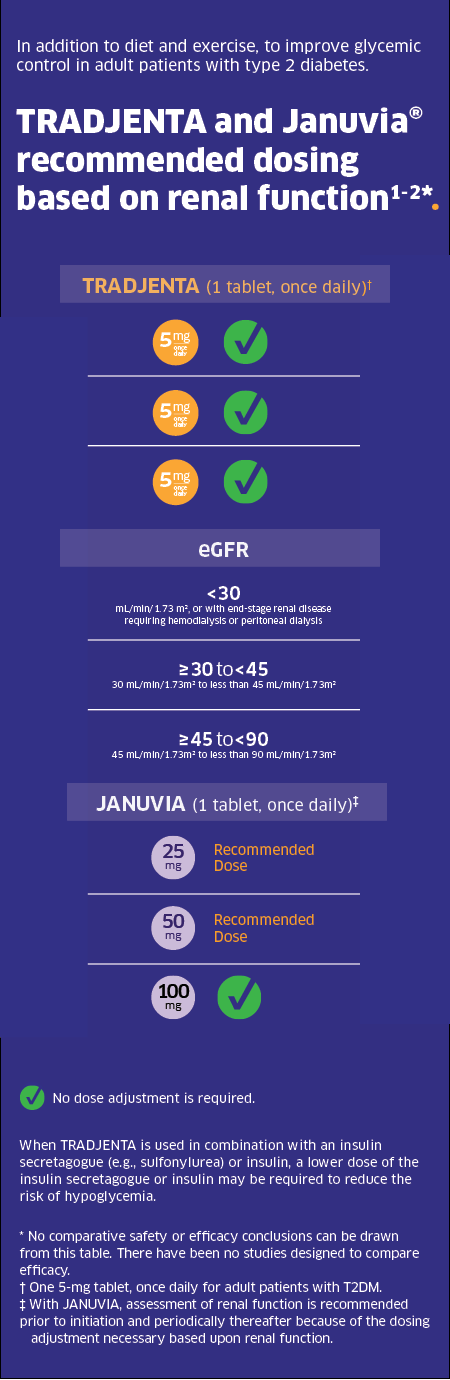
Hypoglycemia: The use in combination with insulin or insulin secretagogues increases the risk of hypoglycemia. A lower dosage of insulin or insulin secretagogue may be required.
Hypersensitivity Reactions: Discontinue TRADJENTA, assess for other potential causes, institute appropriate monitoring and treatment, and initiate alternative treatment for diabetes mellitus. Use caution in a patient with a history of angioedema to another DPP-4 inhibitor because it is unknown whether such patients will be predisposed to angioedema with TRADJENTA.
Severe and Disabling Arthralgia: Severe and disabling arthralgia has been reported in patients taking TRADJENTA. Consider TRADJENTA as a possible cause for severe joint pain and/or disabling arthralgia and discontinue, if appropriate.
Bullous Pemphigoid: There have been reports of bullous pemphigoid requiring hospitalization. Tell patients to report development of blisters or erosions. If bullous pemphigoid is suspected, discontinue TRADJENTA.
Heart Failure: Heart failure has been observed with two other members of the dipeptidyl peptidase-4 (DPP-4) inhibitor class. Consider the risks and benefits of TRADJENTA in patients at risk for heart failure, such as those with a prior history of heart failure and a history of renal impairment. Monitor patients for signs and symptoms. Advise patients of the symptoms of heart failure and to immediately report such symptoms. If heart failure develops consider discontinuation of TRADJENTA.
MOST COMMON ADVERSE REACTIONS (≥5%): Nasopharyngitis, hypoglycemia (when used in combination with sulfonylurea)
DRUG INTERACTIONS: The efficacy of TRADJENTA may be reduced when administered in combination with a strong P-gp or CYP3A4 inducer. Alternative treatments should be used.
USE IN SPECIFIC POPULATIONS: Use during pregnancy only if clearly needed. Exercise caution when administering to a nursing woman.
CL-TJ-100060 06.16.2023
References:
- TRADJENTA Prescribing information. Boehringer Ingelheim Pharmaceuticals, Inc.
- JANUVIA Prescribing Information. Merck & Co., Inc.
Abbreviations
DPP-4i: dipeptidyl peptidase-4 inhibitor; eGFR: estimated glomerular filtration rate; T2DM: type 2 diabetes mellitus
Copyright © 2024 Boehringer Ingelheim Pharmaceuticals, Inc. All rights reserved. [09/24] PC-US-137949

.png)
.png)