


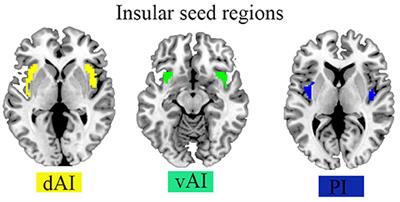
Abnormal Insular Dynamic Functional Connectivity and Its Relation to Social Dysfunctioning in Children With Attention Deficit/Hyperactivity Disorder
Source : https://www.frontiersin.org/articles/10.3389/fnins.2022.890596/full
Anomalies in large-scale cognitive control networks impacting social attention abilities are hypothesized to be the cause of attention deficit hyperactivity disorder (ADHD). The precise nature of abnormal brain functional connectivity...
Relevance: This research adds to our understanding of the neurocognitive mechanisms behind social functioning deficits in ADHD. Future ADHD research could benefit from merging the dFC approach with task-related fMRI and non-invasive brain stimulation, which could aid in the diagnosis and treatment of the disorder.

Psychosocial functioning of adolescents with ADHD in the family, school and peer group: A scoping review protocol
Source : https://journals.plos.org/plosone/article?id=10.1371/journal.pone.0269495
Objective The objective of this scoping review is to investigate what is known about the psychosocial functioning of adolescents with ADHD. All basic life environments (family, school and peer group)...
Objective: The objective of this scoping review is to investigate what is known about the psychosocial functioning of adolescents with ADHD. All basic life environments (family, school and peer group) will be considered.

Sociodemographic Disparities in Attention-Deficit/Hyperactivity Disorder Overdiagnosis and Overtreatment During Elementary School - PubMed
Source : https://pubmed.ncbi.nlm.nih.gov/35674454/
Attention-deficit/hyperactivity disorder (ADHD) overdiagnosis and overtreatment unnecessarily exposes children to potential harm and contributes to provider and community skepticism toward those with moderate or severe symptoms and significant impairments, resulting...
Conclusion: In adjusted analyses, White children are more likely to later be diagnosed (odds ratio [OR] range = 1.70-2.62) and using medication (OR range = 1.70-2.37) among those whose prior behavioral, academic, and executive functioning suggested that they were unlikely to have ADHD.

Sluggish cognitive tempo profiles in survivors of childhood cancer as compared to children with attention-deficit/hyperactivity disorder - Supportive Care in Cancer
Source : https://link.springer.com/article/10.1007/s00520-022-07188-y
Purpose Neurocognitive late effects including problems with attention have been reported in pediatric oncology survivors. While some researchers have characterized these late effects as similar to symptoms of attention-deficit/hyperactivity disorder,...
Relevance: The aim of this study was to describe SCT symptoms in children with ADHD-I or oncology diagnoses; identify groups of SCT symptoms among children with brain tumors (BT), acute lymphoblastic leukemia (ALL), or ADHD-I; and identify whether specific SCT profiles are associated with these diagnoses.

Longitudinal maturation of resting state networks: Relevance to sustained attention and attention deficit/hyperactivity disorder - PubMed
Source : https://pubmed.ncbi.nlm.nih.gov/35676491/
The transition from childhood to adolescence involves important neural function, cognition, and behavior changes. However, the links between maturing brain function and sustained attention over this period could be better...
Conclusion/Relevance: Brain network segregation may increase into adolescence as predicted by key developmental theories; however, participants with ADHD demonstrated altered developmental trajectories between salience and visual networks. The segregation of the frontoparietal network from other brain networks may be a mechanism supporting...