


4yr
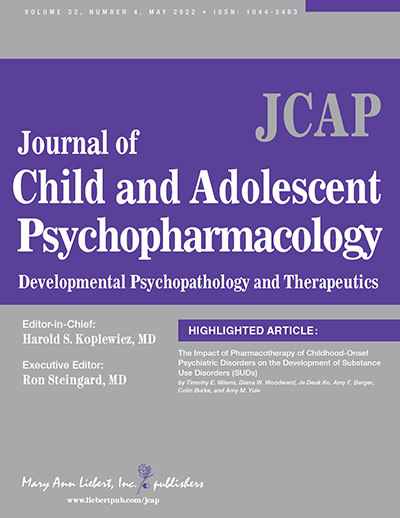
The Impact of Pharmacotherapy of Childhood-Onset Psychiatric Disorders on the Development of Substance Use Disorders | Journal of Child and Adolescent Psychopharmacology
Source : https://www.liebertpub.com/doi/10.1089/cap.2022.0016
Background and Objective: Child- and adolescent-onset psychopathology is known to increase the risk for developing substance use and substance use disorders (SUDs). While pharmacotherapy is effective in treating pediatric psychiatric disorders, the impact of medication on the ultimate risk to develop SUDs in these youth remains unclear.
• Source: Journal of Child and Adolescent Psychopharmacology
• Conclusions: “Overall, pharmacological treatments for psychiatric disorders appear to mitigate the development of SUD [substance-use disorders], especially when treatment is initiated early and for longer durations. More studies on the development of SUD linked to the effects of psychotherapy alone and in combination with medication, medication initiation and duration, adequacy of treatment, non-ADHD disorders, and psychiatric comorbidity are necessary.”
• In the current systematic review, researchers assessed the relationship between pharmacotherapy and later SUD in attention-deficit/hyperactivity disorder (ADHD), major depressive disorder, and psychotic disorders. Most studies demonstrated decreases in SUD (N = 14 sides) followed by no effects (N = 10). Only 2 studies demonstrated enhanced rates of SUD.
• ADHD studies demonstrated that earlier-onset and longer-duration treatment were related to the highest risk reduction in later SUD.
• In one study involving 3 million patients treated for ADHD, patients were about half as likely to develop SUD if they received treatment for ADHD. There was also a 30% less chance that they would manifest SUD while actively being treated for ADHD compared with times that they weren’t being treated.
• Although still unclear, potential mechanisms for these effects include a decreased drive to self-medicate with substances, as well as a decrease in dysfunction that may contribute to dysfunction (e.g., academic failure, criminal activity).
• “Signals clearly emerge from the present review that an early (e.g., <9 years of age in ADHD) and longer duration of pharmacotherapy (e.g., >6 years) were associated with the largest risk reduction in SUD,” wrote the authors. “These findings highlight the need to consider initiating treatment proximal to the onset or diagnosis of psychopathology while enhancing treatment adherence over time.”
• Limitations of the current study include the fact that the authors neither examined the effects of psychotherapy nor psychiatric comorbidity with respect to SUD. The authors also didn’t examine sociodemographic factors.