micro-community-banner
 
Profile Image
  • Saved

Did you know? Hormonal imbalances can subtly influence lipid metabolism, insulin sensitivity, body weight, and renal function. Disruptions in calcium, vitamin D, and magnesium signaling may amplify cardiometabolic risk, underscoring the need for integrated endocrine monitoring across obesity, diabetes, and lipid disorders to support long-term metabolic health.

Could a more holistic approach to hormonal monitoring improve cardiometabolic outcomes across diverse metabolic conditions?

 NCCN Guidelines

Could a more holistic approach to hormonal monitoring improve cardiometabolic outcomes across diverse metabolic conditions?

Profile Image
  • Saved
Background Image DesktopBackground Image Mobile

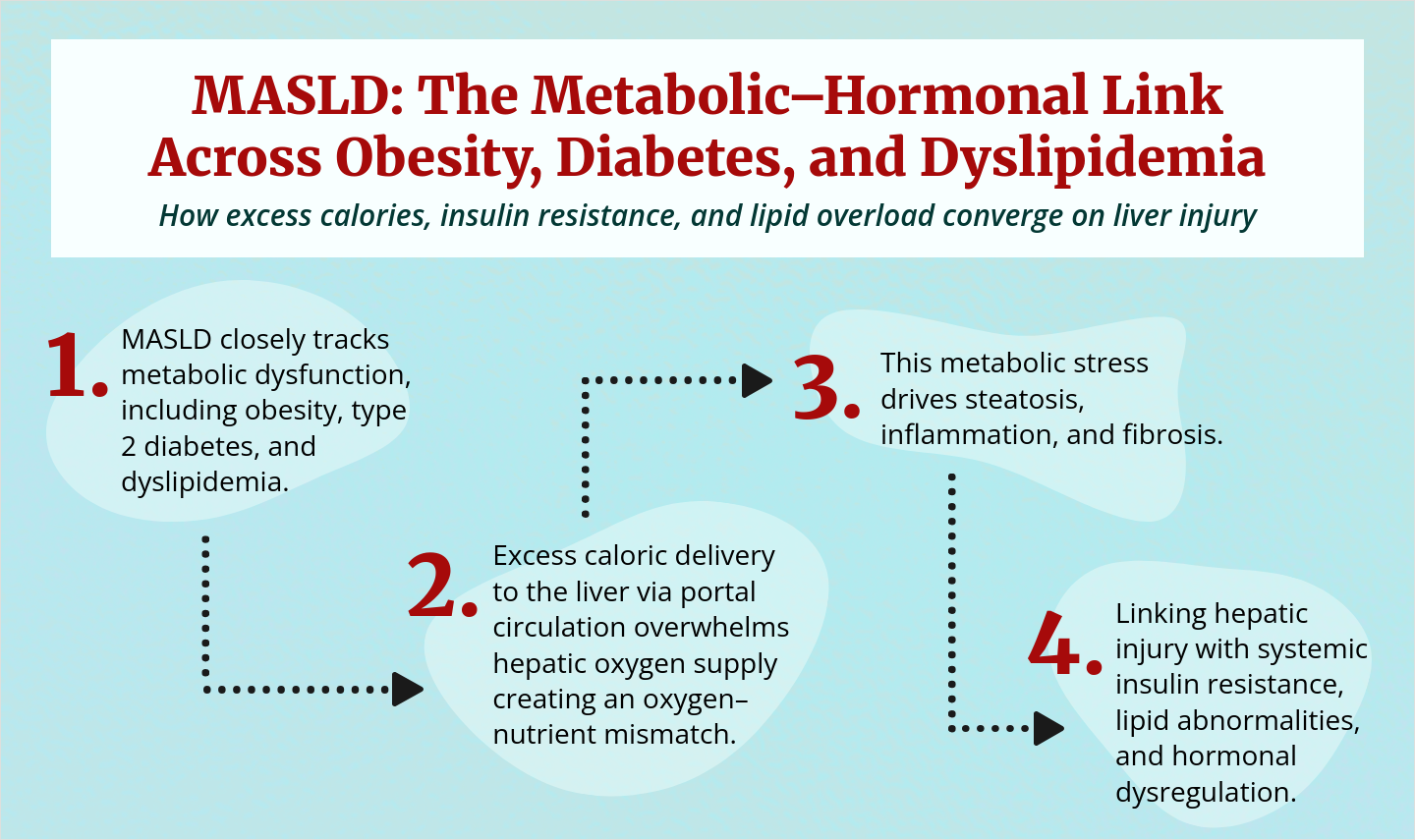
Emerging evidence links hormonal imbalance to metabolic dysfunction, oxidative stress, and elevated cardiovascular risk. Conditions marked by insulin resistance, dyslipidemia, and obesity share disrupted endocrine signaling that accelerates cardiometabolic complications across populations.

Explore endocrine–metabolic connections

Profile Image
  • Saved
Profile Image
  • Saved
Pathogenic analysis of post-transplantation obesity: A comprehensive systematic review - PubMed

Pathogenic analysis of post-transplantation obesity: A comprehensive systematic review - PubMed

Source : https://pubmed.ncbi.nlm.nih.gov/41607827/

Post-transplant obesity arises from a complex interplay of pharmacological, behavioral, and molecular factors. A multidisciplinary approach-incorporating pharmacological modification, nutritional management, physical activity, and molecular-targeted therapies-is essential to mitigate obesity and...

Systematic review identifies pharmacological, behavioral, and molecular drivers of post-transplant obesity, highlighting immunosuppressant effects, lifestyle factors, and adipokine dysregulation, and advocating multidisciplinary strategies to improve long-term transplant outcomes.

Profile Image
  • Saved
Integrating oral GLP-1 pathways into obesity care: clinical decisions beyond initiation

As obesity care continues to evolve, clinical focus is shifting from initiating therapy to managing obesity as a long-term, relapsing condition. Recent advances in oral glucagon-like peptide-1 (GLP-1) receptor agonist development reinforce this shift, prompting clinicians to consider not only whether to use pharmacologic therapy, but how it can be integrated into sustained, multidimensional care plans over time.

GLP-1 receptor activation influences appetite regulation, satiety signaling, and metabolic pathways central to obesity pathophysiology. Oral formulations demonstrate that these mechanisms can be engaged through daily administration, expanding how clinicians think about treatment design and long-term engagement. This evolution brings renewed attention to clinical integration—how pharmacologic therapy aligns with behavioral strategies, lifestyle interventions, and ongoing monitoring rather than functioning as a stand-alone solution.

Patient selection and adherence remain central considerations in long-term obesity management. Functional factors such as daily dosing routines, gastrointestinal tolerability, and treatment fatigue—as well as emotional factors including expectations, motivation, and prior weight-loss experiences—may influence sustained use and outcomes. These considerations highlight the importance of shared decision-making and regular reassessment as patient needs and priorities evolve.

Rather than viewing therapy choice as a single decision point, many clinicians are approaching obesity care as a dynamic process that requires adjustment over time. Evidence-based strategies increasingly emphasize structured follow-up, realistic goal-setting, behavioral support, and coordinated, multidisciplinary care. Within this framework, oral GLP-1 approaches may offer flexibility across different phases of treatment, including escalation, stabilization, or maintenance.

What factors most influence how you select patients for long-term pharmacologic obesity therapy?As oral GLP-1 options enter clinical practice, what adherence challenges or integration considerations will most shape how you incorporate them into comprehensive obesity care?

Profile Image
  • 4d
    If my patient is motivated, has no contraindications, and BMI over 30 I will offer GLP-1, but insurance is the gatekeeper. My office has a Prior Auth team (1 person) Show More
  • 1w
    Patient preference, insurance coverage and side effects profile is all considerations on which one to select. There has been a oral GLP-1 in the past known as rybelsus and it Show More

Show More Comments