


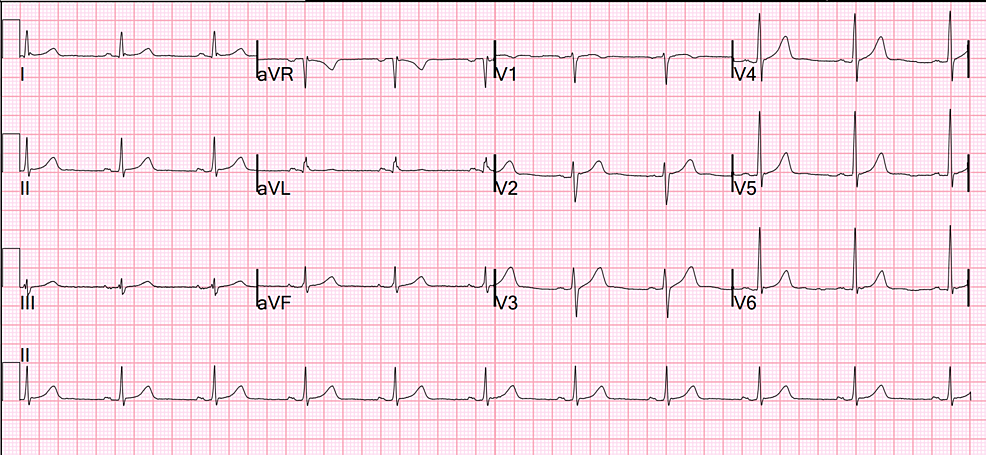
Seizures, Vitamin D Deficiency, and Severe Hypophosphatemia: The Unique Presentation of a SARS-CoV-2 Case
Severe acute respiratory syndrome coronavirus 2 (SARS-CoV-2) is a virus that belongs to the species severe acute respiratory syndrome-related coronavirus (SARSr-CoV), which is related to the SARS-CoV-1 virus that caused...
Conclusions: This case also highlights the importance of obtaining phosphorus and vitamin D levels in SARS-CoV-2-infected patients with seizures.
Molnupiravir plus usual care versus usual care alone as early treatment for adults with COVID-19 at increased risk of adverse outcomes (PANORAMIC): an open-label, platform-adaptive randomised controlled trial - PubMed
Source : https://pubmed.ncbi.nlm.nih.gov/36566761/
UK National Institute for Health and Care Research.
Conclusions: Molnupiravir plus usual care versus usual care alone as early treatment for adults with COVID-19 at increased risk of adverse outcomes (PANORAMIC): an open-label, platform-adaptive randomised controlled trial
Expiratory Aerosol pH: The Overlooked Driver of Airborne Virus Inactivation - PubMed
Source : https://pubmed.ncbi.nlm.nih.gov/36537693/
Respiratory viruses, including influenza virus and SARS-CoV-2, are transmitted by the airborne route. Air filtration and ventilation mechanically reduce the concentration of airborne viruses and are necessary tools for disease...
Conclusions: We find that particles exhaled into indoor air (with relative humidity ≥ 50%) become mildly acidic (pH ∼ 4), rapidly inactivating IAV within minutes, whereas SARS-CoV-2 requires days. If indoor air is enriched with nonhazardous levels of nitric acid, aerosol pH drops by up to 2 units, decreasing 99%-inactivation times for both...
Antibody feedback regulates immune memory after SARS-CoV-2 mRNA vaccination - Nature
Source : https://www.nature.com/articles/s41586-022-05609-w
Feedback inhibition of humoral immunity by antibodies was first documented in 19091. Subsequent work showed that, depending on the context, antibodies can enhance or inhibit immune responses2,3. However, little is...
Conclusions: Our results indicate that pre-existing high-affinity antibodies bias GC and memory B cell selection by two distinct mechanisms: (1) by lowering the activation threshold for B cells thereby permitting abundant lower-affinity clones to participate in the immune response, and (2) through direct masking of their cognate epitopes. This...
Regular physical activity may boost effectiveness of COVID-19 jab
Regular physical activity may boost the effectiveness of the COVID-19 jab, with the level of protection afforded against serious infection rising in tandem with the amount of physical activity done,...
Conclusions: Regular physical activity was associated with improved vaccine effectiveness against COVID-19 hospitalisation, with higher levels of physical activity associated with greater vaccine effectiveness. Physical activity enhances vaccine effectiveness against severe COVID-19 outcomes and should be encouraged by greater public health...