


COVID-19 and Acute Neurologic Complications in Children
Source : https://doi.org/10.1542/peds.2022-058167
James W. Antoon, Matt Hall, Leigh M. Howard, Alison Herndon, Katherine L. Freundlich, Carlos G. Grijalva, Derek J. Williams; COVID-19 and Acute Neurologic Complications in Children. Pediatrics November 2022; 150...
Conclusions: Neurologic complications are common in children hospitalized with COVID-19 and are associated with worse hospital outcomes. Our findings emphasize the importance of COVID-19 immunization in children, especially in high-risk populations, such as those with neurologic comorbidity.
Mutations in SARS-CoV-2 spike protein impair epitope-specific CD4+ T cell recognition - Nature Immunology
Source : https://www.nature.com/articles/s41590-022-01351-7
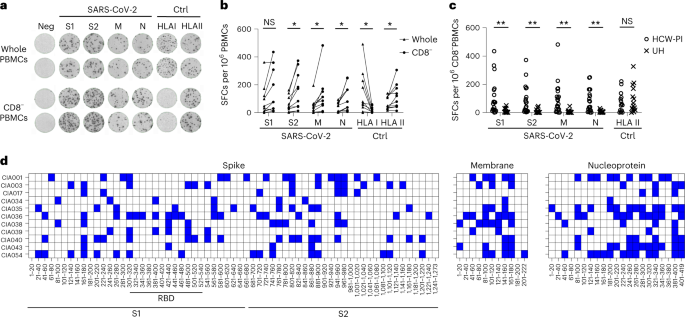
Based on the identification of CD4+ T cell clones specific for distinct epitopes in the SARS-CoV-2 proteins, Long and colleagues characterize how mutations in these epitopes lead to loss of...
Our results indicated that broad targeting of epitopes by CD4 T cells likely limits evasion by current VOCs. However, continued genomic surveillance is vital to identify new mutations able to evade CD4 T cell immunity.

GTF3A mutations predispose to herpes simplex encephalitis by disrupting biogenesis of the host-derived RIG-I ligand RNA5SP141 - PubMed
Source : https://pubmed.ncbi.nlm.nih.gov/36399538/
Herpes simplex virus 1 (HSV-1) infects several billion people worldwide and can cause life-threatening herpes simplex encephalitis (HSE) in some patients. Monogenic defects in components of the type I interferon...
Our work unveils a crucial role for TFIIIA in transcriptional regulation of a cellular RIG-I agonist and shows that GTF3A genetic defects lead to impaired cell-intrinsic anti–HSV-1 responses and can predispose to HSE.
Conclusions: COVID-19 is strongly associated with the risk of incident diabetes, including both type 1 and type 2 diabetes. We should be aware of the risk of developing diabetes after COVID-19 and prepare for the associated health problems, given the large and growing number of people infected with COVID-19. However, the body of evidence still...
Conclusions: The matched cohort analysis found an increased risk for the composite outcome after the second dose; however, the SCCS analysis showed no increased risk. Considering that the SCCS can cancel out time-invariant confounders, the current results suggest that COVID-19 vaccination is unlikely to causally increase the risk of ocular...