


Human leukocyte antigen alleles associate with COVID-19 vaccine immunogenicity and risk of breakthrough infection - Nature Medicine
Source : https://www.nature.com/articles/s41591-022-02078-6
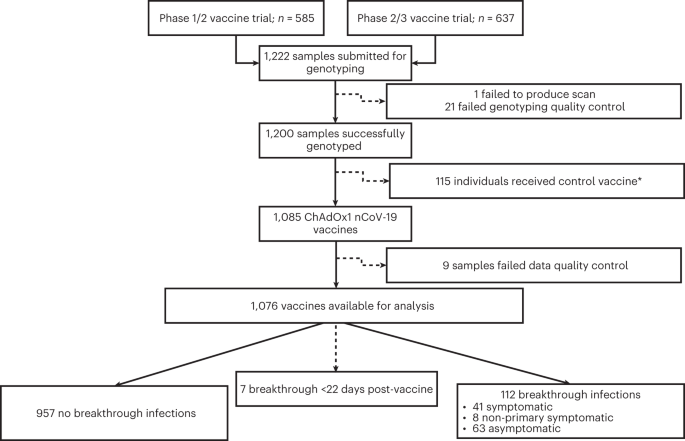
SARS-CoV-2 vaccine immunogenicity varies between individuals, and immune responses correlate with vaccine efficacy. Using data from 1,076 participants enrolled in ChAdOx1 nCov-19 vaccine efficacy trials in the United Kingdom, we...
Our results demonstrate association of HLA type with COVID-19 vaccine antibody response and risk of breakthrough infection, with implications for future vaccine design and implementation.
Effectiveness of an inactivated Covid-19 vaccine with homologous and heterologous boosters against Omicron in Brazil - Nature Communications
Source : https://www.nature.com/articles/s41467-022-33169-0
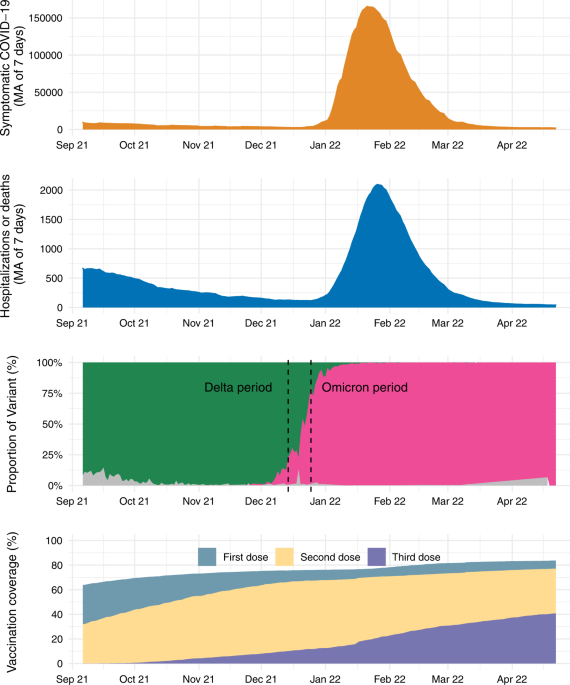
This study investigates the effectiveness of COVID-19 vaccine boosters following a primary series of CoronaVac vaccination. Using data from Brazil during the Omicron wave, the authors show that boosters provided...
Waning against severe Covid-19 after 120 days was only observed after a homologous booster. Heterologous booster might be preferable to individuals with completed primary series inactivated vaccine.
Long-term cardiac pathology in individuals with mild initial COVID-19 illness - Nature Medicine
Source : https://www.nature.com/articles/s41591-022-02000-0
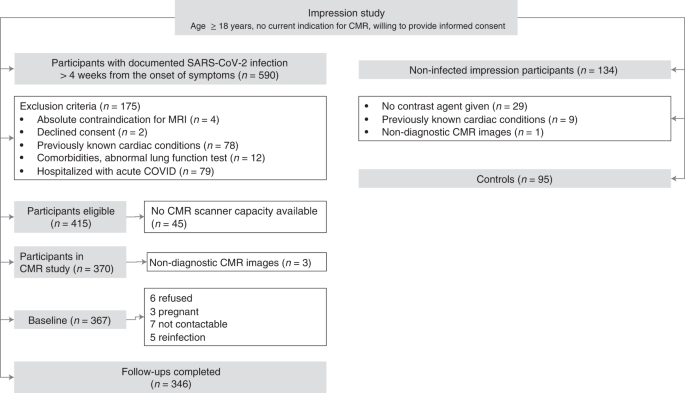
Cardiac symptoms are increasingly recognized as late complications of severe acute respiratory syndrome coronavirus 2 (SARS-CoV-2) infection in previously well individuals with mild initial illness, but the underlying pathophysiology leading...
Ongoing inflammatory cardiac involvement may, at least in part, explain the lingering cardiac symptoms in previously well individuals with mild initial COVID-19 illness.
Clinical, Virologic, and Immunologic Evaluation of Symptomatic Coronavirus Disease 2019 Rebound Following Nirmatrelvir/Ritonavir Treatment - PubMed
Source : https://pubmed.ncbi.nlm.nih.gov/36200701/
Nirmatrelvir/ritonavir treatment does not impede adaptive immune responses to SARS-CoV-2. Clinical rebound corresponds to development of a robust antibody and T-cell immune response, arguing against a high risk of disease...
Conclusions: Nirmatrelvir/ritonavir treatment does not impede adaptive immune responses to SARS-CoV-2. Clinical rebound corresponds to development of a robust antibody and T-cell immune response, arguing against a high risk of disease progression. The presence of infectious virus supports the need for isolation and assessment of longer treatment...

Plasma metabolome and cytokine profile reveal glycylproline modulating antibody fading in convalescent COVID-19 patients
Source : https://www.ncbi.nlm.nih.gov/pmc/articles/PMC9407385/
Zhu Yang, a , b , c , 1 Di Wu, d , e , 1 Shanxin Lu, a , b , 1 Yang Qiu, d , e , 1...
Significance: Using absolute quantification of both cytokines and metabolites from the plasmas of convalescent COVID-19 patients, machine-learning approaches identified that a combination of cytokines and metabolites can clearly discriminate convalescent patients with rapidly faded antibodies (CO) from ordinary convalescents with antibodies...