


SARS-CoV-2 is associated with changes in brain structure in UK Biobank - Nature
Source : https://www.nature.com/articles/s41586-022-04569-5
There is strong evidence for brain-related abnormalities in COVID-191-13. It remains unknown however whether the impact of SARS-CoV-2 infection can be detected in milder cases, and whether this can reveal...
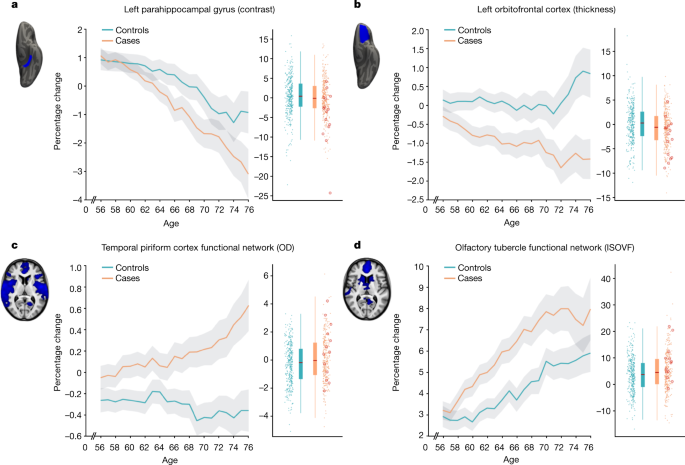
We identified significant longitudinal effects when comparing the two groups, including: (i) greater reduction in grey matter thickness and tissue-contrast in the orbitofrontal cortex and parahippocampal gyrus, (ii) greater changes in markers of tissue damage in regions functionally-connected to the primary olfactory cortex, and (iii) greater...

Placental Tissue Destruction and Insufficiency from COVID-19 Causes Stillbirth and Neonatal Death from Hypoxic-Ischemic Injury: A Study of 68 Cases with SARS-CoV-2 Placentitis from 12 Countries
ABSTRACTContext.-. Perinatal death is an increasingly important problem as the COVID-19 pandemic continues, but the mechanism of death has been unclear.Objective.-. To evaluate the role of the placenta in causing...
Conclusions: The pathology abnormalities composing SARS-CoV-2 placentitis cause widespread and severe placental destruction resulting in placental malperfusion and insufficiency. In these cases, intrauterine and perinatal death likely results directly from placental insufficiency and fetal hypoxic-ischemic injury. There was no evidence that...
Association of COVID-19 vaccines ChAdOx1 and BNT162b2 with major venous, arterial, or thrombocytopenic events: A population-based cohort study of 46 million adults in England
Source : https://doi.org/10.1371/journal.pmed.1003926
William N. Whiteley, Samantha Ip, Jennifer A. Cooper, Thomas Bolton, Spencer Keene, Venexia Walker, Rachel Denholm, Ashley Akbari, Efosa Omigie, Sam Hollings has COMPANION First dose ChAdOx1 and BNT162b2 COVID-19...
Conclusions: In this study, we observed increases in rates of ICVT and thrombocytopenia after ChAdOx1-S vaccination in adults aged
Using dipstick urinalysis to predict development of acute kidney injury in patients with COVID-19 - BMC Nephrology
Source : https://bmcnephrol.biomedcentral.com/articles/10.1186/s12882-022-02677-y
Background Acute kidney injury (AKI) is a common complication in patients hospitalized with COVID-19 and may require renal replacement therapy (RRT). Dipstick urinalysis is frequently obtained, but data regarding the...
Conclusions: Proteinuria and hematuria values on dipstick urinalysis can be utilized to predict AKI and RRT in hospitalized patients with COVID-19. We derived formulas using these two readily available values to help prognosticate kidney outcomes in these patients. Furthermore, the incorporation of CKD or baseline creatinine increases the...
Children develop robust and sustained cross-reactive spike-specific immune responses to SARS-CoV-2 infection - Nature Immunology
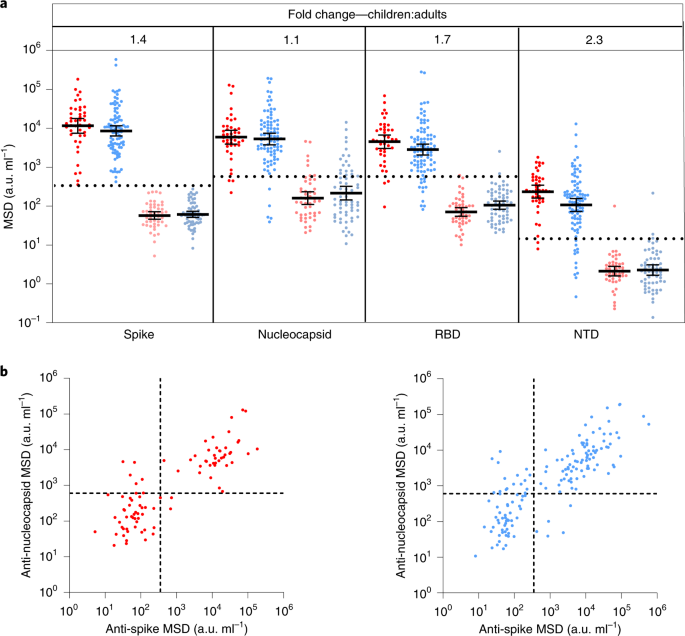
SARS-CoV-2 infection is generally mild or asymptomatic in children but a biological basis for this outcome is unclear. Here we compare antibody and cellular immunity in children (aged 3-11 years)...
Importantly, children retained antibody and cellular responses 6 months after infection, whereas relative waning occurred in adults. Spike-specific responses were also broadly stable beyond 12 months. Therefore, children generate robust, cross-reactive and sustained immune responses to SARS-CoV-2 with focused specificity for the spike...