


efficacy of PCSK9 inhibitors on major cardiovascular events and lipid profile in patients with diabetes: a systematic review and meta-analysis of randomized controlled trials
You do not currently have access to this article. The efficacy of PCSK9 inhibitors on major cardiovascular events and lipid profile in patients with diabetes: a systematic review and meta-analysis...
Conclusions: PCSK9i appear to be effective in reducing the risk of MACE and in improving lipid profiles of subjects with diabetes and dyslipidemia.
Share





PCSK9 Inhibitors Reduce PCSK9 and Early Atherogenic Biomarkers in Stimulated Human Coronary Artery Endothelial Cells - PubMed
Source : https://pubmed.ncbi.nlm.nih.gov/36982171/
Despite reports on the efficacy of proprotein convertase subtilisin-Kexin type 9 (PCSK9) inhibitors as a potent lipid-lowering agent in various large-scale clinical trials, the anti-atherogenic properties of PCSK9 inhibitors in...
Conclusions/Relevance: The anti-atherogenic effects of evolocumab and alirocumab were contributed to by the downregulation of PCSK9, early atherogenesis biomarkers, and the significant inhibition of monocyte adhesion to the endothelial cells via the NF-ĸB and eNOS pathways. These suggest the beyond cholesterol-lowering beneficial effects of...
Share

Investigation of the impact of rosuvastatin and telmisartan in doxorubicin-induced acute cardiotoxicity
Source : https://www.sciencedirect.com/science/article/pii/S0753332222010629?via=ihub
Cardiac injury is the main dose-limiting factor for doxorubicin (Dox) use as an anticancer agent. The cardiotoxicity of Dox is linked to a number of c...
Conclusions/Relevance: This study points out the beneficial use of both rosuvastatin and telmisartan alone or in combination as a clinical option for decreasing the acute toxicity of Dox on cardiomyocytes.
Share
Characteristics and lipid lowering treatment patterns in patients tested for lipoprotein(a): A real-world US study
Source : https://www.sciencedirect.com/science/article/pii/S2666667723000181?via=ihub
Elevated lipoprotein(a) [Lp(a)] is a risk factor for atherosclerotic cardiovascular disease (ASCVD) and has no approved pharmacotherapies. Limited real-world data exists on the proportion of patients with available Lp(a) test...
Conclusions: Lp(a) screening was rare. Elevated Lp(a) was observed in more than one-quarter of patients receiving LLTs, with the highest mean Lp(a) levels observed in Black patients. Low adherence to LLTs was prevalent and at least half of patients failed to achieve their respective LDL-C target thresholds despite treatment. Finally, high...
Share
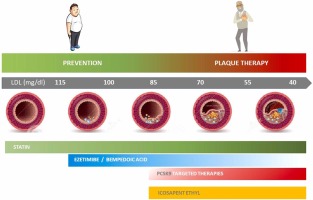
Lipid lowering combination therapy: From prevention to atherosclerosis plaque treatment
Source : https://www.sciencedirect.com/science/article/pii/S1043661823000944?via=ihub
Statins have contributed to the prevention of numerous atherosclerotic cardiovascular (CV) events and cardiovascular deaths in the past three decades....
Conclusions/Relevance: Strategies implementing combination therapies from early stages or even from the outset may increase the number of patients attaining LDLc goals, thereby preventing new CV episodes and improving existing atherosclerotic lesions.
Share