


Relevance: It is hoped that longer follow-ups of people with severe hypercholesterolemia and absence of CAC or plaques will confirm study findings and help improve stratification and guide more aggressive LDL-C level–lowering therapies, even in this so-called high-risk group.

Effectiveness and safety of PCSK9 inhibitor therapy in patients with familial hypercholesterolemia within a therapeutic program in Poland: Preliminary multicenter data | Chlebus | Cardiology Journal
Source : https://journals.viamedica.pl/cardiology_journal/article/view/86348
Early publication date: 2022-01-11 Krzysztof Chlebus 1 2, Barbara Cybulska 3, Piotr Dobrowolski 4, Marzena Romanowska-Kocejko 5 2, Marta Żarczyńska-Buchowiecka 5 2, Natasza Gilis-Malinowska 1 2, Aneta Stróżyk 2 1,...
Conclusions: This study confirmed high effectiveness of PCSK9 inhibitors in reducing LDL-C levels in patients with FH. Due to restrictive inclusion criteria with LDL-C threshold level > 160 mg/dL (> 4.1 mmol/L) required for participation in the therapeutic program, a relatively small number of FH patients were eligible for treatment.
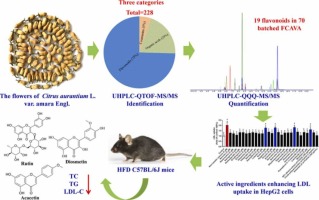
Comprehensive chemical profiling of the flowers of Citrus aurantium L. var. amara Engl. and uncovering the active ingredients of lipid lowering
Source : https://www.sciencedirect.com/science/article/abs/pii/S0731708522000425?via=ihub
The structure-DPIs-NL library was developed for characterization of FCAVA. * A total of 228 constituents were characterized in FCAVA. * A simple method for quantification of 19 flavonoids in FCAVA...
/>
Conclusion: Overall, these findings indicated the potential of FCAVA in the development of functional food or medicine for the prevention and treatment of hyperlipidemia, which could be considered for the improvement of quality standardization of FCAVA.

Long-term effects of evolocumab in participants with HIV and dyslipidemia: results from the open-label extension period - PubMed
Source : https://pubmed.ncbi.nlm.nih.gov/35025817/
doi: 10.1097/QAD.0000000000003175. Online ahead of print. 1 Sorbonne Université, GRC no.
Conclusion: Long-term administration of evolocumab lowered LDL-C and non-HDL-C, allowing more PWH to achieve recommended lipid goals with no serious adverse events.

Sex differences in low-density lipoprotein cholesterol reduction with PCSK9 inhibitors in real world patients: the LIPID-REAL Registry - PubMed
Source : https://pubmed.ncbi.nlm.nih.gov/34983910/
doi: 10.1097/FJC.0000000000001205. Online ahead of print. 1 Cardiology Department. Hospital Universitario de San Juan. Alicante, Spain Unidad de Investigación en Cardiología. Fundación para el Fomento de la Investigación Sanitaria y...
Conclusion: This multicentre and retrospective registry of real-world patients treated with PCSK9 inhibitors highlights significant gender differences in LDLc reduction.