


Conclusions and relevance: In this cohort study of Asian patients with breast cancer, statin use was associated with a reduced risk of cancer-associated death rather than cardiovascular death. Our findings provide evidence to support the use of statins in patients with breast cancer; however, randomized studies are necessary.
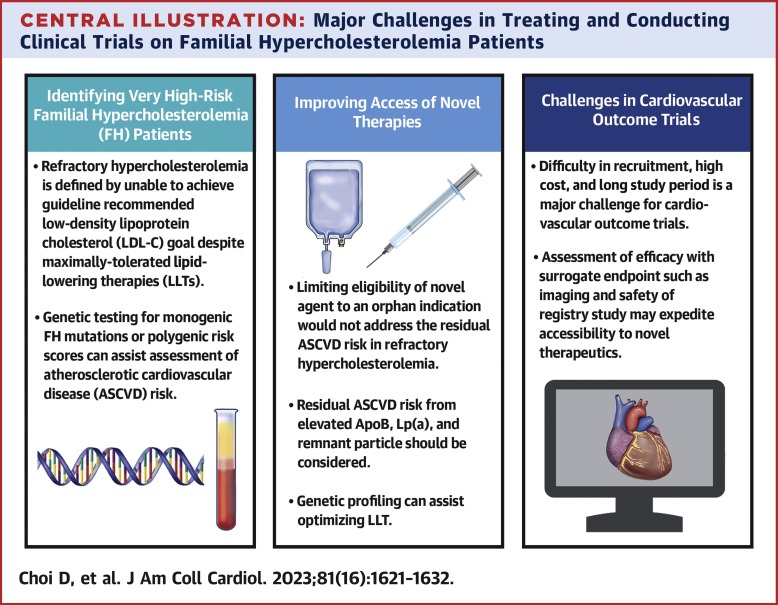
Familial Hypercholesterolemia: Challenges for a High-Risk Population: JACC Focus Seminar 1/3
Source : https://www.sciencedirect.com/science/article/abs/pii/S0735109723045229?via=ihub
The availability of , , and (FH). However, a great number of individuals with FH do not achieve guideline-recommended low-density lipoprotein (LDL) cholesterol levels despite maximal lipid-lowering therapy. Novel therapies...
Conclusions/Relevance: Conduction of cardiovascular outcomes clinical trials in patients with FH can be challenging because of difficulty in recruitment and long periods of follow-up. In the future, the use of validated surrogate measures of atherosclerosis may allow for clinical trials with fewer study participants and shorter duration,...
LDL cholesterol targets rarely achieved in familial hypercholesterolemia patients: A sex and gender-specific analysis - PubMed
Source : https://pubmed.ncbi.nlm.nih.gov/37080805/
In routine practice, only a minority of women and men with FH achieved their LDL-C treatment target. Extra efforts have to be made to provide FH patients with reliable information...
Conclusions: In routine practice, only a minority of women and men with FH achieved their LDL-C treatment target. Extra efforts have to be made to provide FH patients with reliable information on the safety of statins and their long-term effects on CVD risk reduction. If statin treatment is insufficient, alternative lipid lowering...
Sex differences in efficacy and safety of PCSK9 monoclonal antibodies: A real-world registry - PubMed
Source : https://pubmed.ncbi.nlm.nih.gov/37059655/
The .gov means it's official. Federal government websites often end in .gov or .mil. Before sharing sensitive information, make sure you're on a federal government site. The site is secure....
Conclusions: In clinical practice, PCSK9 mAbs are less effective in reducing LDL-c levels in women compared to men and equally safe, implying the importance of sex differences in PCSK9 metabolism.
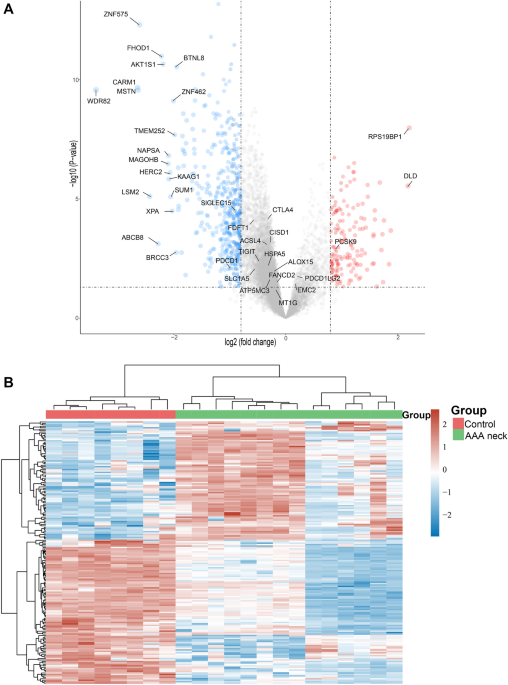
PCSK9, a novel immune and ferroptosis related gene in abdominal aortic aneurysm neck - Scientific Reports
Source : https://www.nature.com/articles/s41598-023-33287-9
The gene expression profile of abdominal aortic aneurysm (AAA) neck is not fully understood. The etiology of AAA is considered to be related to atherosclerosis and the inflammatory response, involving...
Conclusion: PCSK9 was highly expressed in AAA neck, and may exert its role through interacting with immune check-points and ferroptosis-related genes.
-
 Lipid Management Connect3yrKey Points • Source: Scientific Reports • Conclusion: “PCSK9 was highly expressed in AAA [abdominal aortic aneurysm] neck, and may exert its role through interacting with immune check-points and ferroptosis-related genes …. We found Show More