

Comparative study on the performance of different classification algorithms, combined with pre- and post-processing techniques to handle imbalanced data, in the diagnosis of adult patients with familial hypercholesterolemia
Source : https://journals.plos.org/plosone/article?id=10.1371/journal.pone.0269713
Familial Hypercholesterolemia (FH) is an inherited disorder of cholesterol metabolism. Current criteria for FH diagnosis, like Simon Broome (SB) criteria, lead to high false positive rates. The aim of this...
Relevance: Familial Hypercholesterolemia (FH) is an inherited disorder of cholesterol metabolism. Current criteria for FH diagnosis, like Simon Broome (SB) criteria, lead to high false positive rates. The aim of this work was to explore alternative classification procedures for FH diagnosis, based on different biological and biochemical...
Share




-
 Dr Hamid3yrFH diagnosis, based on different biological and biochemical indicators

Modifiable potential risk factors in familial and sporadic frontotemporal dementia - PubMed
Source : https://pubmed.ncbi.nlm.nih.gov/35767471/
doi: 10.1002/acn3.51619. Online ahead of print. 1 Institute of Clinical Medicine - Neurology, University of Eastern Finland, Kuopio, Finland. 2 Centre for Neurodegenerative Disorders, Department of Clinical and Experimental Sciences,...
Interpretation: Our study suggests distinct profiles of several modifiable factors in the FTD group depending on the phenotype and familial inheritance history and that especially sporadic FTD may be associated with modifiable risk factors.
Share

Childhood beverage intake and risk of hypertension and hyperlipidaemia in young adults
Source : https://www.tandfonline.com/doi/abs/10.1080/09637486.2022.2091524?journalCode=iijf20
Abstract An epidemiological analysis assessing beverage consumption and risk factors for cardiovascular disease was conducted. Participants were 9-16 years old at enrolment, completed food frequency questionnaires in 1996-2001 and self-reported outcomes...
Conclusion: This study can guide beverage consumption as it relates to early predictors of cardiovascular disease.
Share

Time-averaged low-density lipoprotein cholesterol lowering with evolocumab: Pooled analysis of phase 2 trials - PubMed
Source : https://pubmed.ncbi.nlm.nih.gov/35760720/
LDL-C is the pivotal risk factor for atherosclerotic cardiovascular disease, and the benefit from LDL-C lowering is proportional to the magnitude of reduction. Clinical trials demonstrate that evolocumab reduces LDL-C...
Conclusion: The time-averaged measure yielded LDL-C reductions for evolocumab that exceeded measurements at the end of dosing intervals and may provide a better estimate of cardiovascular benefit during long-term therapy.
Share
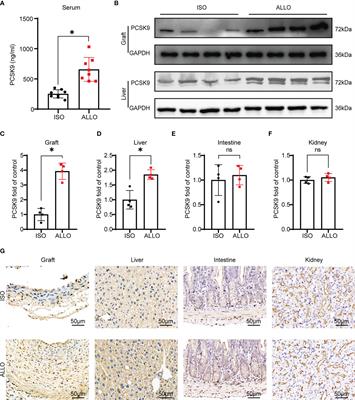
Targeting PCSK9 Ameliorates Graft Vascular Disease in Mice by Inhibiting NLRP3 Inflammasome Activation in Vascular Smooth Muscle Cells
Source : https://www.frontiersin.org/articles/10.3389/fimmu.2022.894789/full
BackgroundGraft vascular disease (GVD), which limits the long-term survival of patients after solid-organ transplantation, is associated with both immune responses and nonimmune factors, including dyslipidemia. Recent studies have shown that...
Conclusion: PCSK9 is upregulated in a mouse model of GVD, and Pcsk9 knockout reduces vascular occlusion, suggesting that PCSK9 may be a promising target for the treatment of GVD.
Share
-
Dr Hamid3yrPCSK9 plays an important role in atherosclerotic plaque development through a cholesterol-independent mechanism