



Analysis of the evolocumab (Repatha®) patient support program for patients with cardiovascular disease in Colombia
Source : https://www.sciencedirect.com/science/article/abs/pii/S021491682300044X?via=ihub
Available online 3 June 2023 Author links open overlay panel, Mariana Pineda-Posada b , , , Show more Las enfermedades cardiovasculares son la principal causa de muerte a nivel mundial.
Conclusion: This is the first real-life study describing patient characteristics, compliance and continuity of treatment for dyslipidemia in a patient support program in Colombia. The overall adherence found was higher than 70%; similar to findings reported in other real-life studies with iPCSK9. However, the reasons for low compliance were...

Differences in treatment strategies for LDL-cholesterol reduction in a university lipid clinic vs. standard care apart from the use of PCSK9 inhibitors - PubMed
Source : https://pubmed.ncbi.nlm.nih.gov/37271601/
Treatment in a lipid clinic leads to a superior LDL-C goal achievement in very high-risk CVD patients as compared to standard care with the highest reduction under LLT with high-intensity...
Conclusion: Treatment in a lipid clinic leads to a superior LDL-C goal achievement in very high-risk CVD patients as compared to standard care with the highest reduction under LLT with high-intensity statins and ezetimibe. Referral algorithms have to be established for high-risk patients.
-
 Lipid Management Connect3yrKey Points • Source: Journal of Clinical Lipidology • Conclusions/Relevance: “Lipid-lowering therapy (LLT) in patients with cardiovascular disease (CVD) is insufficient despite clear guideline recommendations. Lipid clinics have specialized in patients with dyslipidemia, but Show More

A Systematic Review and Meta-Analysis on the Impact of Statin Treatment in HIV Patients on Antiretroviral Therapy - PubMed
Source : https://pubmed.ncbi.nlm.nih.gov/37174188/
The rate of new human immunodeficiency virus (HIV) infections globally is alarming. Although antiretroviral therapy (ART) improves the quality of life among this group of patients, ARTs are associated with...
Conclusions/Relevance: Finally, compared to placebo, statins significantly reduced total cholesterol (SMD: (-2.87, 95% CI: (-4.08, -1.65), p < 0.0001)). Our results suggest that the statin lipid-lowering effect in PLHIV on ART may elevate immune activation without influencing the viral load and CD4 count. However, due to the limited...

Feasibility of Short-Term Aggressive Lipid-Lowering Therapy with the PCSK9 Antibody in Acute Coronary Syndrome - PubMed
Source : https://pubmed.ncbi.nlm.nih.gov/37233171/
The .gov means it's official. Federal government websites often end in .gov or .mil. Before sharing sensitive information, make sure you're on a federal government site. The site is secure....
Conclusions: In ACS patients who underwent PCI, short-term PCSK9 antibody therapy with conventional LLT was feasible in this pilot clinical trial. Long-term follow-up in a larger scale clinical trial is warranted.

Bempedoic Acid: An Emerging Therapy for Uncontrolled Low-Density Lipoprotein (LDL) Cholesterol - PubMed
Source : https://pubmed.ncbi.nlm.nih.gov/37233162/
Atherosclerotic cardiovascular disease (ASCVD) is a silent epidemic, which is progressing relentlessly across the globe. Developing countries such as India have a high prevalence of dyslipidemia and consequently a huge...
Conclusions: Bempedoic acid is first in class for drugs with unique modes of action of ACL inhibition. In the current era of recent Indian and international guidelines with more stringent LDL-C goal criteria, there is a need for this type of molecule, with the potential of a further ~20% LDL-C reduction post maximally tolerated dose of statin...

New Approaches for Targeting PCSK9: Small-Interfering Ribonucleic Acid and Genome Editing - PubMed
Source : https://pubmed.ncbi.nlm.nih.gov/37259866/
There is overwhelming clinical and genetic evidence supporting the concept that low-density-lipoprotein cholesterol should be as low as possible for as long as possible in patients at very high cardiovascular...
Conclusions/Relevance: In this review, we discuss the history of targeting PCSK9 with the use of mRNA and small-interfering ribonucleic acid. We also shed light on targeting PCSK9 with genome editing, including discussion of the VERVE-101 clustered regularly interspaced short palindromic repeats-base editing medicine currently being evaluated...

Long-term treatment persistence and maintained reduction of LDL-cholesterol levels with evolocumab over 30 months: Results from the Spanish cohort of the European prospective HEYMANS study - PubMed
Source : https://pubmed.ncbi.nlm.nih.gov/37236829/
In the Spanish cohort in routine clinical practice, evolocumab therapy provided a reduction in LDL-C levels consistent with that reported in previous clinical trials, which was sustained during 30 months...
Conclusions: In the Spanish cohort in routine clinical practice, evolocumab therapy provided a reduction in LDL-C levels consistent with that reported in previous clinical trials, which was sustained during 30 months of follow-up. Treatment with evolocumab was started at LDL-C levels 50% higher than those recommended by The Spanish Society of...
Statins utilization trends and expenditures in the U.S. before and after the implementation of the 2013 ACC/AHA guidelines
Source : https://www.sciencedirect.com/science/article/pii/S1319016423000841?via=ihub
Statins are drugs of choice in treating hyperlipidemia and preventing or reducing cardiovascular diseases. Explore statins utilization and expenditure trends in the United States before and after the publication of...
Conclusion: The proportion of individuals who used statins significantly increased following the adoption of the 2013 ACC/AHA guidelines. The findings, however, demonstrated suboptimal prescribing trends of high-intensity statins, which need to be addressed by the stakeholders to maximize medication outcomes. Statins expenditures, especially...

estimation of the consequences of reinforcing the 2016 and 2019 ESC/EAS guidelines on current lipid-lowering treatment in patients with type 2 diabetes in tertiary care - a SwissDiab study
Source : https://academic.oup.com/eurjpc/advance-article/doi/10.1093/eurjpc/zwad178/7179456?login=false
AbstractBackground. In 2019, the ESC/EAS updated the 2016 guidelines for the management of dyslipidaemias recommending more stringent LDL-cholesterol (LDL-C) ta
Conclusions: For 68% of the patients, intensifying statin treatment and/or adding ezetimibe would be sufficient to reach the 2016 target, whereas 57% would require cost-intensive PCSK9i therapy to reach the 2019 target, with limited additional medium-term cardiovascular benefit.
Evolocumab attenuate pericoronary adipose tissue density via reduction of lipoprotein(a) in type 2 diabetes mellitus: a serial follow-up CCTA study - Cardiovascular Diabetology
Source : https://cardiab.biomedcentral.com/articles/10.1186/s12933-023-01857-w
Background Pericoronary adipose tissue (PCAT) density is a biomarker of vessel inflammation, which is supposed to be increased in patients with type 2 diabetes mellitus (T2DM). However, whether the coronary...
Conclusions: In patients with T2DM, evolocumab is an effective therapy to decrease noncalcified plaque volume necrotic volume, and increase calcified plaque volume. Furthermore, evolocumab could attenuate PCAT density, at least in part, via the reduction of lipoprotein(a).
Evolocumab loaded Bio-Liposomes for efficient atherosclerosis therapy - Journal of Nanobiotechnology
Source : https://jnanobiotechnology.biomedcentral.com/articles/10.1186/s12951-023-01904-4
PCSK9, which is closely related to atherosclerosis, is significantly expressed in vascular smooth muscle cells (VSMCs). Moreover, Proprotein Convertase Subtilisin/Kexin type 9 (PCSK9) mediated phenotypic transformation, abnormal proliferation, and migration...
Conclusion: In the current study, we described the development of a (Lipo + M)@E nanoparticle to targeted deliver Evol into VSMCs of atherosclerotic plaque. The key findings of our study are that this compound (1) has good bionic properties, escapes immune cells phagocytose, and has long circulation time, (2) has good targeting...

Impact of Berberine or Berberine Combination Products on Lipoprotein, Triglyceride and Biological Safety Marker Concentrations in Patients with Hyperlipidemia: A Systematic Review and Meta-Analysis - PubMed
Source : https://pubmed.ncbi.nlm.nih.gov/37183391/
The .gov means it's official. Federal government websites often end in .gov or .mil. Before sharing sensitive information, make sure you're on a federal government site. The site is secure....
Conclusions/Relevance: Berberine, alone or with other nutraceuticals, can provide a modest positive impact on lipid concentrations.
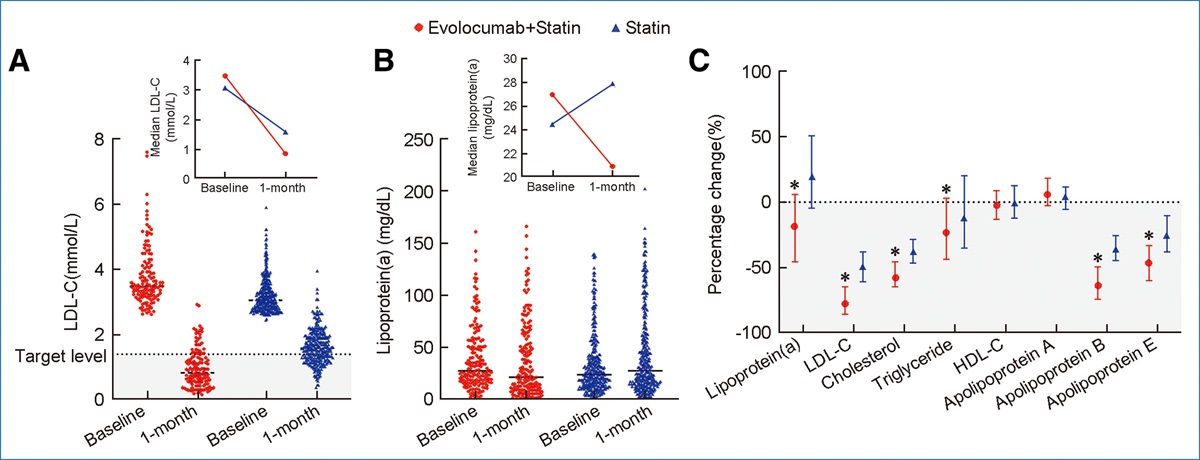
Effect of in-hospital evolocumab therapy on lipoprotein(a) in patients with acute myocardial infarction: a retrospective cohort study and a propensity score matching analysis
in patients with acute myocardial infarction (AMI) is poorly studied. This study aims to investigate the change in lipoprotein(a) under evolocumab therapy in patients with AMI. Methods: This retrospective cohort...
Conclusions: In-hospital initiation of evolocumab on a background statin therapy reduced lipoprotein(a) level at 1-month follow-up in patients with AMI. Evolocumab plus statin therapy inhibited the increase in lipoprotein(a) in statin only therapy, regardless of the baseline lipoprotein(a) level.
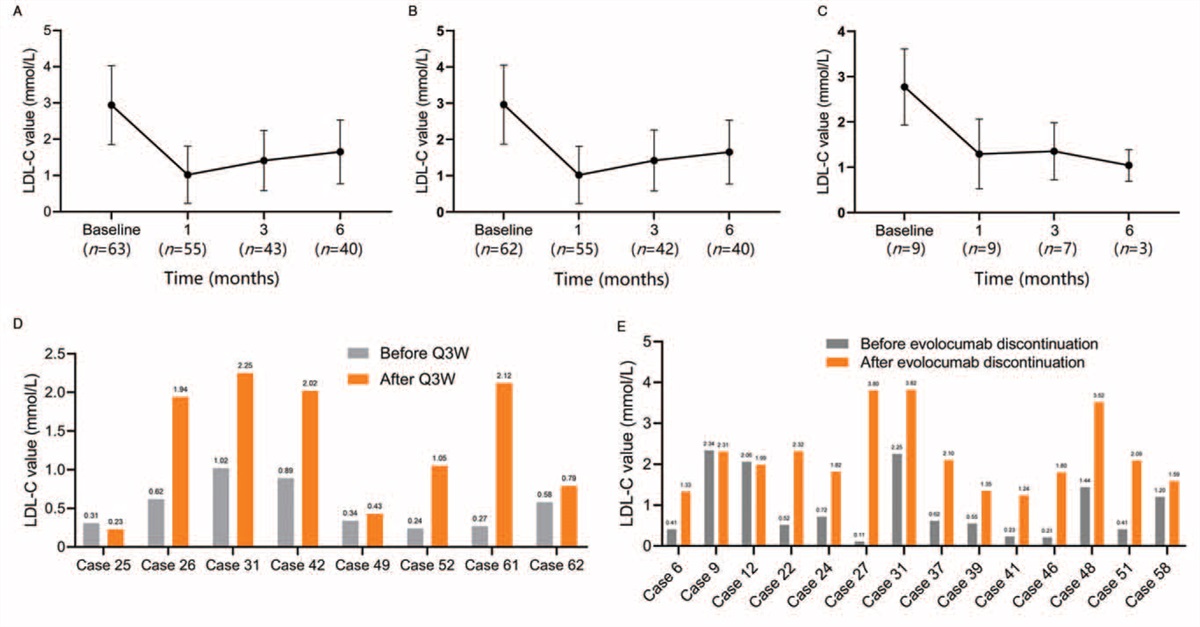
Lipid lowering effects and safety of evolocumab in Chinese patients at very high cardiovascular risk: a single-center study
Low-density lipoprotein cholesterol (LDL-C) is an independent risk factor for atherosclerotic cardiovascular disease (ASCVD). Even after lipid-lowering therapy (LLT) with statins or statin-ezetimibe, a large proportion of patients at very...
Conclusion: We describe here our clinical experience with evolocumab prescription in very high-risk Chinese patients and showed similar lipid-lowering effects and safety profiles compared with previous clinical trials. However, a high discontinuation rate primarily due to the high cost and low affordability of evolocumab was reported....
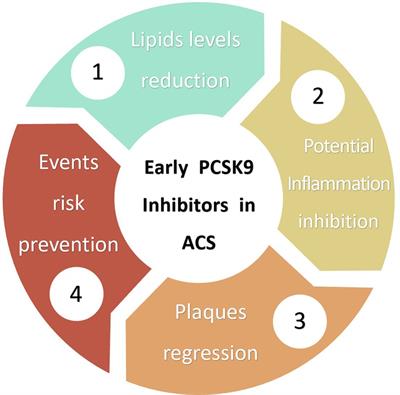
PCSK9 inhibitors for acute coronary syndrome: the era of early implementation
Source : https://www.frontiersin.org/articles/10.3389/fcvm.2023.1138787/full
Proprotein convertase subtilisin/kexin type 9 (PCSK9) inhibitors, a new cholesterol-lowering strategy, can decrease low-density lipoprotein cholesterol (LDL-C) levels by inhibiting PCSK9 and reducing the degradation of LDL receptors; thus, they...
Conclusion: The current evidence has demonstrated the benefits of early PCSK9 inhibitors in lipid reduction, plaque stabilization, and short-term or long-term cardiovascular event prevention. Furthermore, most adverse effects resulting from early PCSK9 inhibitors are mild and manageable, consistent with long-term follow-up results. However,...
PCSK9 Inhibition in Patients After Heart Transplantation: a Retrospective Review and Literature Analysis - Current Heart Failure Reports
Source : https://link.springer.com/article/10.1007/s11897-023-00604-2
Purpose of Review Following cardiac transplantation, patients have an increased risk of developing cardiac allograft vasculopathy and atherosclerotic cardiovascular disease. Therefore, aggressive lipid management is indicated. Some patients do not...
Summary: In our study, the 110 patients from literature review were added to a cohort of 7 similar patients from our institution for combined analysis. This report supports that PCSK9 inhibitors should be considered following cardiac transplantation when conventional medial therapy is not tolerated or ineffective.
![Discovery of [5,5'-bibenzo[d][1,3]dioxol]-6-substituted amine derivatives as potent proprotein convertase subtilisin/kexin type 9 inhibitors - PubMed](https://static-content-prd.skipta.com/public/skipta/skipta-post/2023-05/pubmed-meta-image_207.png "Discovery of [5,5'-bibenzo[d][1,3]dioxol]-6-substituted amine derivatives as potent proprotein convertase subtilisin/kexin type 9 inhibitors - PubMed")
Discovery of [5,5'-bibenzo[d][1,3]dioxol]-6-substituted amine derivatives as potent proprotein convertase subtilisin/kexin type 9 inhibitors - PubMed
Source : https://pubmed.ncbi.nlm.nih.gov/37170061/
Proprotein convertase subtilisin/kexin type 9 (PCSK9) has emerged as a promising therapeutic target for the treatment of hyperlipidemia. In discovery of novel small molecules that interfere PCSK9/LDLR protein-protein interaction (PPI),...
Conclusions/Relevance: It is significant that molecules D28 and D29 exhibited potential for the treatment of hyperlipidemia in current in vitro investigations. Generally, lead compounds with novel structures were developed in the present study for further design of lipid-lowering molecules by targeting PCSK9/LDLR PPI.

Inclisiran, Low-Density Lipoprotein Cholesterol and Lipoprotein (a) - PubMed
Source : https://pubmed.ncbi.nlm.nih.gov/37111334/
Dyslipidemia treatment is of major importance in reducing the risk of atherosclerotic cardiovascular disease (ASCVD), which is still the most common cause of death worldwide. During the last decade, a...
Conclusions: Inclisiran exerts a prolonged and significant LDL-C-lowering effect based on its unique mechanism of action. Some of the ORION trials have been completed confirming that inclisiran effectively reduced LDL-C in patients with elevated LDL-C, despite maximally tolerated statin therapy (±ezetimibe), in different clinical...
Conclusions: HCRU within the first year of ASCVD diagnosis is substantial among patients with ASCVD and elevated Lp(a). Relatively higher rates of inpatient hospitalizations, increased LOS per hospitalization, and requirement of revascularization procedures within the first year of ASCVD index diagnosis were observed in patients with...
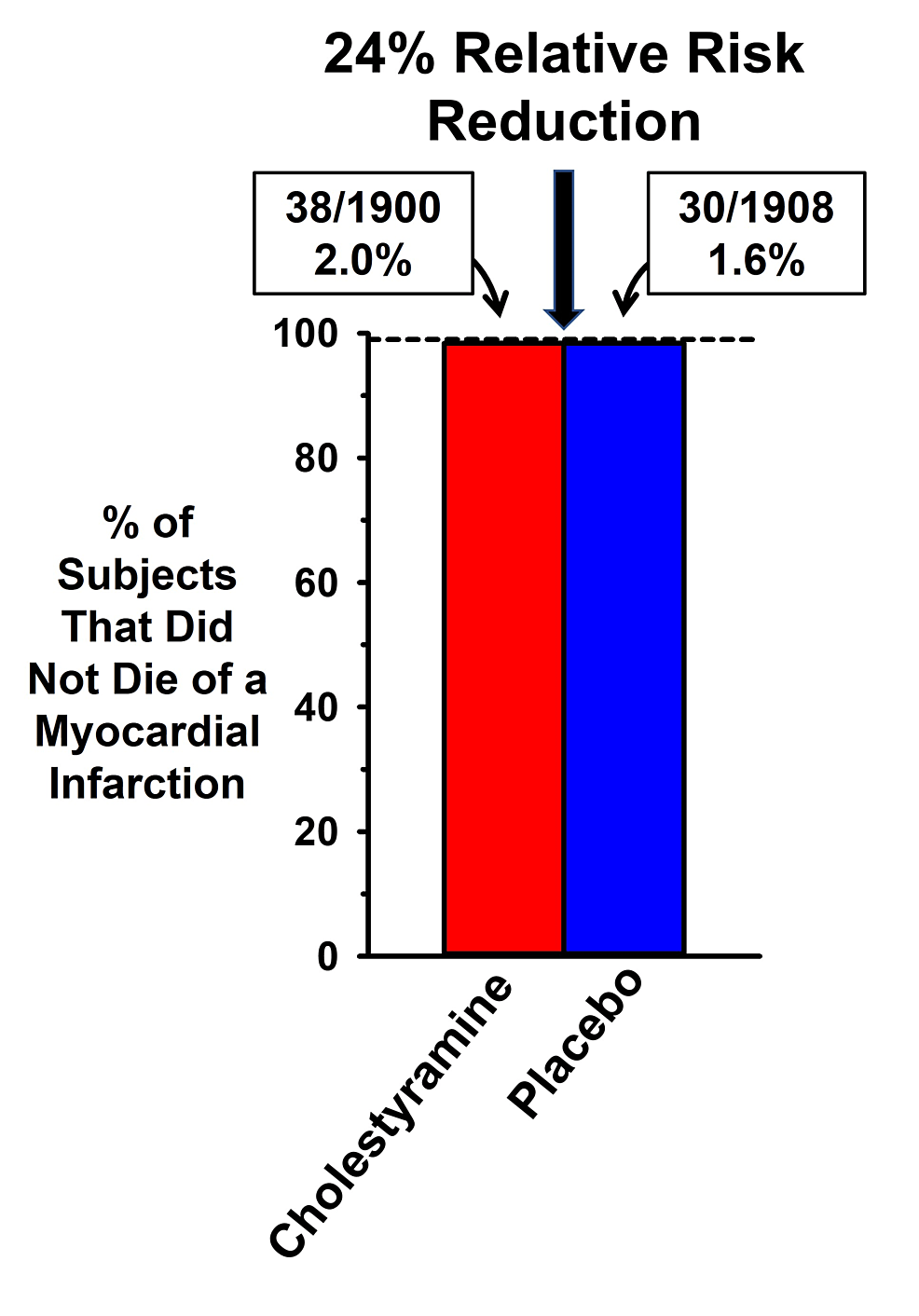
Historical Review of the Use of Relative Risk Statistics in the Portrayal of the Purported Hazards of High LDL Cholesterol and the Benefits of Lipid-Lowering Therapy
The manner in which clinical trial investigators present their findings to healthcare providers and the public can have a substantial influence on their impact. For example, if a heart attack...
Conclusions/Relevance: We assert that the emphasis on RR coupled with insufficient disclosure of AR in the reporting of RCT outcomes has led healthcare providers and the public to overestimate concerns about high cholesterol and to be misled as to the magnitude of the benefits of cholesterol-lowering therapy. The goal of this review is to...