



Statin intolerance management: a systematic review - Endocrine
Source : https://link.springer.com/article/10.1007/s12020-022-03263-w
Background Statin intolerance is a key barrier to the effective prevention of atherosclerotic cardiovascular disease (ASCVD). Experts do not agree on what it is and how to respond to this...
Conclusion: We found substantial variability in the definition and management of statin intolerance among experts. Few focused on ASCVD risk reduction and none promoted the participation of patients in shared decision making about how to address the threat of ASCVD with or without statins.

New Trends and Therapies for Familial Hypercholesterolemia - PubMed
Source : https://pubmed.ncbi.nlm.nih.gov/36431115/
The .gov means it's official. Federal government websites often end in .gov or .mil. Before sharing sensitive information, make sure you're on a federal government site. The site is secure....
Conclusions/Relevance: Newer therapies such as inhibitors of microsomal transfer protein and angiopoietin-like protein 3 have opened the possibility of LDL-cholesterol normalization in homozygous FH and may provide an alternative to lipoprotein apheresis for these patients. Gene-based therapies may provide more definite solutions for lowering...
Genome Editing in Dyslipidemia and Atherosclerosis
Source : https://link.springer.com/chapter/10.1007/978-981-19-5642-3_10
Hardcover Book USD 199.99 Price excludes VAT (USA) We acknowledge the Servier Medical Art for providing basic graph elements for our figures, PubMed for publication statistics, and NHGRI-EBI GWAS Catalog...
Relevance: We give an outlook on the potential gene targets prioritized by large-scale genetic studies of cardiovascular diseases and genome editing in precision medicine of dyslipidemia and atherosclerosis.

Real-World Data on Comparison of Lipid-Lowering Effects between Alirocumab and Evolocumab in Patients with Hypercholesterolemia - PubMed
Source : https://pubmed.ncbi.nlm.nih.gov/36440240/
The .gov means it's official. Federal government websites often end in .gov or .mil. Before sharing sensitive information, make sure you're on a federal government site. The site is secure....
Conclusions: The LDL-C lowering effects of alirocumab are similar to those of evolocumab in clinical practice.
-
 Lipid Management Connect3yrKey Points • Source: Acta Cardiologica Sinica • Conclusions: “The LDL-C lowering effects of alirocumab are similar to those of evolocumab in clinical practice.” • Taiwanese researchers compared characteristics, prescribed medications, plasma LDL-C levels, and percentages Show More

Familial Hypercholesterolemia and Its Current Diagnostics and Treatment Possibilities: A Literature Analysis - PubMed
Source : https://pubmed.ncbi.nlm.nih.gov/36422206/
Familial hypercholesterolemia (FH) is a common, inherited disorder of cholesterol metabolism. This pathology is usually an autosomal dominant disorder and is caused by inherited mutations in the APOB, LDLR, and...
Relevance: It is important to say that the timeous lowering of LDL-C levels can reduce the risk of cardiovascular events and mortality in patients with FH. Therefore, it is essential to increase awareness of FH in order to reduce the burden of acute coronary syndrome (ACS).

Real-World Analyses of the Treatment Conditions in Patients Initiating Proprotein Convertase Subtilisin/Kexin Type 9 (PCSK9) Inhibitor in Taiwan
Source : https://www.jstage.jst.go.jp/article/jat/advpub/0/advpub_63789/_article
Aims: Proprotein convertase subtilisin/kexin type 9 (PCSK9) inhibitor is a powerful low density lipoprotein cholesterol (LDL-C)-lowering therapy, but this drug is expensive. This study aimed to describe the real-world treatment...
Conclusions: In the real-world practice in Taiwan, the LDL-C reduction efficacy of PCSK9 inhibitors was slightly lower than that reported in the clinical trials. The use of non-standard-dosing PCSK9 inhibitors was not uncommon in Taiwan.

Recent Advances in Gene Therapy for Familial Hypercholesterolemia: An Update Review - PubMed
Source : https://pubmed.ncbi.nlm.nih.gov/36431249/
(1) Background: Existing lipid-lowering therapies have difficulty in achieving lipid target levels in patients with familial hypercholesterolemia (FH), especially in the treatment of patients with homozygous familial hypercholesterolemia. (2) Method:...
Conclusion: Gene therapy is being widely used for the lipid-lowering treatment of FH patients and has shown excellent therapeutic promise, but the current delivery efficiency, economic burden, immunogenicity and the precision of gene therapy can be further optimized.

Cardiovascular Risk Profile and Lipid Management in the Population-Based Cohort Study LATINO: 20 Years of Real-World Data - PubMed
Source : https://pubmed.ncbi.nlm.nih.gov/36431309/
The rising prevalence of cardiovascular (CV) risk factors in Portugal has translated into more than 35,000 annual deaths due to CV diseases. We performed a multicenter observational cohort study encompassing...
Conclusions/Relevance: There are clear opportunities to optimize LDL-C management in routine clinical practice. The prescription of LLT according to CV risk represents an important missed treatment opportunity.
World Heart Federation Cholesterol Roadmap 2022
Source : https://globalheartjournal.com/article/10.5334/gh.1154/
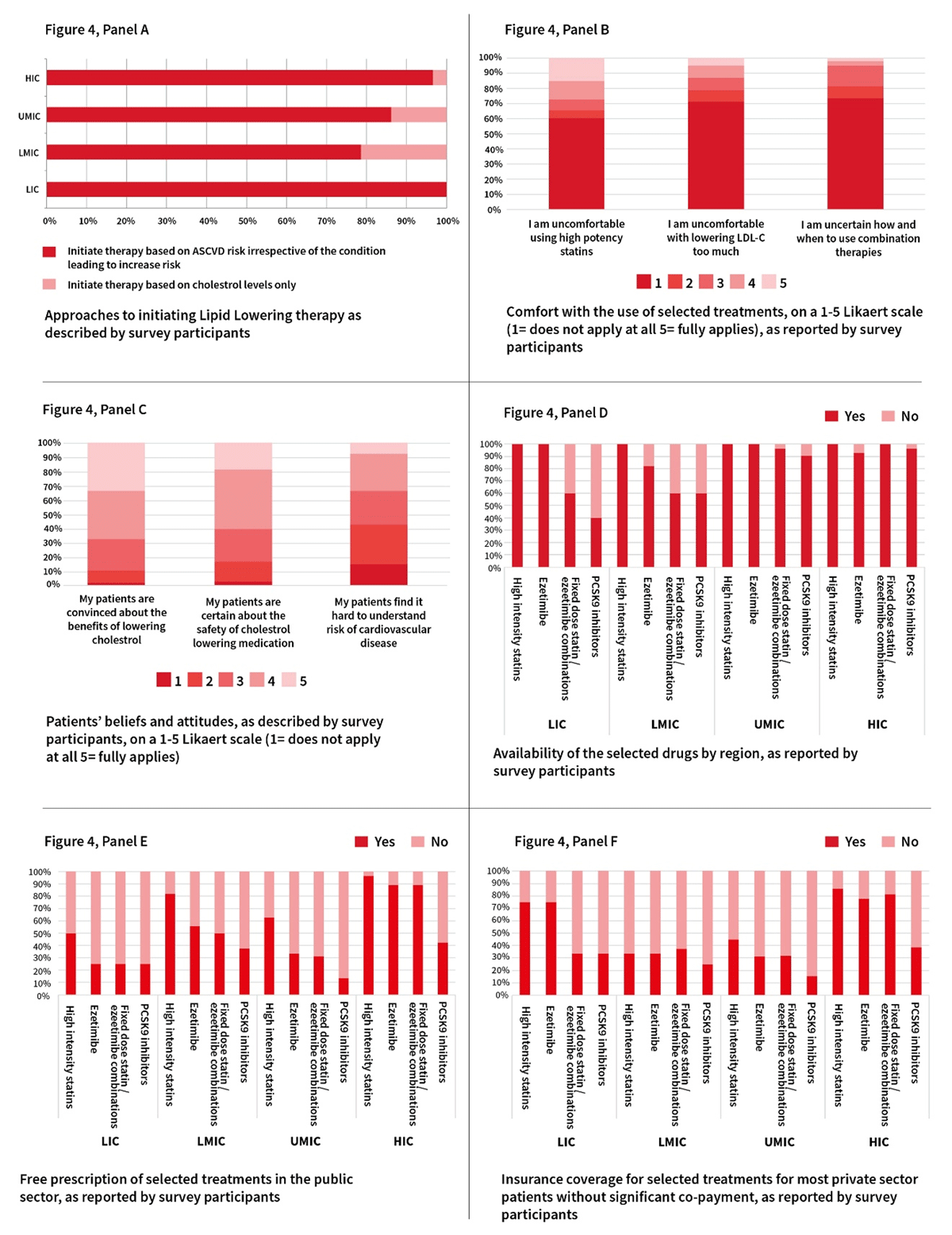
Atherosclerotic cardiovascular disease (ASCVD) remains the leading cause of death globally despite major advances in our understanding of the pathophysiology of atherosclerosis, its consequences and the development of new preventive...
Conclusions: The adverse effects of LDL-cholesterol and apo B containing lipoprotein exposure are cumulative and result in ASCVD. These are preventable by implementation of different strategies, aimed at efficiently tackling atherosclerosis at different stages throughout the human life-course. Preventive strategies should therefore be updated...
Equivalent Impact of Elevated Lipoprotein(a) and Familial Hypercholesterolemia in Patients With Atherosclerotic Cardiovascular Disease
Source : https://www.sciencedirect.com/science/article/abs/pii/S0735109722069546?via=ihub
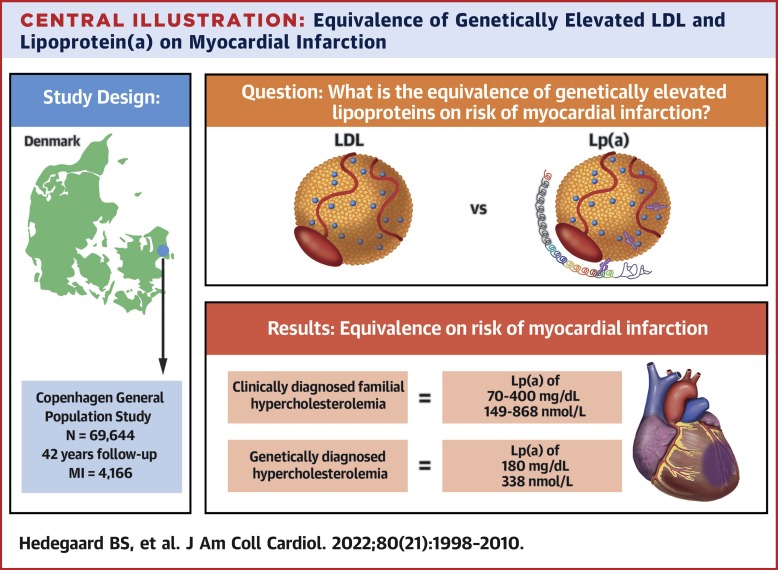
Genetically elevated plasma lipoprotein(a) and familial hypercholesterolemia each result in premature atherosclerotic cardiovascular disease (ASCVD); however, a direct comparison in the same population is needed of these 2 genetic traits...
Conclusions: Lipoprotein(a) levels equivalent to LDL cholesterol in clinical and genetic familial hypercholesterolemia were 67 to 402 mg/dL and 180 mg/dL, respectively, for myocardial infarction and 130 to 391 mg/dL and 175 mg/dL, respectively, for ASCVD.
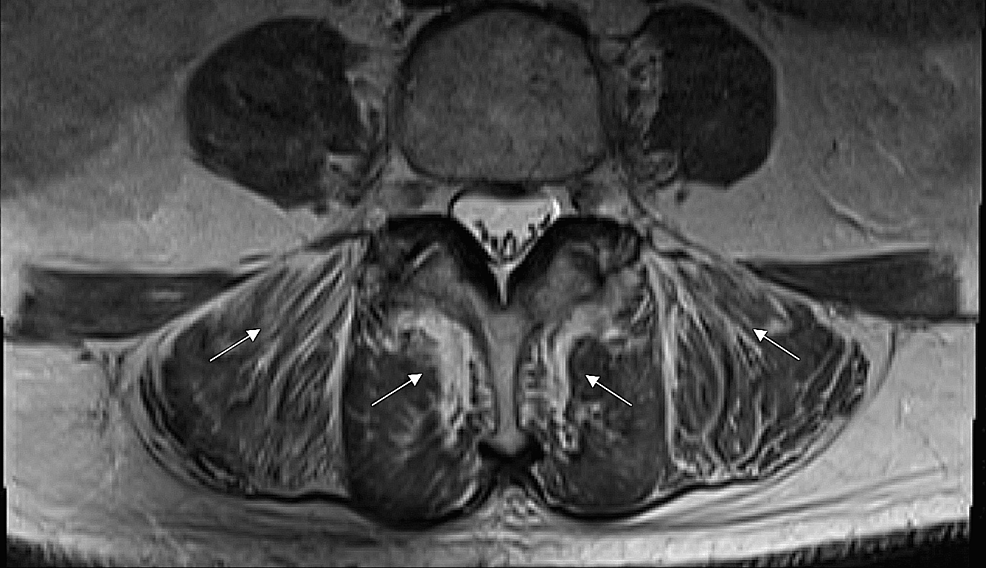
High-Intensity Statin With Severe Consequences: A Case of Non-autoimmune Rosuvastatin-Induced Myonecrosis
Statins constitute a cornerstone in the primary and secondary prevention of atherosclerotic cardiovascular disease (ASCVD). The routine use of these lipid-lowering agents may lead to unintentional neglect of their well-known...
Conclusions/Relevance: Ultimately, statin-induced myopathy may significantly hinder activities of daily living and impair quality of life. It is, however, a reversible condition if diagnosed and appropriately managed early on. Clinicians are encouraged to acquaint themselves with the symptomatology and relevant laboratory values that commonly...
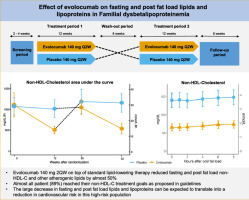
Effect of evolocumab on fasting and post fat load lipids and lipoproteins in familial dysbetalipoproteinemia
Source : https://www.lipidjournal.com/article/S1933-2874(22)00291-4/fulltext
Familial dysbetalipoproteinemia (FD), also known as 'remnant removal disease', is the second most common monogenic lipid disorder after heterozygous familial hypercholesterolemia (heFH), with an estimated prevalence of 1 in 850...
Conclusions: Evolocumab added to standard lipid-lowering therapy significantly reduced fasting and absolute post fat load concentrations of non-HDL-C, apoB and other atherogenic lipids and lipoproteins in FD patients. The clinically significant decrease in lipids and lipoproteins can be expected to translate into a reduction in CVD risk in...
-
Lipid Management Connect3yrKey Takeaways • Source: Journal of Clinical Lipidology • Conclusion: “Evolocumab added to standard lipid-lowering therapy significantly reduced fasting and absolute post fat load concentrations of non-HDL-C, apoB and other atherogenic lipids and lipoproteins Show More

Screening and Management of Dyslipidemia in Children and Adolescents - PubMed
Source : https://pubmed.ncbi.nlm.nih.gov/36362707/
This review provides an overview of pediatric dyslipidemia emphasizing screening and treatment recommendations. The presence of risk factors for cardiovascular disease in childhood poses significant risk for the development of...
Conclusion/Relevance: Treatment of pediatric dyslipidemia begins with lifestyle modifications, but primary genetic dyslipidemias may require medications such as statins. As pediatric lipid disorders often have genetic or familial components, it is important that all physicians are aware that cardiovascular risk begins in childhood, and can both...
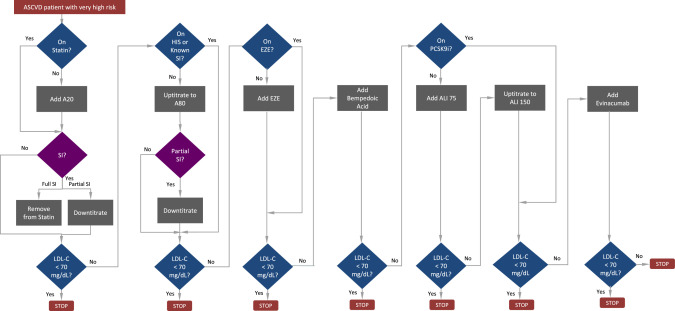
Simulation of lipid-lowering therapy (LLT) intensification in very high-risk patients with atherosclerotic cardiovascular disease
Source : https://www.lipidjournal.com/article/S1933-2874(22)00286-0/fulltext
In a previous study, we used a Monte Carlo simulation model to estimate the proportion of patients with atherosclerotic cardiovascular disease (ASCVD) who would require various lipid-lowering therapies (LLTs), and...
Conclusions: Evinacumab may be useful to address such unmet needs effectively, as the majority of those not at goal after PCSK9 inhibitors could achieve the goal of

Atherogenic Lipoproteins for the Statin Residual Cardiovascular Disease Risk - PubMed
Source : https://pubmed.ncbi.nlm.nih.gov/36362288/
Randomized controlled trials (RCTs) show that decreases in low-density lipoprotein cholesterol (LDL-C) by the use of statins cause a significant reduction in the development of cardiovascular disease (CVD). However, one...
Conclusions/Relevance: MDA-LDL is a representative form of oxidized LDL and plays important roles in the formation and development of the primary lesions of atherosclerosis. MDA-LDL levels were higher in CVD patients and diabetic patients than in the control subjects. Furthermore, we demonstrated the atherogenic properties of such lipoproteins...
ANGPTL3 as a Drug Target in Hyperlipidemia and Atherosclerosis - Current Atherosclerosis Reports
Source : https://link.springer.com/article/10.1007/s11883-022-01071-1
Purpose of Review Elevated low-density lipoprotein cholesterol (LDL-C) and triglyceride-rich lipoproteins (TRLs) or remnants are important risk factors for the development of atherosclerotic cardiovascular disease (ASCVD). The ongoing challenge of...
Summary: ANGPTL3 is a novel target in lipoprotein metabolism, targeting not only LDL-C via an LDL-receptor (LDLR) independent mechanism but also TRLs and carries a significant promise for further ASCVD risk reduction.

Weight Change and Clinical Outcomes in Heart Failure with Reduced Ejection Fraction: Insights from EMPEROR-Reduced - PubMed
Source : https://pubmed.ncbi.nlm.nih.gov/36325584/
doi: 10.1002/ejhf.2728. Online ahead of print. 1 Department of Cardiology and Berlin Institute of Health Center for Regenerative Therapies, and German Centre for Cardiovascular Research (DZHK) partner site Berlin, Charité...
Conclusion: The benefits of empagliflozin versus placebo were consistently present across all BMI categories in HFrEF patients. Weight loss was associated with higher risk of all-cause mortality, regardless of treatment group.

Considerations for Use of Pharmacodynamic Biomarkers to Support Biosimilar Development- (I) A Randomized Trial with PCSK9 Inhibitors - PubMed
Source : https://pubmed.ncbi.nlm.nih.gov/36282186/
FDA guidance outlines how biosimilars can be developed based on pharmacokinetic (PK) and pharmacodynamic (PD) similarity study data in lieu of a comparative clinical efficacy study. There is a paucity...
Relevance: In summary, this study illustrates how pilot study data can be leveraged to inform appropriate dosing and data analyses for a PK and PD similarity study.
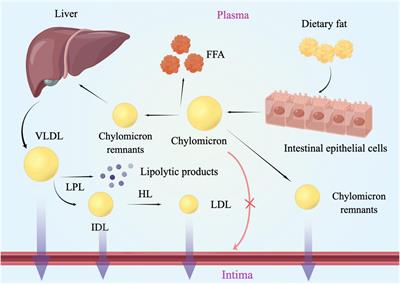
Remnant cholesterol and atherosclerotic cardiovascular disease: Metabolism, mechanism, evidence, and treatment
Source : https://www.frontiersin.org/articles/10.3389/fcvm.2022.913869/full
This review aimed to summarize the evidence of elevated remnant cholesterol and the risks of atherosclerotic cardiovascular disease (ASCVD) and to search for further guidance in clinical therapy. The lipids-lowering...
Conclusions/Relevance: The use of statins, fibrates, APOC3 inhibitors, PCSK9 inhibitors, and omega-3 fatty acids to reduce RC levels in the plasma may provide long-term benefits. However, the standardized detection of RC was still controversial, and more studies on appropriate treatments of elevated RC are urgently needed. These positive trials...
-
Lipid Management Connect3yrKey Points • Source: Frontiers in Cardiovascular Medicine • Relevance: “The review aimed to summarize the evidence of elevated RC and the risks of ASCVD, and to search for further guidance in clinical therapy.” • Increased Show More

The Level of Remnant Cholesterol and Implications for Lipid-Lowering Strategy in Hospitalized Patients with Acute Coronary Syndrome in China: Findings from the Improving Care for Cardiovascular Disease in China-Acute Coronary Syndrome Project - PubMed
Source : https://pubmed.ncbi.nlm.nih.gov/36295800/
Elevated remnant cholesterol is associated with an increased risk of atherosclerotic cardiovascular disease (ASCVD). We aimed to evaluate the concentrations and general distribution of remnant cholesterol at admission in patients...
Conclusion: One fifth of patients with ACS have elevated remnant cholesterol concentrations at admission. Elevated remnant cholesterol concentrations are present in patients with LDL-C or/and non-HDL-C concentrations within the target, which represents an unmet need to add remnant cholesterol as a target for the secondary prevention of ASCVD.