



Comparative study on the performance of different classification algorithms, combined with pre- and post-processing techniques to handle imbalanced data, in the diagnosis of adult patients with familial hypercholesterolemia
Source : https://journals.plos.org/plosone/article?id=10.1371/journal.pone.0269713
Familial Hypercholesterolemia (FH) is an inherited disorder of cholesterol metabolism. Current criteria for FH diagnosis, like Simon Broome (SB) criteria, lead to high false positive rates. The aim of this...
Relevance: Familial Hypercholesterolemia (FH) is an inherited disorder of cholesterol metabolism. Current criteria for FH diagnosis, like Simon Broome (SB) criteria, lead to high false positive rates. The aim of this work was to explore alternative classification procedures for FH diagnosis, based on different biological and biochemical...
-
 Dr Hamid4yrFH diagnosis, based on different biological and biochemical indicators
Childhood beverage intake and risk of hypertension and hyperlipidaemia in young adults
Source : https://www.tandfonline.com/doi/abs/10.1080/09637486.2022.2091524?journalCode=iijf20
Abstract An epidemiological analysis assessing beverage consumption and risk factors for cardiovascular disease was conducted. Participants were 9-16 years old at enrolment, completed food frequency questionnaires in 1996-2001 and self-reported outcomes...
Conclusion: This study can guide beverage consumption as it relates to early predictors of cardiovascular disease.

Time-averaged low-density lipoprotein cholesterol lowering with evolocumab: Pooled analysis of phase 2 trials - PubMed
Source : https://pubmed.ncbi.nlm.nih.gov/35760720/
LDL-C is the pivotal risk factor for atherosclerotic cardiovascular disease, and the benefit from LDL-C lowering is proportional to the magnitude of reduction. Clinical trials demonstrate that evolocumab reduces LDL-C...
Conclusion: The time-averaged measure yielded LDL-C reductions for evolocumab that exceeded measurements at the end of dosing intervals and may provide a better estimate of cardiovascular benefit during long-term therapy.

Molecular and cellular biology of PCSK9: impact on glucose homeostasis - PubMed
Source : https://pubmed.ncbi.nlm.nih.gov/35723066/
Proprotein convertase substilisin/kexin 9 (PCSK9) inhibitors (PCSK9i) revolutionised the lipid-lowering therapy. However, a risk of type 2 diabetes mellitus (T2DM) is evoked under PCSK9i therapy. In this review, we summarise...
Conclusion/Relevance: Convertase substilisin/kexin 9 (PCSK9) inhibitors (PCSK9i) revolutionised the lipid- Proprotein lowering therapy. However, a risk of type 2 diabetes mellitus (T2DM) is evoked under PCSK9i therapy. In this review, we summarise the current knowledge on the link of PCSK9 with T2DM. A significant correlation was found between...
-
Dr Hamid4yrProprotein convertase substilisin/kexin 9 (PCSK9) inhibitors (PCSK9i) revolutionised the lipid-lowering therapy
PCSK9 inhibitors for secondary prevention in patients with cardiovascular diseases: a bayesian network meta-analysis - Cardiovascular Diabetology
Source : https://cardiab.biomedcentral.com/articles/10.1186/s12933-022-01542-4
Background The Food and Drug Administration has approved Proprotein Convertase Subtilisin/Kexin Type 9 (PCSK9) inhibitors for the treatment of dyslipidemia. However, evidence of the optimal PCSK9 agents targeting PCSK9 for...
Conclusions: In consideration of the fact that both PCSK9 monoclonal antibody and inclisiran enable patients to achieve recommended LDL-C target, the findings in this meta-analysis suggest that alirocumab might provide the optimal benefits regarding all-cause mortality with relatively lower SAE risks, and evolocumab might provide the optimal...
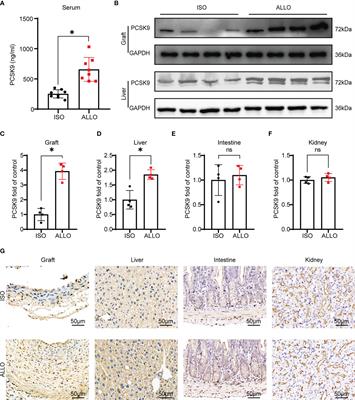
Targeting PCSK9 Ameliorates Graft Vascular Disease in Mice by Inhibiting NLRP3 Inflammasome Activation in Vascular Smooth Muscle Cells
Source : https://www.frontiersin.org/articles/10.3389/fimmu.2022.894789/full
BackgroundGraft vascular disease (GVD), which limits the long-term survival of patients after solid-organ transplantation, is associated with both immune responses and nonimmune factors, including dyslipidemia. Recent studies have shown that...
Conclusion: PCSK9 is upregulated in a mouse model of GVD, and Pcsk9 knockout reduces vascular occlusion, suggesting that PCSK9 may be a promising target for the treatment of GVD.
-
Dr Hamid4yrPCSK9 plays an important role in atherosclerotic plaque development through a cholesterol-independent mechanism
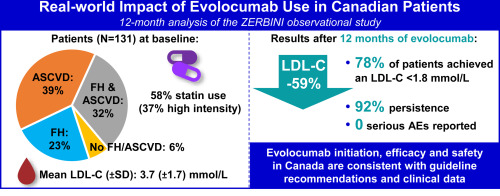
Real-World Insights Into Evolocumab Use in Patients With Hyperlipidemia: Canadian Analysis From the ZERBINI Study
Source : https://www.cjcopen.ca/article/S2589-790X(22)00051-8/fulltext
The 2021 Canadian Cardiovascular Society guidelines recommend proprotein convertase subtilisin-kexin type 9 (PCSK9) inhibitor therapy in patients with atherosclerotic cardiovascular disease whose low-density lipoprotein cholesterol (LDL-C) concentration remains ≥ 1.8...
Conclusions: These findings provide real-world evidence of guideline-recommended initiation of evolocumab therapy, as well as confirmation of its effectiveness and safety in a Canadian population. Evolocumab therapy can address a healthcare gap in the management of dyslipidemia, by increasing the proportion of patients achieving LDL-C goals...

Hyperlipidemia in Children and Adolescents - PubMed
Source : https://pubmed.ncbi.nlm.nih.gov/35700367/
While coronary artery disease (CAD) is thought to be a disease of adulthood, atherosclerosis can originate in childhood and adolescence. There is a paucity of randomized controlled treatment trials regarding...
Conclusion: Statins are the most widely used medications. Newer medications have proven integral in treatment for genetic dyslipidemias including evolocumab and evinacumab.

A scoping review of interventions increasing screening and diagnosis of familial hypercholesterolemia - PubMed
Source : https://pubmed.ncbi.nlm.nih.gov/35713652/
Given the diversity of effective interventions identified in this review, future efforts could explore approaches that maximize identification through a combination of interventions. Our results support one such strategy that...
Conclusion: Given the diversity of effective interventions identified in this review, future efforts could explore approaches that maximize identification through a combination of interventions. Our results support one such strategy that uses electronic medical records to screen for index cases and a 2-step indirect and direct contact method...

The promising novel therapies for familial hypercholesterolemia - PubMed
Source : https://pubmed.ncbi.nlm.nih.gov/35712827/
doi: 10.1002/jcla.24552. Online ahead of print. 1 School of Medicine of Ningbo University, Ningbo, China. 2 The Affiliated Ningbo First Hospital, School of Medicine of Ningbo University, Ningbo, China. 3...
Conclusion: While the therapies based on different targets including protein, RNA, and DNA are on different stages of development, the mechanisms of these novel therapies may provide new ideas for precision medicine.

Evolocumab administration prior to Coronary Artery Bypass Grafting in patients with multivessel coronary artery disease (EVOCABG): study protocol for a randomized controlled clinical trial - Trials
Source : https://trialsjournal.biomedcentral.com/articles/10.1186/s13063-022-06398-3
Background Despite advances in surgical and postoperative care, myocardial injury or infarction (MI) is still a common complication in patients undergoing coronary artery bypass surgery (CABG). Several studies that aimed...
Conclusion/Relevance: Evolocumab, a PCSK9 inhibitor, has been reported to lower lipids and prevent ischemic events in various medical conditions. However, the effect of evolocumab in cardiovascular surgery has not been evaluated. The objective of this trial is to evaluate the cardioprotective effects of evolocumab in elective CABG patients with...

Effect of Omega-3 Fatty Acid Supplementation on the Postprandial Metabolism of Apolipoprotein(a) in Familial Hypercholesterolemia - PubMed
Source : https://pubmed.ncbi.nlm.nih.gov/35676030/
Supplementation with ω3FA reduces postprandial TRL-apo(a) response to a fat meal in FH patients; this novel metabolic effect of ω3FA may have implications on decreasing the risk of ASCVD in...
Conclusions: Supplementation with ω3FA reduces postprandial TRL-apo(a) response to a fat meal in FH patients; this novel metabolic effect of ω3FA may have implications on decreasing the risk of ASCVD in patients with FH, especially in those with elevated plasma triglyceride and Lp(a) concentrations. However, the clinical implications of these...

New Treatment Targets and Innovative Lipid-Lowering Therapies in Very-High-Risk Patients with Cardiovascular Disease
Source : https://www.ncbi.nlm.nih.gov/pmc/articles/PMC9138506/
Bart De Geest, Academic Editor The effective and fast reduction of circulating low-density lipoprotein cholesterol (LDL-C) is a cornerstone for secondary prevention of atherosclerotic disease progression. Despite the substantial lipid-lowering...
Conclusion: In this review, we summarize evidence for the lipid-modifying properties of these novel agents and their safety profiles, and discuss their potential pleiotropic effects beyond LDL-C reduction (if any) as well as their effects on clinical endpoints as cardiovascular mortality. In addition to a treatment strategy of “the lower, the...
-
Lipid Management Connect4yrKey Points • Source: Biomedicines • Conclusion: “In this review, we summarize evidence for the lipid-modifying properties of these novel agents and their safety profiles, and discuss their potential pleiotropic effects beyond LDL-C reduction Show More

Reduced serum high-density lipoprotein cholesterol levels and aberrantly expressed cholesterol metabolism genes in colorectal cancer - PubMed
Source : https://pubmed.ncbi.nlm.nih.gov/35663062/
Serum HDL-C levels are associated with tumor size and stage in CRC patients. LRP8, PCSK9, LDLR, MBTPS2 and FDXR are upregulated, while ABCA1 and OSBPL1A are downregulated in CRC. Among...
Conclusion: Serum HDL-C levels are associated with tumor size and stage in CRC patients. LRP8, PCSK9, LDLR, MBTPS2 and FDXR are upregulated, while ABCA1 and OSBPL1A are downregulated in CRC. Among them, LDLR, ABCA1, OSBPL1A and FDXR were valuable prognostic factors of DFS and were involved in important cellular function pathways.
Conclusions: A previous history of MI places patients with recent ACS at high risk for recurrent MACE and death. Alirocumab reduced the relative risks of these events consistently in patients with or without previous MI, but with numerically greater absolute benefit in the former subgroup.

Genetic Variant ABCC1 rs45511401 Is Associated with Increased Response to Statins in Patients with Familial Hypercholesterolemia - PubMed
Source : https://pubmed.ncbi.nlm.nih.gov/35631530/
Statins are the first-line treatment for familial hypercholesterolemia (FH), but response is highly variable due to genetic and nongenetic factors. Here, we explored the association between response and genetic variability...
Conclusion: The deleterious variant ABCC1 rs45511401 enhanced LDL-c response in Brazilian FH patients. As such, this variant might be a promising candidate for the individualization of statin therapy.

Effect of Early Initiation of Evolocumab on Lipoprotein(a) in Patients with Acute Myocardial Infarction: Sub-Analysis of a Randomized Controlled Trial - PubMed
Source : https://pubmed.ncbi.nlm.nih.gov/35621864/
Elevated circulating lipoprotein(a) levels are associated with an increased risk of cardiovascular events. We reported that early initiation of evolocumab, a proprotein convertase subtilisin/kexin type 9 inhibitor, in addition to...
Conclusion: In AMI patients, early initiation of evolocumab therapy within 24 h of primary PCI suppressed the increase in lipoprotein(a) levels within 4 weeks, regardless of baseline levels and characteristics.

AFM-based nanoindentation indicates an impaired cortical stiffness in the AAV-PCSK9 DY atherosclerosis mouse model - PubMed
Source : https://pubmed.ncbi.nlm.nih.gov/35648220/
Investigating atherosclerosis and endothelial dysfunction has mainly become established in genetically modified ApoE -/- or LDL-R -/- mice transgenic models. A new AAV-PCSK9DY DY mouse model with no genetic modification...
Conclusion: Our results demonstrate that this model is highly suitable and represents a good alternative to the commonly used transgenic mouse models for studying atherosclerosis and other vascular pathologies.

SORBS2 as a molecular target for atherosclerosis in patients with familial hypercholesterolemia - Journal of Translational Medicine
Source : https://translational-medicine.biomedcentral.com/articles/10.1186/s12967-022-03381-z
Background Familial hypercholesterolemia (FH) is a metabolic disease in which patients are prone to develop premature atherosclerosis (AS). Sorbin and SH3 Domain Containing 2 (SORBS2) is known to play a...
Conclusions: SORBS2 regulates lipid-induced inflammation and foam cell formation, and is a potential therapeutic target for hypercholesterolemia.

Cost-Effectiveness Analysis of Evolocumab in Adult Patients with Atherosclerotic Cardiovascular Disease in Canada - PubMed
Source : https://pubmed.ncbi.nlm.nih.gov/35604523/
doi: 10.1007/s12325-022-02130-4. Online ahead of print. 1 Montreal Heart Institute, Université de Montréal, Montreal, QC, Canada. 2 Health Economics and Market Access, Value Access and Policy, Amgen Canada Inc., 6775...
Conclusion: Overall, this analysis supports reimbursement of evolocumab by payers in patients with ASCVD who cannot reach LDL-C thresholds despite optimized LLT to reduce unnecessary fatal and non-fatal CV events.