



Long-term efficacy and safety of moderate-intensity statin with ezetimibe combination therapy versus high-intensity statin monotherapy in patients with atherosclerotic cardiovascular disease (RACING): a randomised, open-label, non-inferiority trial
Source : https://www.thelancet.com/journals/lancet/article/PIIS0140-6736(22)00916-3/fulltext
Among patients with ASCVD, moderate-intensity statin with ezetimibe combination therapy was non-inferior to high-intensity statin monotherapy for the 3-year composite outcomes with a higher proportion of patients with LDL cholesterol...
Interpretation: Among patients with ASCVD, moderate-intensity statin with ezetimibe combination therapy was non-inferior to high-intensity statin monotherapy for the 3-year composite outcomes with a higher proportion of patients with LDL cholesterol concentrations of less than 70 mg/dL and lower intolerance-related drug discontinuation or dose...
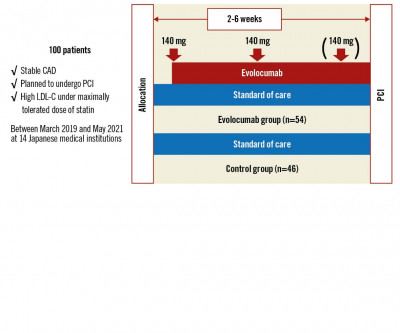
Evolocumab for prevention of microvascular dysfunction in patients undergoing percutaneous coronary intervention: the randomised, open-label EVOCATION trial
Masaharu Ishihara 1, MD, PhD; Masanori Asakura 1 , 2, MD, PhD; Kiyoshi Hibi 3, MD, PhD; Kozo Okada 3, MD, PhD; Wataru Shimizu 4, MD, PhD; Hitoshi Takano 4,...
Conclusion: In summary, empagliflozin activated Wnt/β-catenin to stimulate FUNDC1-dependent mitochondrial quality surveillance, ultimately improving mitochondrial function and cardiac performance during CRS-3. Thus, empagliflozin could be considered for the clinical management of heart function following acute kidney injury.
Conclusions:...

Adverse event profiles of PCSK9 inhibitors alirocumab and evolocumab: data mining of the FDA Adverse Event Reporting System - PubMed
Source : https://pubmed.ncbi.nlm.nih.gov/35818959/
doi: 10.1111/bcp.15460. Online ahead of print. 1 Research Division of Clinical Pharmacology, the First Affiliated Hospital of Nanjing Medical University, Nanjing, Jiangsu, China. 2 Department of Respiratory, Wuxi No.5 People's...
Conclusion: Data mining of the FAERs is useful for examining PCSK9 inhibitor-induced AEs. Herein, our findings were largely consistent with clinical experience and could help clinicians improve the safety of PCSK9 inhibitors in clinical practice.

Familial Hypercholesterolemia
Source : https://www.ncbi.nlm.nih.gov/books/NBK174884/
Familial hypercholesterolemia (FH) is characterized by significantly elevated low-density lipoprotein cholesterol (LDL-C) that leads to atherosclerotic plaque deposition in the coronary arteries and proximal aorta at an early age and...
Relevance: Familial hypercholesterolemia (FH) is characterized by significantly elevated low-density lipoprotein cholesterol (LDL-C) that leads to atherosclerotic plaque deposition in the coronary arteries and proximal aorta at an early age and increases the risk of premature cardiovascular events such as angina and myocardial infarction;...

Harmonisation of large-scale, heterogeneous individual participant adverse event data from randomised trials of statin therapy - PubMed
Source : https://pubmed.ncbi.nlm.nih.gov/35815805/
In this meta-analysis of adverse event data from the large randomised trials of statins, approaches based on common standards for data organisation and classification have provided a resource capable of...
Conclusion: In this meta-analysis of adverse event data from the large randomised trials of statins, approaches based on common standards for data organisation and classification have provided a resource capable of allowing reliable and rapid evaluation of any previously unknown benefits or hazards of statin therapy.