


Evolocumab use in Greece is associated with early and sustainable reductions in low-density cholesterol (LDL-C) and high persistence to therapy: Results from the Greek cohort analysis of the observational HEYMANS study
Source : https://www.sciencedirect.com/science/article/pii/S1109966623001537?via=ihub
All content on this site: Copyright © 2023 Elsevier B.V., its licensors, and contributors. All rights are reserved, including those for text and data mining, AI training, and similar technologies....
This study (HEYMANS) represents the largest multicountry study of PCSK9i use in routine clinical care settings to date. The data from the Greek cohort are in alignment with the full cohort HEYMANS results which demonstrated that expanded use of PCSK9is combined with LLT may increase the likelihood of attaining and maintaining LDL-C goals.
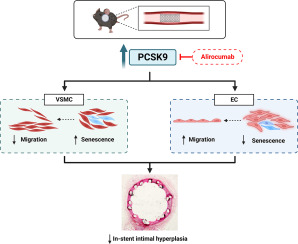
Antibody-mediated PCSK9 neutralization worsens outcome after bare-metal stent implantation in mice
Source : https://www.sciencedirect.com/science/article/abs/pii/S1537189123000307?via=ihub
Despite advances in pharmacotherapy and device innovation, in-stent restenosis (ISR) and stent thrombosis (ST) remain serious complications following ...
Conclusion: Antibody-based PCSK9 inhibition promotes in-stent intimal hyperplasia and blunts vascular healing by increasing VSMC migration, while reducing that of EC. This effect is likely mediated, at least in part, by a differential effect on VSMC and EC senescence. The herein-reported data warrant additional investigations concerning the...

Concomitant Coronary Atheroma Regression and Stabilization in Response to Lipid-Lowering Therapy
Source : https://www.sciencedirect.com/science/article/abs/pii/S0735109723064689?via=ihub
The frequency, characteristics and outcomes of patients treated with high-intensity lipid-lowering therapy and showing concomitant atheroma volume red...
Conclusions: Triple regression occurred in one third of AMI patients receiving high-intensity lipid-lowering therapy and was associated with alirocumab treatment, higher baseline lipid content and reduced cardiovascular events.
Pregnancy-related adverse events associated with statins: a real-world pharmacovigilance study of the FDA Adverse Event Reporting System (FAERS) - PubMed
Source : https://pubmed.ncbi.nlm.nih.gov/37612600/
Statins did not increase the risk of pregnancy-related AEs, including abortion, abortion spontaneous, or stillbirth/fetal death. However, we did find significant disproportionality signals for preterm birth and low birth weight...
Conclusions: Statins did not increase the risk of pregnancy-related AEs, including abortion, abortion spontaneous, or stillbirth/fetal death. However, we did find significant disproportionality signals for preterm birth and low birth weight associated with pravastatin, and lovastatin was related to a higher proportion of fetal complications....
Meaning: The observed safety, tolerability, pharmacokinetics, and exploratory pharmacodynamics of muvalaplin in healthy participants support further clinical evaluation in patients with elevated Lp(a) levels.