


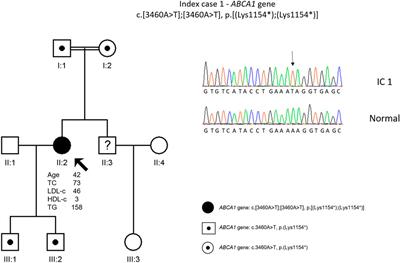
Rare primary dyslipidaemias associated with low LDL and HDL cholesterol values in Portugal
Source : https://www.frontiersin.org/articles/10.3389/fgene.2022.1088040/full
Background: Dyslipidaemia represents a group of disorders of lipid metabolism, characterized by either an increase or decrease in lipid particles, usually associated with triglycerides, LDL cholesterol (LDL-C) and/or HDL cholesterol...
Conclusion: We report here the clinical and molecular characteristics of seven patients with rare lipid disorders associated with low LDL or low HDL. Two cases presented with hypoalphalipoproteinemia, and the genetic workup allowed the diagnosis of Tangier disease in one and of Fish Eye Disease in the other. These are ultrarare disorders,...
Natural language processing to identify reasons for sex disparity in statin prescriptions
Source : https://www.sciencedirect.com/science/article/pii/S2666667723000375?via=ihub
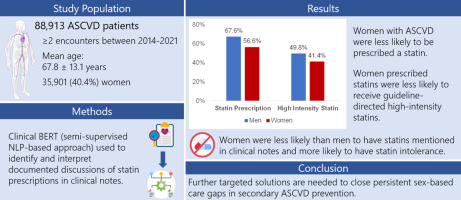
Statins are the cornerstone of treatment of patients with atherosclerotic cardiovascular disease (ASCVD). Despite this, multiple studies have shown that women with ASCVD are less likely to be prescribed statins...
Conclusions: Women with ASCVD were less likely to be prescribed guideline-directed statins compared with men. NLP identified additional sex-based statin disparities and reasons for statin non-prescription in clinical notes of patients with ASCVD.

Soluble PCSK9 Inhibition: Indications, Clinical Impact, New Molecular Insights and Practical Approach-Where Do We Stand? - PubMed
Source : https://pubmed.ncbi.nlm.nih.gov/37109259/
The .gov means it's official. Federal government websites often end in .gov or .mil. Before sharing sensitive information, make sure you're on a federal government site. The site is secure....
Conclusions/Relevance: Several clues suggest that regulation of PCSK9 represents a cornerstone of cardiovascular prevention, partly because of some pleiotropic effects attributed to these newly developed drugs. New mechanisms of PCSK9 regulation are being explored, and further efforts need to be put in place to reach patients with these new...
Bruton's Tyrosine Kinase inhibition by Acalabrutinib does not affect early or advanced atherosclerotic plaque size and morphology in Ldlr-/- mice
Source : https://www.sciencedirect.com/science/article/pii/S1537189123000320?via=ihub
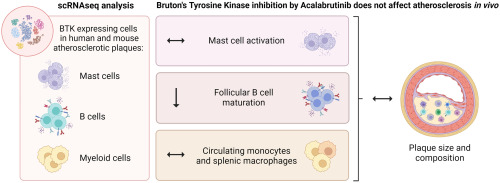
In human plaques, BTK is mainly expressed in mast cells, B cells and myeloid cells. * Acalabrutinib dose-dependently inhibits bone marrow-derived mast cell activation. * Acalabrutinib treatment does not affect...
Conclusions/Relevance: Conclusively, BTK inhibition by Acalabrutinib alone did neither affect either mast cell activation nor early- and advanced atherosclerosis, despite the effects on follicular B cell maturation.
Hypocholesterolaemic treatment in coronary unit: from statins to anti PCSK9 therapies and bempedoic acid
Source : https://academic.oup.com/eurheartjsupp/article/25/Supplement_B/B55/7135794?login=false
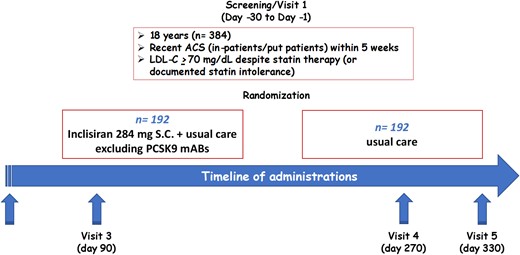
Coronary artery disease remains a major cause of death in the developed world, although many improvements in its prevention and management. Acute coronary syndrome (ACS) [which includes unstable angina, non-ST-segment-elevation...
Conclusions: The benefit of intensive LDL-C lowering to reduce cardiovascular risk is recognized in international guidelines in patients after an ACS. Indeed, ∼20% of ACS survivors experience a subsequent ischaemic cardiovascular event within 24 months and 5-year mortality ranges from 19% to 22%. The risk reduction management of patients...