


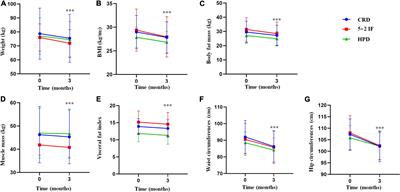
The effects of three weight management methods on body composition and serum lipids of overweight and obese people
Source : https://www.frontiersin.org/articles/10.3389/fnut.2022.1073576/full
IntroductionObesity has become a major health problem worldwide. Diet management is an important means of weight loss.
Conclusions: Our findings showed that the 5 2 IF may be more effective in reducing total weight and body fat, and HPD may be more helpful in preventing lean body mass loss during a short-term weight loss intervention.
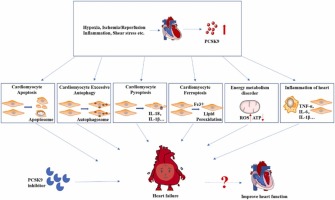
PCSK9: A emerging participant in heart failure
Source : https://www.sciencedirect.com/science/article/pii/S0753332222014950?via=ihub
HF needs new treatment strategies to ameliorate its present situation. * HF's pathogenesis involved cell death, energy metabolism, inflammation etc. * PCSK9 contributes to the pathogenesis of HF and may...
Conclusions: The purpose of this review is to summarize the potential mechanism of PCSK9’s involvement in heart failure, thereby providing a new treatment strategy for heart failure.

Genetic Spectrum of Familial Hypercholesterolaemia in the Malaysian Community: Identification of Pathogenic Gene Variants Using Targeted Next-Generation Sequencing - PubMed
Source : https://pubmed.ncbi.nlm.nih.gov/36499307/
The .gov means it's official. Federal government websites often end in .gov or .mil. Before sharing sensitive information, make sure you're on a federal government site. The site is secure....
Conclusions/Relevance: The detection rate of genetic confirmation is similar between potential and possible FH groups, suggesting a need for genetic confirmation in index cases from both groups. Clinical and genetic confirmation of FH index cases in the community may enhance the early detection of affected family members through family cascade...
-
 Dr Hamid3yrprevalence of genetically confirmed FH and the detection rate of pathogenic variants (PV) amongst clinically diagnosed patients is not well established
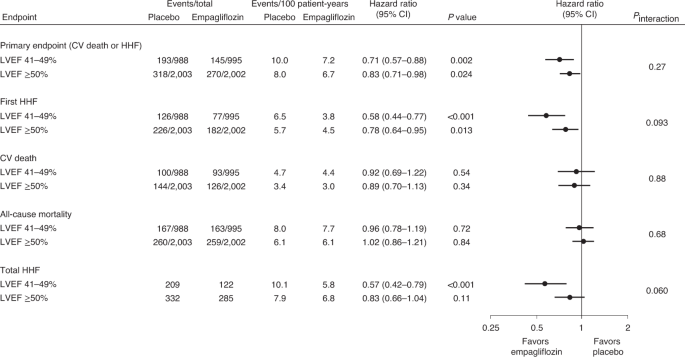
Empagliflozin benefits in patients with heart failure and preserved ejection fraction - Nature Medicine
Source : https://www.nature.com/articles/s41591-022-02050-4
Subgroup analysis of the EMPEROR-Preserved clinical trial of the glucose-lowering drug empagliflozin in chronic heart failure with left ventricular ejection fraction (LVEF) >40% found improved clinical outcomes in the cohort...
Conclusion: Subgroup analysis of the EMPEROR-Preserved clinical trial of the glucose-lowering drug empagliflozin in chronic heart failure with left ventricular ejection fraction (LVEF) >40% found improved clinical outcomes in the cohort of patients with LVEF ≥50%.
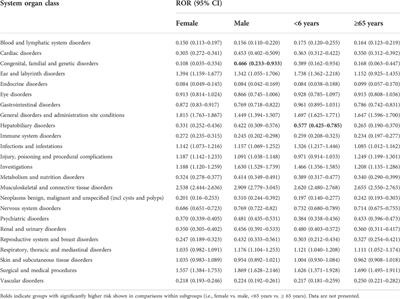
Real-world safety of PCSK9 inhibitors: A pharmacovigilance study based on spontaneous reports in FAERS
Source : https://www.frontiersin.org/articles/10.3389/fphar.2022.894685/full
Objective: We aimed to evaluate alirocumab- and evolocumab-related adverse events (AEs) in real-world compared with all other drugs, overall and by gender and age subgroups; we also aimed to compare...
Conclusion: Real-world evidence showed that PCSK9 inhibitors were associated with an increased risk of musculoskeletal and connective tissue disorders and general disorders and administration site conditions, overall and by subgroups. Muscle toxicity, injection site reactions, and influenza-like illness were significant AE signals. Compared...