


ANGPTL3 as a Drug Target in Hyperlipidemia and Atherosclerosis - Current Atherosclerosis Reports
Source : https://link.springer.com/article/10.1007/s11883-022-01071-1
Purpose of Review Elevated low-density lipoprotein cholesterol (LDL-C) and triglyceride-rich lipoproteins (TRLs) or remnants are important risk factors for the development of atherosclerotic cardiovascular disease (ASCVD). The ongoing challenge of...
Summary: ANGPTL3 is a novel target in lipoprotein metabolism, targeting not only LDL-C via an LDL-receptor (LDLR) independent mechanism but also TRLs and carries a significant promise for further ASCVD risk reduction.
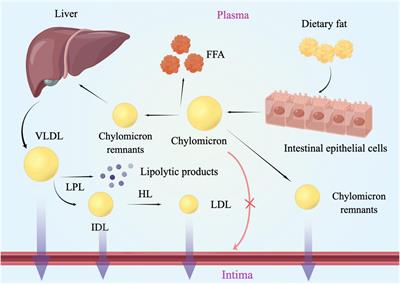
Remnant cholesterol and atherosclerotic cardiovascular disease: Metabolism, mechanism, evidence, and treatment
Source : https://www.frontiersin.org/articles/10.3389/fcvm.2022.913869/full
This review aimed to summarize the evidence of elevated remnant cholesterol and the risks of atherosclerotic cardiovascular disease (ASCVD) and to search for further guidance in clinical therapy. The lipids-lowering...
Conclusions/Relevance: The use of statins, fibrates, APOC3 inhibitors, PCSK9 inhibitors, and omega-3 fatty acids to reduce RC levels in the plasma may provide long-term benefits. However, the standardized detection of RC was still controversial, and more studies on appropriate treatments of elevated RC are urgently needed. These positive trials...
-
 Lipid Management Connect3yrKey Points • Source: Frontiers in Cardiovascular Medicine • Relevance: “The review aimed to summarize the evidence of elevated RC and the risks of ASCVD, and to search for further guidance in clinical therapy.” • Increased Show More

Weight Change and Clinical Outcomes in Heart Failure with Reduced Ejection Fraction: Insights from EMPEROR-Reduced - PubMed
Source : https://pubmed.ncbi.nlm.nih.gov/36325584/
doi: 10.1002/ejhf.2728. Online ahead of print. 1 Department of Cardiology and Berlin Institute of Health Center for Regenerative Therapies, and German Centre for Cardiovascular Research (DZHK) partner site Berlin, Charité...
Conclusion: The benefits of empagliflozin versus placebo were consistently present across all BMI categories in HFrEF patients. Weight loss was associated with higher risk of all-cause mortality, regardless of treatment group.

Considerations for Use of Pharmacodynamic Biomarkers to Support Biosimilar Development- (I) A Randomized Trial with PCSK9 Inhibitors - PubMed
Source : https://pubmed.ncbi.nlm.nih.gov/36282186/
FDA guidance outlines how biosimilars can be developed based on pharmacokinetic (PK) and pharmacodynamic (PD) similarity study data in lieu of a comparative clinical efficacy study. There is a paucity...
Relevance: In summary, this study illustrates how pilot study data can be leveraged to inform appropriate dosing and data analyses for a PK and PD similarity study.

The Level of Remnant Cholesterol and Implications for Lipid-Lowering Strategy in Hospitalized Patients with Acute Coronary Syndrome in China: Findings from the Improving Care for Cardiovascular Disease in China-Acute Coronary Syndrome Project - PubMed
Source : https://pubmed.ncbi.nlm.nih.gov/36295800/
Elevated remnant cholesterol is associated with an increased risk of atherosclerotic cardiovascular disease (ASCVD). We aimed to evaluate the concentrations and general distribution of remnant cholesterol at admission in patients...
Conclusion: One fifth of patients with ACS have elevated remnant cholesterol concentrations at admission. Elevated remnant cholesterol concentrations are present in patients with LDL-C or/and non-HDL-C concentrations within the target, which represents an unmet need to add remnant cholesterol as a target for the secondary prevention of ASCVD.