



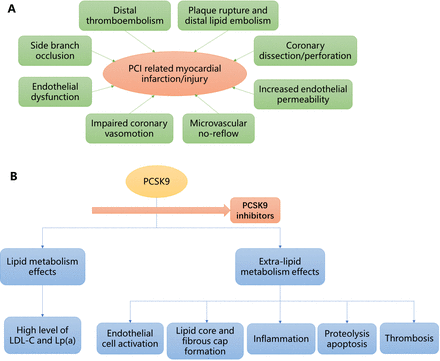
Alirocumab effect on preventing periprocedural ischaemic events in coronary heart disease patients undergoing coronary stenting (APPEASE trial): study protocol of a multicentre, open-label, randomised controlled trial
Source : https://bmjopen.bmj.com/content/13/7/e072541
Introduction Percutaneous coronary intervention (PCI)-related myocardial infarction (type 4a MI) and major periprocedural myocardial injury have been demonstrated leading to poor prognosis of patients with coronary heart disease (CHD) undergoing...
Strengths: This study will provide new evidence of the efficacy of alirocumab on preventing percutaneous coronary intervention (PCI)-related myocardial infarction or major periprocedural myocardial injury in patients with coronary heart disease undergoing elective PCI.
Inclisiran adjuvant therapy to statins for the use of hypercholesterolemia: a commentary - The Egyptian Heart Journal
Source : https://tehj.springeropen.com/articles/10.1186/s43044-023-00389-8
Background Hypercholesterolemia is a lipid disorder characterized by excessively high levels of low-density lipoproteins, which encourages fat accumulation in your arteries, hence escalating the chances of heart attack and stroke....
Conclusions: While statin treatments have been extensively researched and are strongly endorsed by randomized controlled trials and clinical guidelines, not every patient can tolerate statin therapy or attain an adequate reduction in LDL-C levels through statin treatment alone. Inclisiran provides convenience as it needs to be administered...
The German CaRe high registry for familial hypercholesterolemia - Sex differences, treatment strategies, and target value attainment
Source : https://www.sciencedirect.com/science/article/pii/S2667089523000093?via=ihub
Familial hypercholesterolemia (FH) is among the most common genetic disorders in primary care. However, only 15% or less of patients are diagnosed, an...
Conclusions: FH is under-treated in Germany compared to guideline recommendations. Male gender, genetic proof of FH, treatment by a specialist, and presence of ASCVD appear to be associated with increased treatment intensity. Achieving the LDL-C goals of the 2019 ESC/EAS dyslipidemia guidelines remains challenging if pre-treatment LDL-C is...
-
 Lipid Management Connect3yrKey Points • Source: Atherosclerosis Plus • Conclusion: “FH is under-treated in Germany compared to guideline recommendations. Male gender, genetic proof of FH, treatment by a specialist, and presence of ASCVD appear to be Show More

Impact of metformin on statin-associated myopathy risks in dyslipidemia patients - PubMed
Source : https://pubmed.ncbi.nlm.nih.gov/37417539/
A growing number of patients with metabolic disorders are receiving statin and antidiabetic therapies as comedications. A signal of increased risk of myotoxicity due to potential interactions between antidiabetics and...
Conclusions/Relevance: This study found that a comedication with metformin was associated with decreased myopathy risk in statin-treated dyslipidemia patients compared to statin-only users. Our findings suggest that metformin may provide protective effects on potential muscle toxicities induced by statin therapy.

The Inhibition of Evolocumab on Non-Infarct-Related Artery Disease in Patients with ST-Elevation Myocardial Infarction
Evolocumab + statin therapy could significantly improve physiological function of coronary arteries, downregulate re-hospitalization rate of STEMI pts with NIRA
Conclusion: Evolocumab combined with statin therapy can significantly improve the anatomical and physiological function of the coronary arteries and downregulate the re-hospitalization rate due to UA in STEMI patients with NIRA.

Graft Failure After Coronary Artery Bypass Grafting and Its Association With Patient Characteristics and Clinical Events: A Pooled Individual Patient Data Analysis of Clinical Trials With Imaging Follow-Up - PubMed
Source : https://pubmed.ncbi.nlm.nih.gov/37417248/
In contemporary practice, graft failure remains common among patients undergoing CABG and is strongly associated with adverse cardiac events.
Conclusions: In contemporary practice, graft failure remains common among patients undergoing CABG and is strongly associated with adverse cardiac events.
Both LDL and HDL particle concentrations associate positively with an increased risk of developing microvascular complications in patients with type 2 diabetes: lost protection by HDL (Zodiac-63) - Cardiovascular Diabetology
Source : https://cardiab.biomedcentral.com/articles/10.1186/s12933-023-01909-1
Background Triglyceride-rich lipoproteins (TRL) and low-density lipoproteins (LDL) are associated positively whereas high-density lipoproteins (HDL) are associated inversely with the development of new-onset type 2 diabetes (T2D). Here we studied...
Conclusions: Total lipoprotein particle concentrations of both LDL and HDL associate positively with an increased risk of developing microvascular complications in T2D. We propose that the protective role of HDL on the development of microvascular complications may be lost in established T2D.

Haematological Parameters in People with Atherosclerotic Cardiovascular Disease versus Those Who are Only at Risk for Cardiovascular Disease: A Comparative Cross-Sectional Study
Comparing the pattern of hematological parameters in people with established atherosclerotic cardiovascular disease (ASVD) versus people with ASCVD risks alone
Results: The ASCVD-risk group had significantly higher mean platelet volume (MPV), which was associated with the presence of the risk. Furthermore, hs-CRPs show a significant correlation with MPV in a correlation analysis of highly sensitive C-reactive protein (hs-CRP) with hematological parameters. Thus, using these affordable, routinely...

Disparities in PCSK9 Initiation Among US Veterans with Peripheral Arterial Disease or Cerebrovascular Disease - PubMed
Source : https://pubmed.ncbi.nlm.nih.gov/36947397/
Adjusted for LDL-C levels, PAD and CeVD patients are much less likely to receive PCSK9i therapy. Despite low co-pay, PCSK9i initiation rates among US veterans, nationwide, is low, with household...
Conclusions: Adjusted for LDL-C levels, PAD and CeVD patients are much less likely to receive PCSK9i therapy. Despite low co-pay, PCSK9i initiation rates among US veterans, nationwide, is low, with household income and community deprivation appearing to predict PCSK9i use.
Smoking and diabetes attenuate beneficial effects of PSCK9 inhibitors on arterial wall properties in patients with very high lipoprotein (a) levels
Source : https://www.sciencedirect.com/science/article/pii/S2667089522000207?via=ihub
Elevated lipoprotein (a) (Lp(a)) and low-density lipoprotein cholesterol levels (LDL-C) are significant residual risk factors for cardiovascular event...
Conclusion: These data show that for patients with CAD and high Lp(a) levels, beneficial effects of PCSK9 inhibitors on the arterial wall properties can be attenuated by specific risk factors, such as smoking and diabetes.
-
Lipid Management Connect3yrKey Points • Source: Atherosclerosis Plus • Conclusion: “These data show that for patients with CAD and high Lp(a) levels, beneficial effects of PCSK9 inhibitors on the arterial wall properties can be attenuated by Show More
Targeting PCSK9 to tackle cardiovascular disease
Source : https://www.sciencedirect.com/science/article/pii/S0163725823001444?via=ihub
Lowering blood cholesterol levels efficiently reduces the risk of developing atherosclerotic cardiovascular disease (ASCVD), including coronary artery...
Conclusion: The discovery of the PCSK9 gene and associated GOF/LOF mutations provided the foundation for a new treatment strategy targeting PCSK9 to tackle ASCVD. PCSK9 inhibitors have been developed in record time, and FDA-approved antibodies targeting PCSK9 have already shown clinically efficient LDL-C lowering and ASCVD risk reduction...
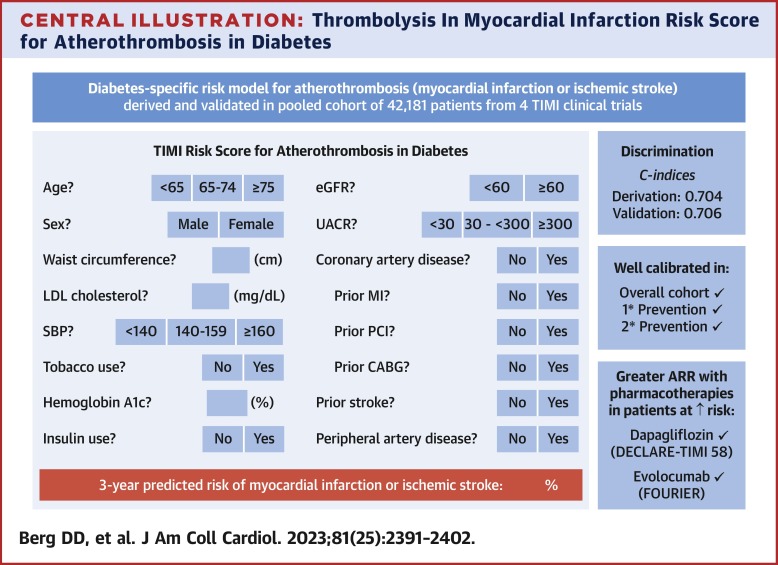
Assessment of Atherothrombotic Risk in Patients With Type 2 Diabetes Mellitus
Source : https://www.sciencedirect.com/science/article/pii/S0735109723055006?via=ihub
Risk of atherothrombotic events is not uniform in patients with type 2 diabetes mellitus (T2DM). Tailored risk assessment may help guide selection of ...
Conclusions: We developed and validated a risk score for atherothrombotic events, leveraging 16 routinely assessed clinical variables in patients with T2DM. The score has the potential to improve risk assessment and inform clinical decision-making.

Sex-Specific Impact of Body Weight on Atherosclerotic Cardiovascular Disease Incidence in Individuals With and Without Ideal Cardiovascular Health - PubMed
Source : https://pubmed.ncbi.nlm.nih.gov/37345817/
Background The impact of an elevated body mass index (BMI) on atherosclerotic cardiovascular disease (ASCVD) risk in individuals who are metabolically healthy is debated. We investigated the respective contributions of...
Conclusions: In women and men in the UK Biobank, the relationship between the BMI and ASCVD incidence in healthy individuals was inconsistent, whereas cardiovascular risk factors strongly predicted ASCVD incidence in all BMI categories. Assessing lifestyle and cardiometabolic risk factors as well as body fat distribution indices may help...

Is there benefit to adding ezetimibe to a statin for the secondary prevention of CVD? - PubMed
Source : https://pubmed.ncbi.nlm.nih.gov/37339492/
YES. In patients with known cardiovascular disease (CVD), ezetimibe with a statin decreases major adverse cardiovascular events (MACE) but has no effect on all-cause and cardiovascular mortality, compared to a...
Conclusions/Relevance: In patients with known cardiovascular disease (CVD), ezetimibe with a statin decreases major adverse cardiovascular events (MACE) but has no effect on all-cause and cardiovascular mortality, compared to a statin alone (strength of recommendation [SOR], A; meta-analysis of randomized controlled trials [RCTs] including 1...

Impact of alirocumab/evolocumab on lipoprotein (a) concentrations in patients with familial hypercholesterolaemia: a systematic review and meta-analysis of randomized controlled trials - PubMed
Source : https://pubmed.ncbi.nlm.nih.gov/37335067/
Anti-PCSK9 drugs (alirocumab and evolocumab) may be effective as therapy for reducing serum Lp(a) levels in FH, and no differences were observed in treatment durations, participant characteristics, and other aspects...
Conclusions: Anti-PCSK9 drugs (alirocumab and evolocumab) may be effective as therapy for reducing serum Lp(a) levels in FH, and no differences were observed in treatment durations, participant characteristics, and other aspects of the 2 types of PCSk9 inhibitors. However, further experimental studies and RCTs are warranted to clarify the...

Subclinical coronary atherosclerosis, detected by computer tomography with coronary calcium score, and the occurrence of major cardiovascular events at 5 years of follow-up in a cohort of patients with systemic sclerosis - PubMed
Source : https://pubmed.ncbi.nlm.nih.gov/37316356/
The prevalence of SCA was 42% (Agatston scores of 266.04 ± 455.9 units) in our group of SSc patients. Patients with SCA were principally older (p = 0.0001) and had...
Conclusion: This study evidenced the high presence of the new “not pure” pattern of PAH, which could worsen the outcome in SSc in a medium-term (5 years) observation period. Furthermore, our data confirmed a higher cardiovascular impairment in SSc due to the presence of both SCA, mainly associated with typical cardiovascular risk factors,...

Effects of early PCSK9 inhibitor application on inflammation levels and microcirculatory function after PCI in patients with NSTE-ACS
Source : https://www.ncbi.nlm.nih.gov/pmc/articles/PMC10251011/
Objective: To investigate inflammation levels and microcirculatory function following the early application of proprotein convertase subtilisin/kexin 9 (PCSK9) inhibitor after percutaneous coronary intervention (PCI) in patients with non-ST segment elevation...
Conclusions: Compared with statins alone, a PCSK9 inhibitor combined with statins improves inflammation levels and microcirculatory function after PCI in patients with NSTE-ACS, and this strategy deserves clinical attention.

Prevalence of familial hypercholesterolemia and its association with coronary artery disease: A Chinese cohort study - PubMed
Source : https://pubmed.ncbi.nlm.nih.gov/37305106/
The prevalence of FH was estimated to be 0.19% in the participants, and it was associated with an elevated risk of incident CAD. Our study suggests that early screening of...
Conclusions: The prevalence of FH was estimated to be 0.19% in the participants, and it was associated with an elevated risk of incident CAD. Our study suggests that early screening of FH has certain public health significance for the prevention of CAD.
SARS-CoV-2 reinfection: Adding insult to dysfunctional endothelium in patients with atherosclerotic cardiovascular disease
Source : https://www.sciencedirect.com/science/article/pii/S266708952300010X?via=ihub
In this short narrative review, we aim at defining the pathophysiological role endothelial dysfunction in the observed COVID-19-associated rise in ris...
Conclusion: Considering weakened protection against the cardiovascular risk-enhancing reinfections with emerging new subvariants of SARS-CoV-2, treatment of COVID-19 patients with statins during the illness and thereafter is recommended, partly because the statins tend to reduce endothelial dysfunction.

Lipoprotein Particle Profiles Associated with Telomere Length and Telomerase Complex Components - PubMed
Source : https://pubmed.ncbi.nlm.nih.gov/37299586/
The .gov means it's official. Federal government websites often end in .gov or .mil. Before sharing sensitive information, make sure you're on a federal government site. The site is secure....
Conclusions/Relevance: Our results suggest that the lipoprotein profiles are associated with telomere length, TERT, and WRAP53 expression and should be considered when assessing the risk of chronic diseases.