


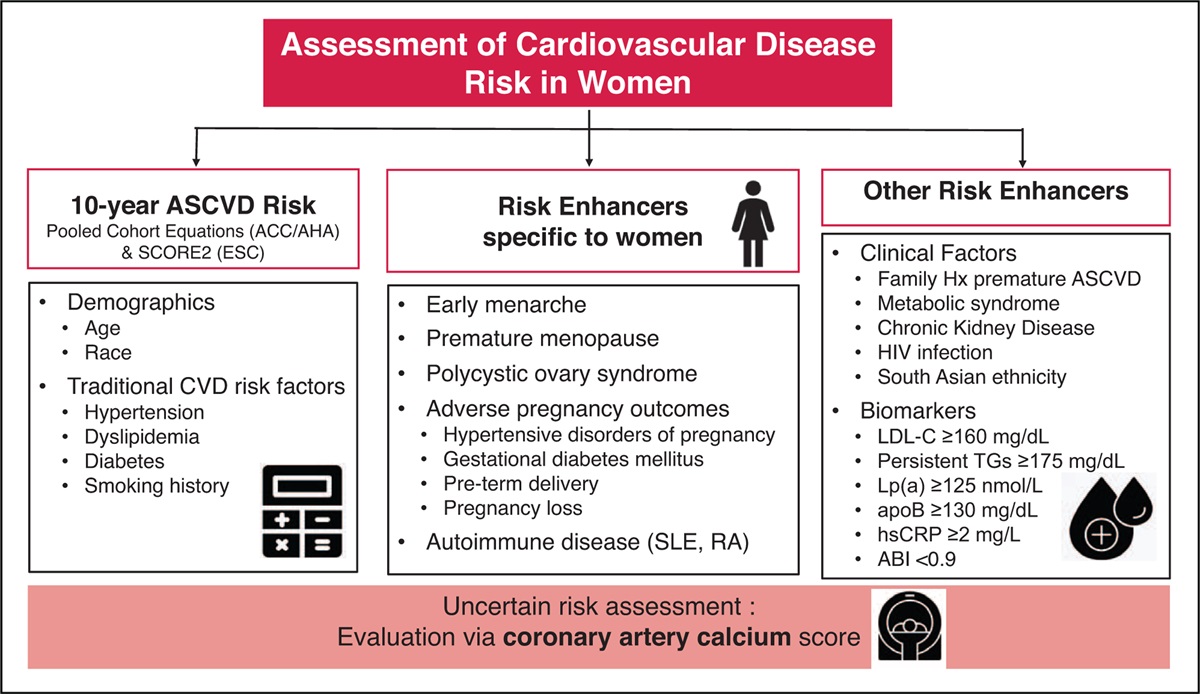
Cardiovascular Disease Prevention in Women – the Current State in 2023
Recent studies have demonstrated the need to account for risk factors specific to women in current risk assessment models for CVD, including early menarche, polycystic ovary syndrome, adverse pregnancy outcomes,...
At-risk women benefit similarly to lipid-lowering and other preventive therapies as men but are less likely to be treated.

Site-Specific Genome Editing in Treatment of Inherited Diseases: Possibility, Progress, and Perspectives
Source : https://www.ncbi.nlm.nih.gov/pmc/articles/PMC10388762/
Advancements in genome editing enable permanent changes of DNA sequences in a site-specific manner, providing promising approaches for treating human genetic disorders caused by gene mutations.
Site-specific genome editing systems are exciting, inspiring, and promising. With continuous improvement of delivery vehicles, enzymes, and repair pathways in their accuracy, specificity, and efficiency, the scope of their applications in inherited diseases such as heterozygous familial hypercholesterolemia will expand.

Low-Density Lipoprotein Cholesterol Reduction Therapies for Secondary Prevention in Patients With Stroke: a Network Meta-Analysis
Source : https://www.eurekaselect.com/article/135397
Patients with previous strokes are at a higher risk of stroke recurrence. Current guidelines recommend a range of low-density lipoprotein cholesterol (LDL-C)-lowering treatments to reduce the risk of recurrent stroke....
Overall, 9 trials comprising 17,226 patients were included. Treatment with statins was related to an increased risk of hemorrhagic stroke versus placebo (RR: 1.57, 95% CrI: 1.13-2.21).

Real‐World Effectiveness of PCSK9 Inhibitors in Reducing LDL‐C in Patients With Familial Hypercholesterolemia in Italy: a Retrospective Cohort Study Based on the AIFA Monitoring Registries
Source : https://pubmed.ncbi.nlm.nih.gov/37850449/
Background Information on the real-world use of proprotein convertase subtilisin kexin 9 inhibitors (PCKS9is) in familial hypercholesterolemia are limited.
A group of international researchers showed that the full achievement of European Atherosclerosis Society/European Society of Cardiology LDL‐C goals should require a lower threshold for PCSK9 inhibitor initiation and eventually combination of multiple lipid‐lowering therapies.

Aggressive LDL-C Lowering and the Brain: Impact on Risk for Dementia and Hemorrhagic Stroke: a Scientific Statement From the American Heart Association
Source : https://pubmed.ncbi.nlm.nih.gov/37706297/
The objective of this scientific statement is to evaluate contemporary evidence that either supports or refutes the conclusion that aggressive low-density lipoprotein cholesterol lowering or lipid lowering exerts toxic effects...
The risk of a hemorrhagic stroke associated with statin therapy in patients without a history of cerebrovascular disease is nonsignificant, and achieving very low levels of low-density lipoprotein cholesterol does not increase that risk.