
Antithrombotic therapy and bleeding risk in the era of aggressive lipid-lowering: current evidence, clinical implications, and future perspectives
Source : https://journals.lww.com/cmj/Fulltext/9900/Antithrombotic_therapy_and_bleeding_risk_in_the.367.aspx
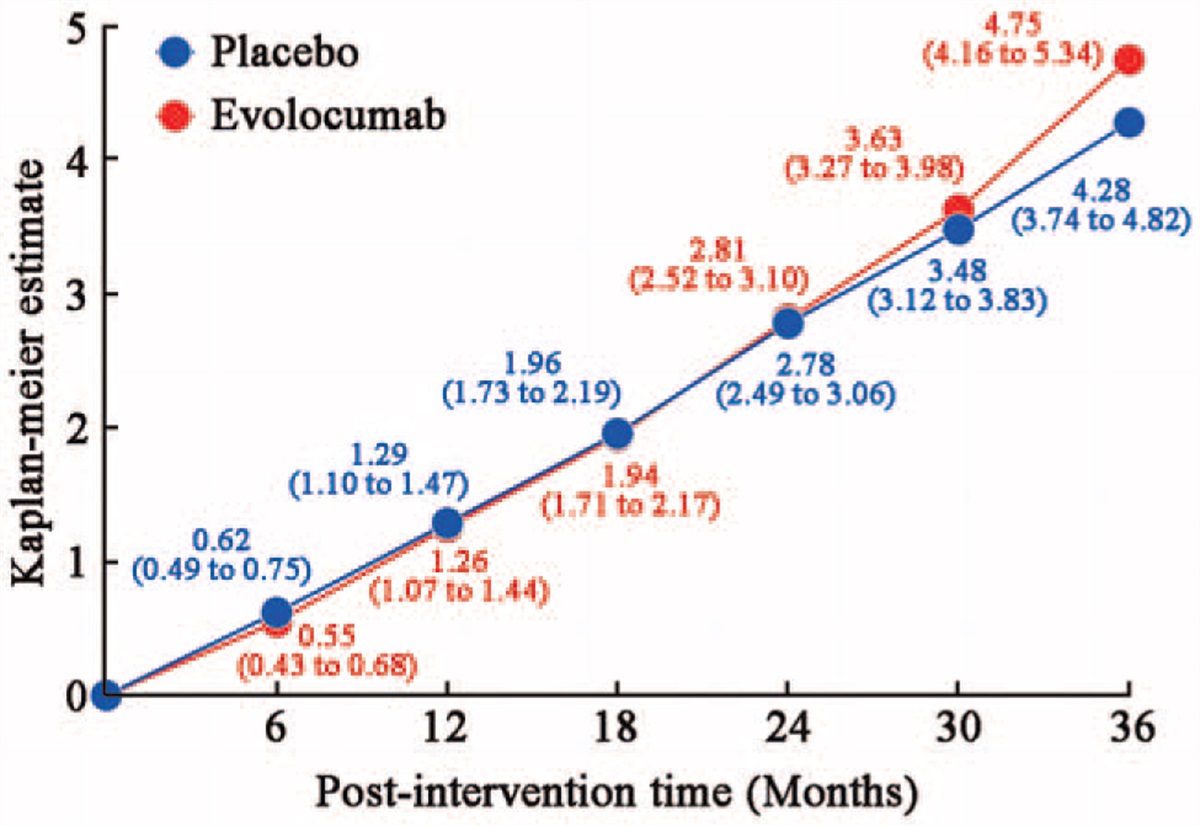
all-cause mortality benefit of PCSK9i remains inconclusive, current cholesterol management guidelines have been modified toward more aggressive goals for lowering low-density lipoprotein cholesterol (LDL-C). Consequently, the emerging concept of "the...
Conclusions/Relevance: This review summarizes recent evidence of low-LDL-C-related bleeding risk in patients on antithrombotic therapy and discusses potential measures for reducing this risk, underscoring the importance of carefully weighing the pros and cons of aggressive LDL-C lowering in patients on antithrombotic therapy.
Share




Efficacy and Safety of Evolocumab in Chinese Patients with Primary Hypercholesterolemia and Mixed Dyslipidemia: 12-Week Primary Results of the HUA TUO 华佗 Randomized Clinical Trial - Cardiology and Therapy
Source : https://link.springer.com/article/10.1007/s40119-023-00304-x
Introduction Evolocumab, a fully human proprotein convertase/subtilisin kexin type 9 inhibitor antibody, significantly lowers low-density lipoprotein cholesterol (LDL-C) in patients with type 2 diabetes mellitus and hyperlipidemia and mixed dyslipidemia....
Conclusion: In Chinese patients with primary hypercholesterolemia and mixed dyslipidemia, 12-week treatment with evolocumab significantly lowered LDL-C and other lipids, and was safe and well tolerated.
Share
A practical statin recommendation system based on real-world data to improve LDL-C management in secondary prevention
k of cardiovascular events. Owing to individual differences in statin therapy, it is possible first to consider changing the type of statin before adding non-statin medications in certain patients to...
Conclusions/Relevance: The present study demonstrated that the statin recommendation system could significantly improve the achievement of LDL-C goals in ASCVD patients, providing a new approach to improve LDL-C management.
Share
Lipoprotein(a) is linked to atherothrombosis and aortic valve stenosis independent of C-reactive protein - PubMed
Source : https://pubmed.ncbi.nlm.nih.gov/36805188/
The .gov means it's official. Federal government websites often end in .gov or .mil. Before sharing sensitive information, make sure you're on a federal government site. The site is secure....
Conclusion: High lipoprotein(a) was a main driver for the risk of ASCVD, myocardial infarction, and aortic valve stenosis independent of C-reactive protein levels.
Share
Benefit of Combination Ezetimibe/Simvastatin Among High-Risk Populations: Lessons from the IMPROVE-IT Trial - Current Atherosclerosis Reports
Source : https://link.springer.com/article/10.1007/s11883-023-01084-4
Purpose of Review The Improved Reduction of Outcomes: Vytorin Efficacy International Trial (IMPROVE-IT) demonstrated the clinical benefit of the combination of ezetimibe-simvastatin compared to placebo-simvastatin following acute coronary syndrome (ACS)....
Summary: Ezetimibe reduced the LDL-C by 16.7 mg/dL compared to placebo at 1 year, resulting in a significant reduction in the primary composite endpoint (absolute risk difference 2.0%; relative risk difference 6.4%, hazard ratio, 0.936; 95% confidence interval, 0.89 to 0.99; P = 0.016). The benefits achieved with ezetimibe in both LDL-C...
Share