

Time-averaged low-density lipoprotein cholesterol lowering with evolocumab: Pooled analysis of phase 2 trials - PubMed
Source : https://pubmed.ncbi.nlm.nih.gov/35760720/
LDL-C is the pivotal risk factor for atherosclerotic cardiovascular disease, and the benefit from LDL-C lowering is proportional to the magnitude of reduction. Clinical trials demonstrate that evolocumab reduces LDL-C...
Conclusion: The time-averaged measure yielded LDL-C reductions for evolocumab that exceeded measurements at the end of dosing intervals and may provide a better estimate of cardiovascular benefit during long-term therapy.
Share




Targeting PCSK9 Ameliorates Graft Vascular Disease in Mice by Inhibiting NLRP3 Inflammasome Activation in Vascular Smooth Muscle Cells
Source : https://www.frontiersin.org/articles/10.3389/fimmu.2022.894789/full
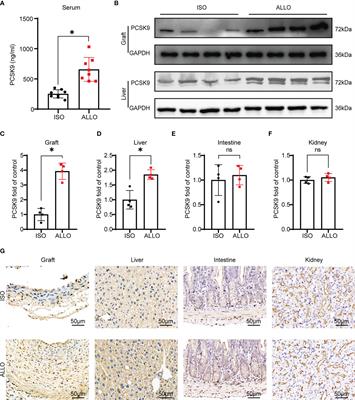
BackgroundGraft vascular disease (GVD), which limits the long-term survival of patients after solid-organ transplantation, is associated with both immune responses and nonimmune factors, including dyslipidemia. Recent studies have shown that...
Conclusion: PCSK9 is upregulated in a mouse model of GVD, and Pcsk9 knockout reduces vascular occlusion, suggesting that PCSK9 may be a promising target for the treatment of GVD.
Share
-
 Dr Hamid3yrPCSK9 plays an important role in atherosclerotic plaque development through a cholesterol-independent mechanism

Molecular and cellular biology of PCSK9: impact on glucose homeostasis - PubMed
Source : https://pubmed.ncbi.nlm.nih.gov/35723066/
Proprotein convertase substilisin/kexin 9 (PCSK9) inhibitors (PCSK9i) revolutionised the lipid-lowering therapy. However, a risk of type 2 diabetes mellitus (T2DM) is evoked under PCSK9i therapy. In this review, we summarise...
Conclusion/Relevance: Convertase substilisin/kexin 9 (PCSK9) inhibitors (PCSK9i) revolutionised the lipid- Proprotein lowering therapy. However, a risk of type 2 diabetes mellitus (T2DM) is evoked under PCSK9i therapy. In this review, we summarise the current knowledge on the link of PCSK9 with T2DM. A significant correlation was found between...
Share
-
Dr Hamid3yrProprotein convertase substilisin/kexin 9 (PCSK9) inhibitors (PCSK9i) revolutionised the lipid-lowering therapy
PCSK9 inhibitors for secondary prevention in patients with cardiovascular diseases: a bayesian network meta-analysis - Cardiovascular Diabetology
Source : https://cardiab.biomedcentral.com/articles/10.1186/s12933-022-01542-4
Background The Food and Drug Administration has approved Proprotein Convertase Subtilisin/Kexin Type 9 (PCSK9) inhibitors for the treatment of dyslipidemia. However, evidence of the optimal PCSK9 agents targeting PCSK9 for...
Conclusions: In consideration of the fact that both PCSK9 monoclonal antibody and inclisiran enable patients to achieve recommended LDL-C target, the findings in this meta-analysis suggest that alirocumab might provide the optimal benefits regarding all-cause mortality with relatively lower SAE risks, and evolocumab might provide the optimal...
Share
Real-World Insights Into Evolocumab Use in Patients With Hyperlipidemia: Canadian Analysis From the ZERBINI Study
Source : https://www.cjcopen.ca/article/S2589-790X(22)00051-8/fulltext
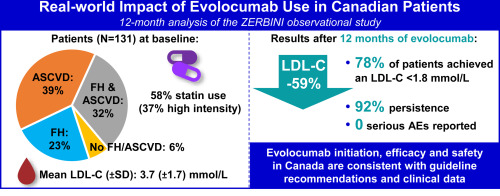
The 2021 Canadian Cardiovascular Society guidelines recommend proprotein convertase subtilisin-kexin type 9 (PCSK9) inhibitor therapy in patients with atherosclerotic cardiovascular disease whose low-density lipoprotein cholesterol (LDL-C) concentration remains ≥ 1.8...
Conclusions: These findings provide real-world evidence of guideline-recommended initiation of evolocumab therapy, as well as confirmation of its effectiveness and safety in a Canadian population. Evolocumab therapy can address a healthcare gap in the management of dyslipidemia, by increasing the proportion of patients achieving LDL-C goals...
Share