


Synergistic Effects of Inflammation and Atherogenic Dyslipidemia on Subclinical Carotid Atherosclerosis Assessed by Ultrasound in Patients with Familial Hypercholesterolemia and Their Family Members - PubMed
Source : https://pubmed.ncbi.nlm.nih.gov/35203576/
doi: 10.3390/biomedicines10020367. 1 Division of Cardiology, Department of Internal Medicine, National Taiwan University Hospital, Taipei 100225, Taiwan. 2 Department of Environmental and Occupational Medicine, National Taiwan University Hospital, Taipei 100225,...
Conclusion: Our results demonstrated that systemic inflammation, in terms of higher hsCRP levels ≥ 2 mg/L, synergistically contributed to atherogenic dyslipidemia of higher LDL-C or a higher TC/HDL-C ratio on subclinical atherosclerosis.
Share





Approaches to Visualising Endocytosis of LDL-Related Lipoproteins - PubMed
Source : https://pubmed.ncbi.nlm.nih.gov/35204658/
Endocytosis is the process by which molecules are actively transported into cells. It can take on a variety of forms depending on the cellular machinery involved ranging from specific receptor-mediated...
Conclusion/Relevance: The aim of this review is to outline the many endocytic pathways utilised for lipoprotein uptake. It explores the various experimental approaches that have been applied to visualise lipoprotein endocytosis with an emphasis on LDL and its more complex counterpart, lipoprotein(a) [Lp(a)]. Finally, we look at new...
Share
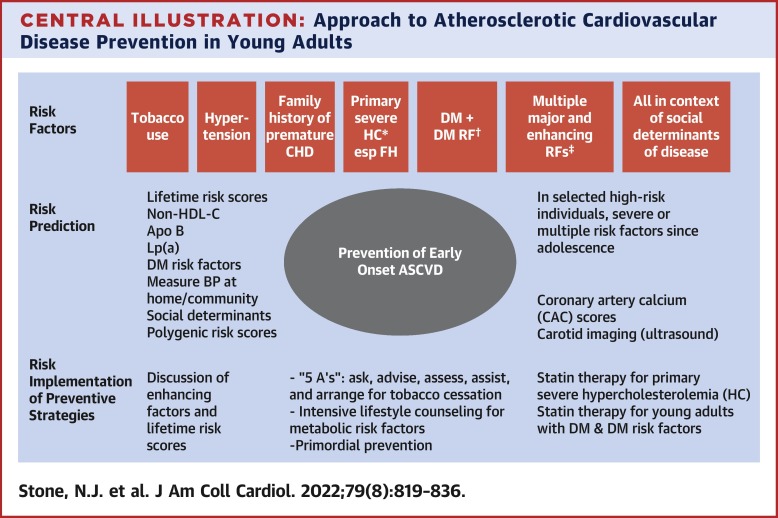
Managing Atherosclerotic Cardiovascular Risk in Young Adults: JACC State-of-the-Art Review
Source : https://www.sciencedirect.com/science/article/abs/pii/S0735109721084448?via=ihub
Addressing risk factors in individuals aged 20-39 years can reduce premature atherosclerotic cardiovascular disease. * Tobacco cessation and managing hypertension, hypercholesterolemia, diabetes, sex-specific risk factors, and metabolic syndrome are essential....
Relevance: The authors update current thinking on lipid risk factors such as triglycerides, non–high-density lipoprotein cholesterol, apolipoprotein B, or lipoprotein (a) that are useful in understanding an individual’s long-term ASCVD risk. The authors review emerging strategies, such as coronary artery calcium and polygenic risk scores...
Share

Pharmacological treatment with lipid-lowering agents after molecular identification of familial hypercholesterolemia: results from the Hipercol Brasil cohort - PubMed
Source : https://pubmed.ncbi.nlm.nih.gov/35181259/
Index cases with a positive genetic result increase their prevalence of lipid-lowering medication use. Positive relatives did not have the expected adherence; we could notice a significant increase in the...
Conclusion: Index cases with a positive genetic result increase their prevalence of lipid-lowering medication use. Positive relatives did not have the expected adherence; we could notice a significant increase in the prevalence of treatment starting after a positive genetic test. The independent predictors for lipid-lowering treatment were...
Share

Clinical decision support for familial hypercholesterolemia (CDS-FH): Rationale and design of a cluster randomized trial in primary care
Source : https://www.sciencedirect.com/science/article/pii/S000287032200031X?via=ihub
Familial hypercholesterolemia (FH) is an underdiagnosed and undertreated genetic disorder with high risk of premature atherosclerotic cardiovascular disease and death. Clinical decision support (CDS) systems have the potential to aid...
Conclusion: Despite increasing awareness of FH, the condition remains underdiagnosed and undertreated. The present study will investigate whether a CDS can increase the number of patients being diagnosed with FH.
Share