



Considerations for Use of Pharmacodynamic Biomarkers to Support Biosimilar Development- (I) A Randomized Trial with PCSK9 Inhibitors - PubMed
Source : https://pubmed.ncbi.nlm.nih.gov/36282186/
FDA guidance outlines how biosimilars can be developed based on pharmacokinetic (PK) and pharmacodynamic (PD) similarity study data in lieu of a comparative clinical efficacy study. There is a paucity...
Relevance: In summary, this study illustrates how pilot study data can be leveraged to inform appropriate dosing and data analyses for a PK and PD similarity study.

The Level of Remnant Cholesterol and Implications for Lipid-Lowering Strategy in Hospitalized Patients with Acute Coronary Syndrome in China: Findings from the Improving Care for Cardiovascular Disease in China-Acute Coronary Syndrome Project - PubMed
Source : https://pubmed.ncbi.nlm.nih.gov/36295800/
Elevated remnant cholesterol is associated with an increased risk of atherosclerotic cardiovascular disease (ASCVD). We aimed to evaluate the concentrations and general distribution of remnant cholesterol at admission in patients...
Conclusion: One fifth of patients with ACS have elevated remnant cholesterol concentrations at admission. Elevated remnant cholesterol concentrations are present in patients with LDL-C or/and non-HDL-C concentrations within the target, which represents an unmet need to add remnant cholesterol as a target for the secondary prevention of ASCVD.

New algorithms for treating homozygous familial... : Current Opinion in Lipidology
ng, but a combination of multiple lipid-lowering therapies (LLT) is key. Patients with (near) absence of LDL receptor expression are most severely affected and frequently require regular lipoprotein apheresis on...
Summary: Hypercholesterolemia is notoriously difficult to control in most patients with HoFH, but multi-LLT, including newer drugs, allows reduction of LDL-C to levels unimaginable until a few years ago. Cost and availability of these new therapies are important future challenges to be addressed.

/>
Relevance: Non–LDLR-dependent therapies approved for lowering LDL cholesterol in patients with HoFH include lomitapide, a microsomal transferase protein inhibitor; evolocumab, an angiopoietin like 3 protein inhibitor; and LDL apheresis. Lomitapide can effectuate dose-dependent LDL cholesterol lowering. In an open-label, single-arm study of...
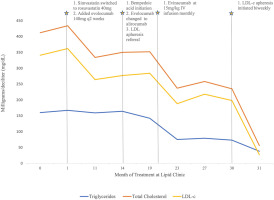
Implementation of Novel Lipid Therapies in a Refractory Heterozygous Familial Hypercholesterolemia Patient With Atherosclerotic Disease
Source : https://www.sciencedirect.com/science/article/pii/S2666084922005198?via=ihub
Compound heterozygous familial hypercholesterolemia patients are phenotypically similar to homozygous familial hypercholesterolemia patients, present with significant elevations of low-density lipoprotein cholesterol, and are at risk of cardiovascular disease. Although new...
Conclusions/Relevance: Compound heterozygous familial hypercholesterolemia patients are phenotypically similar to homozygous familial hypercholesterolemia patients, present with significant elevations of low-density lipoprotein cholesterol, and are at risk of cardiovascular disease. Although new treatment options are emerging, the stepwise...