


Effects of SGLT2 inhibitors on cardiac structure and function - PubMed
Source : https://pubmed.ncbi.nlm.nih.gov/35711023/
SGLT2 inhibitors reduce cardiovascular death or hospitalization for heart failure, regardless of the presence or absence of diabetes in patients at high cardiovascular risk and in those with heart failure...
Conclusion/Relevance: SGLT2 inhibitors reduce cardiovascular death or hospitalization for heart failure, regardless of the presence or absence of diabetes in patients at high cardiovascular risk and in those with heart failure and reduced ejection fraction (HFrEF).
Share




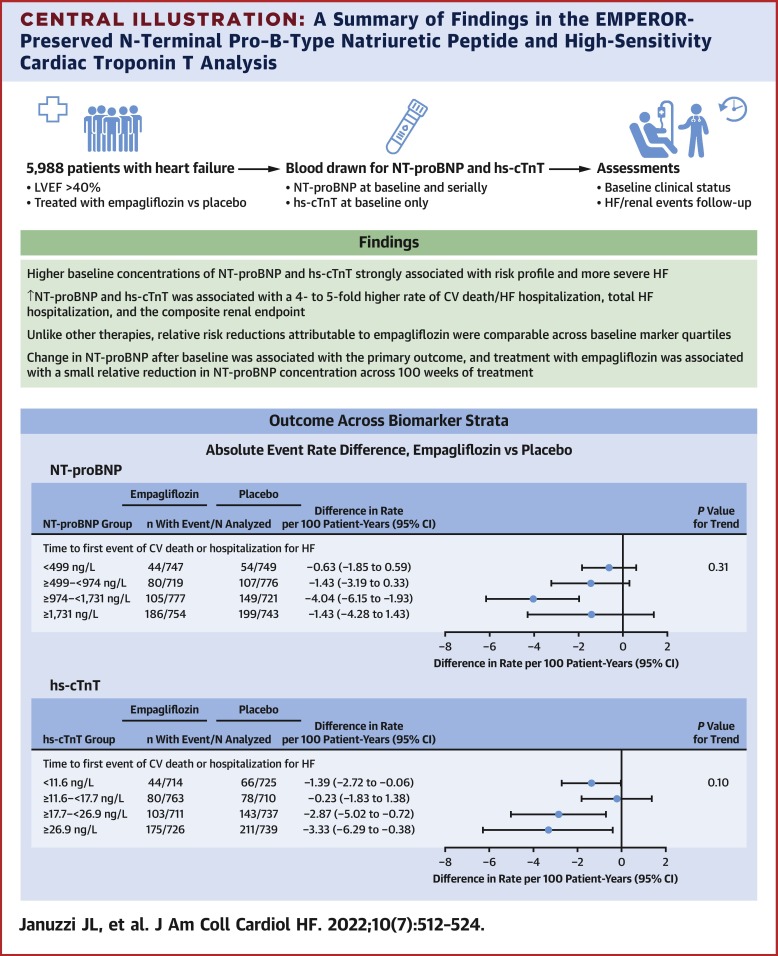
Prognostic Implications of N-terminal Pro-B Type Natriuretic Peptide and High-Sensitivity Cardiac Troponin T in EMPEROR-Preserved
Source : https://www.sciencedirect.com/science/article/pii/S221317792200302X?via=ihub
N-terminal pro-B type natriuretic peptide (NT-proBNP) and high-sensitivity cardiac troponin T (hs-cTnT) are associated with disease severity and outcomes among patients with heart failure with preserved ejection fraction (HFpEF). We...
Conclusions: The benefit of empagliflozin on cardiac outcomes and decline of eGFR is preserved across the wide range of baseline NT-proBNP and hs-cTnT evaluated. Empagliflozin modestly reduces NT-proBNP in HFpEF.
Share
Comorbidities in heart failure with preserved ejection fraction - Herz
Source : https://link.springer.com/article/10.1007/s00059-022-05123-9
Chronic heart failure is one of the most common causes of hospitalization and death in industrialized countries. Demographic changes with an aging population are expected to further increase the prevalence...
Conclusion/Relevance: Except for comorbidity-specific guidelines, no HFpEF-specific treatment of comorbidities can be recommended at this time. Optimized care is becoming increasingly relevant to reducing hospitalizations through a seamless inpatient and outpatient care structure. Current treatment is focused on symptom relief and management of...
Share

Cardiopulmonary exercise responses in patients with non-ischemic heart failure and a mildly reduced ejection fraction
Source : https://www.futuremedicine.com/doi/10.2217/fca-2021-0135
Background: The cardiopulmonary response to exercise in patients with heart failure exhibiting a mildly reduced ejection fraction (41%≤EF≤49%) remains unclear. Materials & methods: A total of 193 consecutive patients with...
Conclusion: Measurements of grip strength and blood pressure during exercise are useful predictors of prognoses in patients with non-ischemic and mildly reduced EF.
Share

Exercise Training in Heart failure with Preserved and Reduced Ejection Fraction: A Systematic Review and Meta-Analysis - PubMed
Source : https://pubmed.ncbi.nlm.nih.gov/35674912/
ET significantly improves exercise capacity and quality of life in both HFpEF and HFrEF patients. In HFpEF patients, ET significantly improved an important index of diastolic function, with significant improvements...
Conclusions: The benefit of empagliflozin on cardiac outcomes and decline of eGFR is preserved across the wide range of baseline NT-proBNP and hs-cTnT evaluated. Empagliflozin modestly reduces NT-proBNP in HFpEF.
Share