




Cardiovascular benefits of empagliflozin are associated with gut microbiota and plasma metabolites in type 2 diabetes - PubMed
Source : https://pubmed.ncbi.nlm.nih.gov/35397165/
doi: 10.1210/clinem/dgac210. Online ahead of print. 1 Department of Endocrinology, Henan Provincial Key Medicine Laboratory of Intestinal Microecology and Diabetes, Henan Provincial People's Hospital, People's Hospital of Zhengzhou University, Zhengzhou,...
Conclusions: Empagliflozin may be a superior initial therapy for patients with T2DM at risk of CVDs; its cardiovascular benefits may be associated with shifts in gut microbiota and plasma metabolites.

SGLT2 Inhibitors in Type 2 Diabetes Mellitus and Heart Failure-A Concise Review - PubMed
Source : https://pubmed.ncbi.nlm.nih.gov/35329796/
The incidence of both diabetes mellitus type 2 and heart failure is rapidly growing, and the diseases often coexist. Sodium-glucose co-transporter 2 inhibitors (SGLT2i) are a new antidiabetic drug class...
Conclusions: The expected paradigm shift in treatment strategies was reflected in the most recent 2021 guidelines published by the European Society of Cardiology, recommending dapagliflozin and empagliflozin as first-line treatment for heart failure patients with reduced ejection fraction. Moreover, the recent results of the EMPEROR-Preserved...

Regulation of SARS CoV-2 host factors in the kidney and heart in rats with 5/6 nephrectomy-effects of salt, ARB, DPP4 inhibitor and SGLT2 blocker - BMC Nephrology
Source : https://bmcnephrol.biomedcentral.com/articles/10.1186/s12882-022-02747-1
Background Host factors such as angiotensin-converting enzyme 2 (ACE2) and the transmembrane protease, serine-subtype-2 (TMPRSS2) are important factors for SARS-CoV-2 infection. Clinical and pre-clinical studies demonstrated that RAAS-blocking agents can...
Conclusions: Our study indicated that there is no upregulation regarding host factors potentially promoting SARS-CoV-2 virus entry into host cells when the SGLT2-blocker empagliflozin, telmisartan and the DPP4-inhibitor blocker linagliptin are used. The results obtained in a preclinical, experimental non-diabetic kidney failure model need...
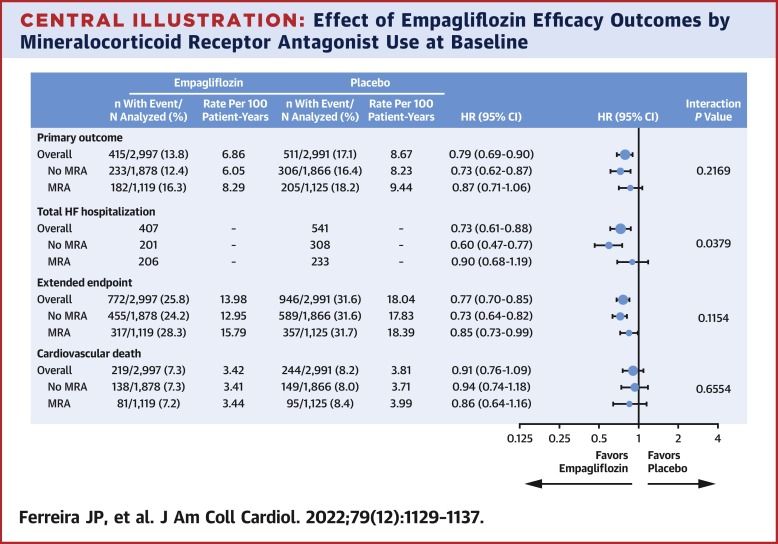
Mineralocorticoid Receptor Antagonists and Empagliflozin in Patients With Heart Failure and Preserved Ejection Fraction
Source : https://www.sciencedirect.com/science/article/pii/S0735109722002492?via=ihub
Mineralocorticoid receptor antagonists (MRAs) may be beneficial in reducing heart failure (HF) hospitalizations in patients with HF with preserved ejection fraction. The effect of sodium-glucose cotransporter 2 inhibitors in patients...
Conclusions: The benefit of empagliflozin to reduce the primary outcome was not significantly different between MRA nonusers and MRA users. The effect of empagliflozin to reduce first and recurrent HF hospitalizations was more pronounced in MRA nonusers. Empagliflozin reduced hyperkalemia, with no significant treatment-by-MRA subgroup...

Empagliflozin in patients with type 2 diabetes mellitus and chronic obstructive pulmonary disease - PubMed
Source : https://pubmed.ncbi.nlm.nih.gov/35314257/
In patients with T2DM and CVD, COPD increased the risk of mortality and cardiorenal outcomes, including HF. Empagliflozin consistently reduced these outcomes versus placebo regardless of COPD, suggesting that empagliflozin's...
Conclusions: In patients with T2DM and CVD, COPD increased the risk of mortality and cardiorenal outcomes, including HF. Empagliflozin consistently reduced these outcomes versus placebo regardless of COPD, suggesting that empagliflozin's benefits in patients with T2DM and CVD are not mitigated by the presence of COPD.

Mineralocorticoid Receptor Antagonists and Empagliflozin in Patients With Heart Failure and Preserved Ejection Fraction - PubMed
Source : https://pubmed.ncbi.nlm.nih.gov/35331406/
The benefit of empagliflozin to reduce the primary outcome was not significantly different between MRA nonusers and MRA users. The effect of empagliflozin to reduce first and recurrent HF hospitalizations...
Conclusions: The benefit of empagliflozin to reduce the primary outcome was not significantly different between MRA nonusers and MRA users. The effect of empagliflozin to reduce first and recurrent HF hospitalizations was more pronounced in MRA nonusers. Empagliflozin reduced hyperkalemia, with no significant treatment-by-MRA subgroup...

Targeting MuRF1 by small molecules in a HFpEF rat model improves myocardial diastolic function and skeletal muscle contractility - PubMed
Source : https://pubmed.ncbi.nlm.nih.gov/35301823/
doi: 10.1002/jcsm.12968. Online ahead of print. 1 Laboratory of Molecular and Experimental Cardiology, TU Dresden, Heart Center Dresden, Dresden, Germany. 2 Dresden Cardiovascular Research Institute and Core Laboratories GmbH, Dresden,...
Conclusions: MyoMed-205 improved myocardial diastolic function and prevented SKM atrophy/function in the ZSF1 animal model of HFpEF. Mechanistically, SKM benefited from an attenuated ubiquitin proteasome system and augmented synthesis/activity of proteins of the mitochondrial respiratory chain while the myocardium seemed to benefit from...

Empagliflozin and decreased risk of nephrolithiasis: A potential new role for SGLT2 inhibition? - PubMed
Source : https://pubmed.ncbi.nlm.nih.gov/35290464/
Compared to placebo, empagliflozin therapy was associated with an approximate 40% reduced risk of urinary tract stone events in T2D patients. The underlying mechanisms are unknown but may involve altered...
Conclusion: Compared to placebo, empagliflozin therapy was associated with an approximate 40% reduced risk of urinary tract stone events in T2D patients. The underlying mechanisms are unknown but may involve altered lithogenic profile of the urine. Dedicated randomized prospective clinical trials are warranted to confirm these initial...

Sodium-Glucose Cotransporter 2 Inhibitors and Cardiac Remodeling - PubMed
Source : https://pubmed.ncbi.nlm.nih.gov/35290593/
Sodium-glucose cotransporter 2 (SGLT2) inhibitors have evident cardiovascular benefits in patients with type 2 diabetes with or at high risk for atherosclerotic cardiovascular disease, heart failure with reduced ejection fraction,...
Conclusions/Relevance: Cardiac remodeling encompasses molecular, cellular, and interstitial changes that result in favorable changes in the mass, geometry, size, and function of the heart. The pathophysiological mechanisms of adverse cardiac remodeling are related to increased apoptosis and necrosis, decreased autophagy, impairments of...

Empagliflozin Inhibits Hepatic Gluconeogenesis and Increases Glycogen Synthesis by AMPK/CREB/GSK3β Signalling Pathway
Source : https://www.frontiersin.org/articles/10.3389/fphys.2022.817542/full
Increases in glucose production and decreases in hepatic glycogen storage induce glucose metabolic abnormalities in type 2 diabetes (T2DM). Empagliflozin, a sodium-dependent glucose transporter 2 (SGLT2) inhibitor, is an effective...
Conclusions: The results of the 5-Aminoimidazole-4-carboxamide1-β-D-ribofuranoside (AIACR) intervention in HL7702 cells were consistent with those of empagliflozin treatment, and the effects of empagliflozin were abolished by compound C. In summary, empagliflozin could maintain glucose homoeostasis by reducing gluconeogenesis and increasing...
Automated Insulin Delivery (AID) with SGLT2i Combination Therapy in Type 1 Diabetes
Source : https://www.liebertpub.com/doi/10.1089/dia.2021.0542
Use of sodium-glucose cotransporter 2 inhibitors (SGLT2i) as adjunct therapy to insulin in type 1 diabetes (T1D) has been previously studied. In this study, we present data from the first...
Conclusion/Relevance: Interpretation In an eight-week outpatient study, addition of 5 mg daily empagliflozin to commercially available AID or PLGS systems significantly improved daytime glucose control in individuals with T1D, without increased hypoglycaemia risk. However, the risk of ketosis and ketoacidosis remains. Therefore, future studies...

Pharmacological treatment options for heart failure with reduced ejection fraction: A 2022 update
Source : https://www.tandfonline.com/doi/abs/10.1080/14656566.2022.2047647?journalCode=ieop20
ABSTRACT Despite considerable advances in the treatment of heart failure with reduced ejection fraction (HFrEF) over the last 60 years, mortality and morbidity remains high. Fortunately, in the last years,...
Relevance: The authors provide an overview of recent developments in HF treatment and bring the recommendations in the HF guidelines of the European Society of Cardiology into perspective.

Effect of Empagliflozin on Sphingolipid Catabolism in Diabetic and Hypertensive Rats - PubMed
Source : https://pubmed.ncbi.nlm.nih.gov/35270028/
The profile of sphingomyelin and its metabolites shows changes in the plasma, organs, and tissues of patients with cardiovascular, renal, and metabolic diseases. The objective of this study was to...
Conclusion/Relevance: Our results suggest that empagliflozin downregulates the interaction of the de novo pathway and the catabolic pathway of sphingolipid metabolism in the diabetes, whereas in Ang II-dependent hypertension, it only downregulates the sphingolipid catabolic pathway.
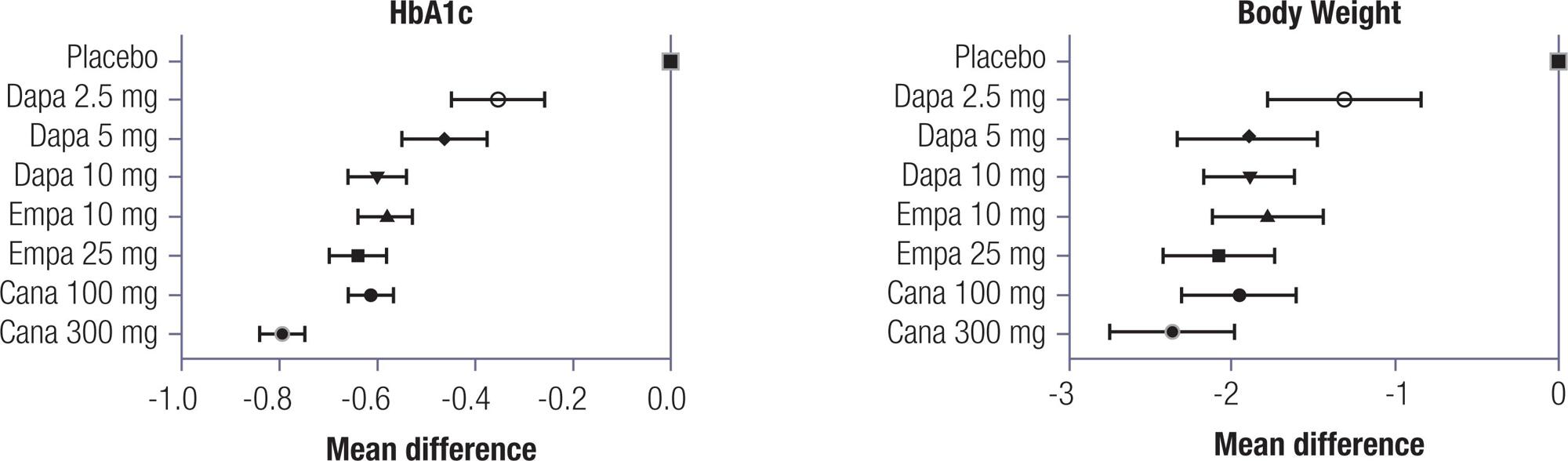
Dose-ranging effects of SGLT2 inhibitors in patients with type 2 diabetes: a systematic review and meta-analysis
ABSTRACT The lowest dosage of empagliflozin (10 mg) showed similar benefits on glycated hemoglobin (HbA1c) level, body weight, blood pressure, and total and cardiovascular mortality in comparison with the highest...
Conclusion/Relevance: In the indirect meta-analysis, canagliflozin 300 mg ranked the highest regarding reductions in HbA1c and body weight. The remaining medications and dosages were clinically similar, despite some statistically significant differences among them. Canagliflozin 300 mg seems to be more potent in reducing HbA1c and body weight...

Determining the role of SGLT2 inhibition with Empagliflozin in the development of diabetic retinopathy - PubMed
Source : https://pubmed.ncbi.nlm.nih.gov/35234250/
Diabetes mellitus is a chronic metabolic disease that occurs when the pancreas is not producing enough insulin or when the insulin that it does produce is not able to be...
Conclusion/Relevance:We show that EMPA reduces vascular leakage indicated by lower albumin staining in the vitreous humor and diminishes expression of the pathogenic factor VEGF in the retina. Additionally, EMPA significantly alters the retinal genetic signature. Our findings suggest that SGLT2 inhibition may be a useful therapeutic approach to...

Patterns of Care for First-detected Atrial Fibrillation: Insights from the Get With The Guidelines Atrial Fibrillation Registry
Source : https://www.heartrhythmjournal.com/article/S1547-5271(22)00210-7/fulltext
Despite multiple trials comparing rate with rhythm control, there is no consensus on optimal management of first-detected atrial fibrillation (AF). We analyzed current patterns of care for first-detected AF in...
Conclusions: Less than half of the patients with first-detected AF receive rhythm control at admission. Given recent trial results, further studies should assess the long-term impact of rhythm control on patients’ symptoms and quality of life, cardiovascular morbidity, and mortality

The effect of empagliflozin on growth differentiation factor 15 in patients with heart failure: a randomized controlled trial (Empire HF Biomarker) - PubMed
Source : https://pubmed.ncbi.nlm.nih.gov/35219331/
Randomized Controlled Trial doi: 10.1186/s12933-022-01463-2. 1 Department of Cardiology, Research Unit of Cardiology, Odense University Hospital, Odense, Denmark. [email protected]. 2 Steno Diabetes Center Odense, Odense University Hospital, Odense, Denmark. [email protected]....
Conclusion: Empagliflozin increased plasma levels of GDF-15 in patients with HFrEF, with no concomitant increase in hsTNT nor hsCRP.

The SGLT2 inhibitor empagliflozin in patients hospitalized for acute heart failure: a multinational randomized trial - PubMed
Source : https://pubmed.ncbi.nlm.nih.gov/35228754/
The sodium-glucose cotransporter 2 inhibitor empagliflozin reduces the risk of cardiovascular death or heart failure hospitalization in patients with chronic heart failure, but whether empagliflozin also improves clinical outcomes when...
Conclusion: "The SGLT2 inhibitor empagliflozin in patients hospitalized for acute heart failure: a multinational randomized trial".
"
Age-related sex differences in the outcomes of patients with hypertrophic cardiomyopathy
Source : https://journals.plos.org/plosone/article?id=10.1371/journal.pone.0264580
Background We aimed to clarify the sex differences in various cardiovascular and non-cardiovascular outcomes, and to investigate whether sex differences in outcomes are affected by age in hypertrophic cardiomyopathy (HCM)....
Conclusions: Women with HCM have worse cardiovascular prognosis than men, driven by higher cardiovascular mortality and HF events. The negative impact of female sex on cardiac function and cardiovascular outcome became prominent at age ≥60 years, suggesting age-related sex differences in the prognosis of HCM.
Conclusions: Women with HCM...

Clinical implications of left atrial reverse remodelling after cardiac resynchronization therapy - PubMed
Source : https://pubmed.ncbi.nlm.nih.gov/35213709/
doi: 10.1093/ehjci/jeac042. Online ahead of print. 1 Department of Cardiology, Leiden University Medical Center, Albinusdreef 2, 2300 RC Leiden, The Netherlands. 2 Department of Cardiology, Jessa Hospital, 3500 Hasselt, Belgium....
Conclusions: Patients with complete reverse remodelling have a lower mortality risk than those showing incomplete or no significant reverse remodelling. The use of integrated LA and LV deformation imaging may improve risk-stratification of CRT recipients.