



Clinical Characteristics and Outcome of End Stage Hypertrophic Cardiomyopathy: Role of Age and Heart Failure Phenotypes
Source : https://pubmed.ncbi.nlm.nih.gov/38242504/
Two different HCM-ES phenotypes can be recognized, with ES-pEF showing distinctive features at ES recognition and receiving less frequently advanced HF treatments. Older age at ES recognition has a major...
Two different end-stage HCM phenotypes can be recognized, with end-stage pEF showing distinctive features at end-stage recognition and receiving less frequently advanced HF treatments.
Among patients with HFimpEF, treatment with dapagliflozin was associated with lower rates of cardiovascular death relative to placebo, a difference primarily due to lower rates of sudden death.

Long-Term Outcomes of Resynchronization-Defibrillation for Heart Failure
Source : https://pubmed.ncbi.nlm.nih.gov/38231622/
Among patients with a reduced ejection fraction, a widened QRS complex, and NYHA class II or III heart failure, the survival benefit associated with receipt of a CRT-D as compared...
Among patients with a reduced ejection fraction, a widened QRS complex, and NYHA class 2/3 heart failure, the survival benefit associated with receipt of a cardiac-resynchronization therapy defibrillator as compared with implantable cardioverter-defibrillators appeared to be sustained during a median of nearly 14 years of follow-up.
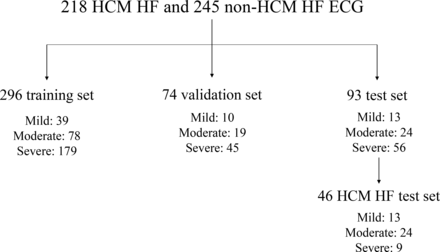
Model for Classification of Heart Failure Severity in Patients With Hypertrophic Cardiomyopathy Using a Deep Neural Network Algorithm With a 12-Lead Electrocardiogram
Source : https://openheart.bmj.com/content/10/2/e002414.long
In hypertrophic cardiomyopathy (HCM), specific ECG abnormalities are observed. Therefore, ECG is a valuable screening tool. Although several studies have reported on estimating the risk of developing fatal arrhythmias from...
Analysis using Guided Grad-CAM and Integrated Gradients showed the potential to lead to the extraction of effective ECG feature values to indicate HF severity.

Impaired Cardiopulmonary Baroreflex Function and Altered Cardiovascular Responses to Hypovolemia in Patients With Heart Failure With Preserved Ejection Fraction
Source : https://pubmed.ncbi.nlm.nih.gov/38174372/
Heart failure with preserved ejection fraction (HFpEF) is associated with autonomic imbalance which may be related to baroreflex dysfunction. Thus, we tested the hypothesis that central and peripheral hemodynamic responses...
These data provide new evidence for impairments in both cardiopulmonary and integrated baroreflex responsiveness in patients with HFpEF.