

Empagliflozin ameliorates diabetic cardiomyopathy via regulated branched-chain amino acid metabolism and mTOR/p-ULK1 signaling pathway-mediated autophagy - Diabetology & Metabolic Syndrome
Source : https://dmsjournal.biomedcentral.com/articles/10.1186/s13098-023-01061-6
Background Empagliflozin, a sodium-glucose co-transporter 2 inhibitor (SGLT2i), has been reported to significantly reduce the risk of heart failure in multiple clinical studies. However, the underlying mechanisms remain elusive. This...
Conclusions: Empagliflozin may attenuate diabetic cardiomyopathy-related myocardial injury by promoting the catabolism of BCAA and inhibiting mTOR/p-ULK1 to enhance autophagy. These findings suggest that empagliflozin could be a potential candidate drug against BCAA increase and could be used for other cardiovascular diseases with a metabolic...
Share




Conclusions and Relevance: In this study, patients with HFpEF had marked abnormalities in skeletal muscle mitochondrial function. Severely reduced maximal capacity and complex I–linked and complex II–linked respiration were associated with exercise intolerance and represent promising therapeutic targets.
Share
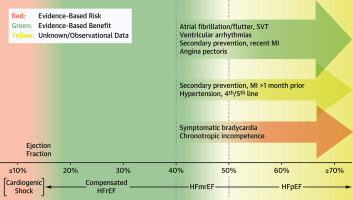
Beta-Blocker Use and Heart Failure Outcomes in Mildly Reduced and Preserved Ejection Fraction
Source : https://www.sciencedirect.com/science/article/abs/pii/S2213177923001737?via=ihub
The NCDR (National Cardiovascular Data Registry) PINNACLE (Practice Innovation and Clinical Excellence) Registry is a quality improvement registry that began in 2008 and includes longitudinal data on >47 million visits...
Conclusions: In a large, real-world, propensity score-adjusted cohort of older outpatients with HF and EF ≥40%, beta-blocker use was associated with a higher risk of HF hospitalization as EF increased, with potential benefit in patients with HFmrEF and potential risk in patients with higher EF (particularly >60%). Further studies are...
Share

All-Cause and Cardiovascular-Related Mortality in CKD Patients With and Without Heart Failure: A Population-Based Cohort Study in Kaiser Permanente Southern California
Source : https://www.ncbi.nlm.nih.gov/pmc/articles/PMC10151415/
Albert S. Yu, 1 Katherine J. Pak, 2 Hui Zhou, 2, 3 Sally F. Shaw, 2 Jiaxiao Shi, 2 Benjamin I. Broder, 4 and John J.
Conclusions: Among patients with incident CKD, heart failure was highly prevalent with HFpEF accounting for over 70% among patients with known ejection fraction. Although the presence of heart failure was associated with higher 1-year all-cause and cardiovascular-related mortality, patients with HFrEF were the most vulnerable.
Share
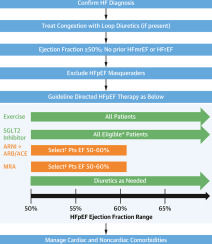
How to Manage Heart Failure With Preserved Ejection Fraction: Practical Guidance for Clinicians
Source : https://www.sciencedirect.com/science/article/abs/pii/S2213177923001427?via=ihub
Available online 3 May 2023 Author links open overlay panel Akshay S. Desai MD, MPH a , Carolyn S.P. Lam MBBS, PhD b c , John J.V. McMurray MD d...
Conclusions: A suggested algorithm for HFpEF treatment is outlined in the Central Illustration. Following confirmation of the diagnosis and exclusion of alternatives, treatment should focus on decongestion and optimal management of cardiac and noncardiac comorbidities.
Share