

Epicardial adipose tissue density is a better predictor of cardiometabolic risk in HFpEF patients: a prospective cohort study - Cardiovascular Diabetology
Source : https://cardiab.biomedcentral.com/articles/10.1186/s12933-023-01778-8
Background Epicardial adipose tissue (EAT) accumulation is associated with multiple cardiometabolic risk factors and prognosis of heart failure with preserved ejection fraction (HFpEF). The correlation between EAT density and cardiometabolic...
Conclusions: EAT density was an independent impact factor of cardiometabolic risk in HFpEF. EAT density might have better predictive value than EAT volume for metabolic syndrome and it might have prognostic value in patients with HFpEF.
Share




Meaning: Results suggest that adding SGLT2-I therapy is intermediate or low value in patients with heart failure with preserved ejection fraction.
Share
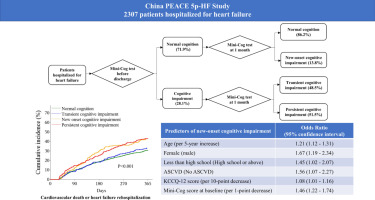
Distinct associations between post-discharge cognitive change patterns and 1-year outcomes in patients hospitalized for heart failure
Source : https://www.onlinejcf.com/article/S1071-9164(23)00035-0/fulltext
Among the patients hospitalized for HF who experienced cognitive impairment before discharge, 48.5% had transient cognitive impairment at 1 month after discharge. Among patients with normal cognition before discharge, 13.8%...
Conclusions: Acute HF substantially affects short-term cognition. Patients who have developed new-onset cognitive impairment have an increased risk of adverse outcomes. Monitoring cognition is necessary, particularly in high-risk patients.
Share

Global trends in research on oxidative stress related to heart failure from 2012 to 2021: a bibliometric analysis and suggestion to researchers
Source : https://atm.amegroups.com/article/view/108849/html
Key findings * This study clarify the research focus and development trends of oxidative stress related to HF in the past decade. What is known and what is new? *...
Conclusions: Our research shows the research focus and development trends of oxidative stress related to HF in the past decade. Understanding the most important indicators of oxidative stress related to HF and the hot spots in the field of oxidative stress research related to HF can assist scholars, countries and policy-makers in the field in...
Share
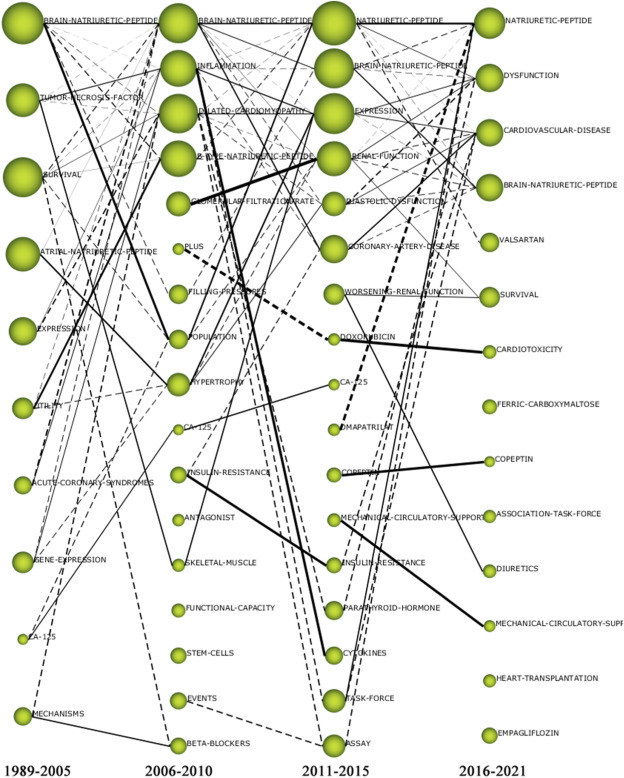
Global historical retrospect and future prospects on biomarkers of heart failure: A bibliometric analysis and science mapping
Heart failure is a rapidly growing public health problem and has become a major cause of hospitalization in middle-aged and older adults. Biomarkers are clinically important in managing heart failure...
Conclusions: Extensive national and inter-institutional collaboration should be enhanced to bridge the gap between developed and less developed countries in heart failure biomarkers research. The research in this field seems to have reached a relatively mature stage, with a decrease in research fervor in recent years. The study of the...
Share