


Effects of empagliflozin on cardiovascular and renal outcomes in heart failure with reduced ejection fraction according to age: A secondary analysis of EMPEROR-Reduced - PubMed
Source : https://pubmed.ncbi.nlm.nih.gov/36194680/
doi: 10.1002/ejhf.2707. Online ahead of print. 1 Second Department of Cardiology, Athens University Hospital Attikon, National and Kapodistrian University of Athens Medical School, Athens, Greece. 2 Department of Cardiology, Berlin...
Conclusions: The efficacy and safety of empagliflozin in improving cardiovascular and renal outcomes in HFrEF was consistent across the spectrum of age, including older patients (aged ≥75). This article is protected by copyright. All rights reserved.
Share





Bone marrow-derived naïve B lymphocytes improve heart function after myocardial infarction: a novel cardioprotective mechanism for empagliflozin - Basic Research in Cardiology
Source : https://link.springer.com/article/10.1007/s00395-022-00956-1
The role of adaptive immunity in myocardial recovery post myocardial infarction (MI), particularly the immune response by B lymphocytes, remains elusive. Bone marrow immune microenvironment in response to MI is...
Conclusions: These findings provide new mechanistic insights into regulation of adaptive immune response post MI, and support targeting bone marrow B cell development for improved ventricular remodeling and reduced heart failure after MI.
Share
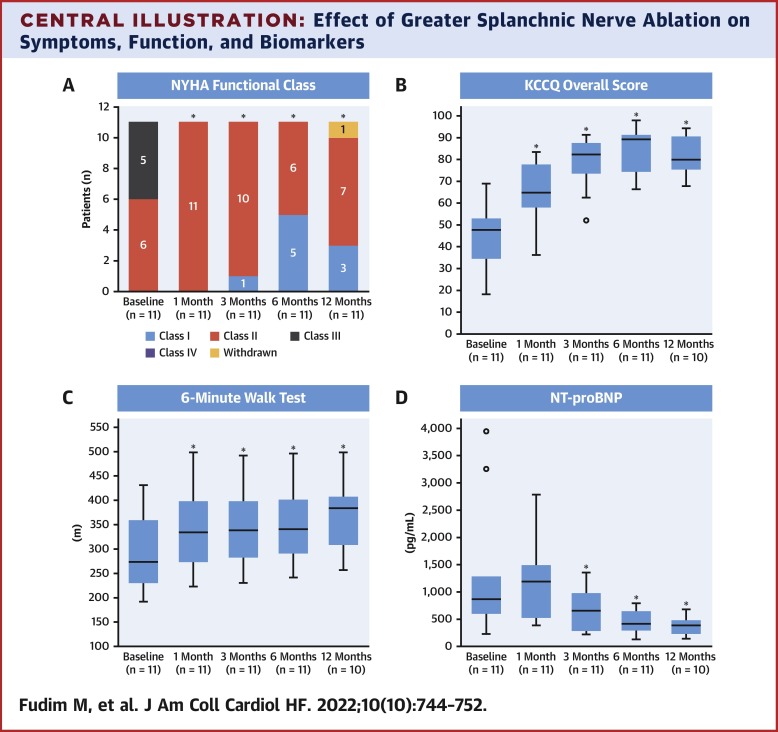
Transvenous Right Greater Splanchnic Nerve Ablation in Heart Failure and Preserved Ejection Fraction: First-in-Human Study
Source : https://www.sciencedirect.com/science/article/pii/S221317792200316X?via=ihub
Ablation of the right-sided greater splanchnic nerve (GSN) can reduce excessive splanchnic vasoconstriction, potentially improving the handling of volume shifts in patients with heart failure with preserved ejection fraction (HFpEF)....
Conclusions: In this open-label, single-arm feasibility study, right-sided GSN ablation was safe and improved mostly subjective clinical metrics in patients with HFpEF over 12 months.
Share
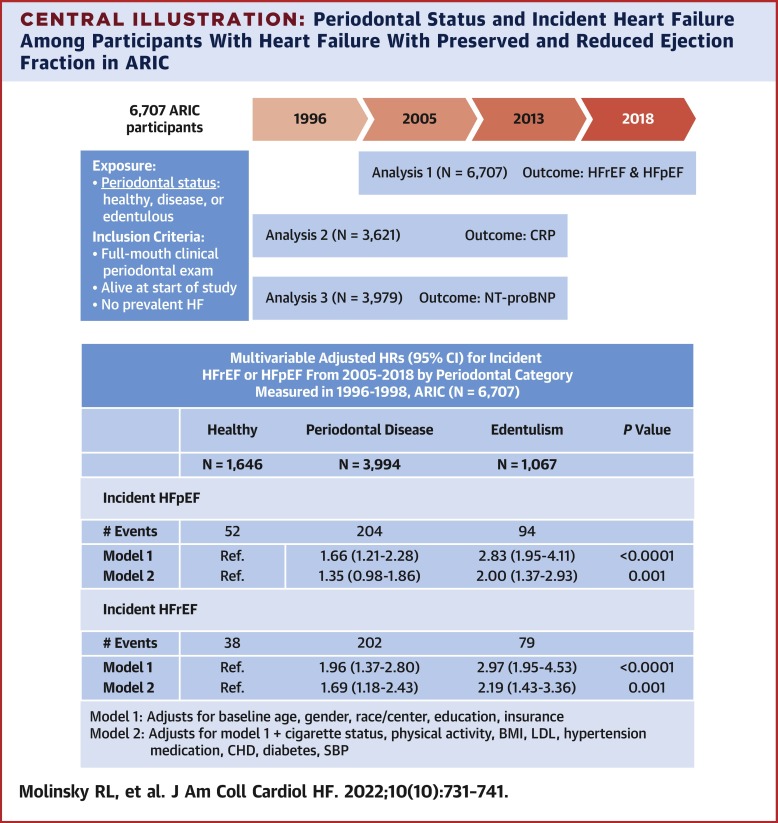
Periodontal Status, C-Reactive Protein, NT-proBNP, and Incident Heart Failure: The ARIC Study
Source : https://www.sciencedirect.com/science/article/abs/pii/S2213177922003146?via=ihub
Periodontal disease (PD), resulting from inflammatory host response to dysbiotic subgingival microbiota, has been linked to cardiovascular disease; however, its relationship to heart failure (HF) and its subtypes (heart failure...
Conclusions: Periodontal status was associated with incident HF, HFpEF, and HFrEF, as well as unfavorable changes in CRP and NT-proBNP.
Share
Defining the Phenotypes for Heart Failure With Preserved Ejection Fraction - Current Heart Failure Reports
Source : https://link.springer.com/article/10.1007/s11897-022-00582-x
Purpose of Review Heart failure with preserved ejection fraction (HFpEF) imposes a significant burden on society and healthcare. The lack in efficacious therapies is likely due to the significant heterogeneity...
Summary: We synthesized the literature and propose three broad phenotypes: (1) young, with few comorbidities, usually obese and with low natriuretic peptide levels, (2) obese with substantive cardiometabolic burden and comorbidities and impaired ventricular relaxation, (3) old, multimorbid, with high rates of atrial fibrillation, renal and...
Share