



Patients with systemic lupus erythematosus and lupus nephritis showed significantly higher risk of hypertension, hyperlipidemia, and type 2 diabetes compared with those without lupus nephritis.
This synopsis focuses on outpatient management of diabetes with high risk of hypoglycemia; the guideline also addresses prevention of hypoglycemia in hospitalized patients.
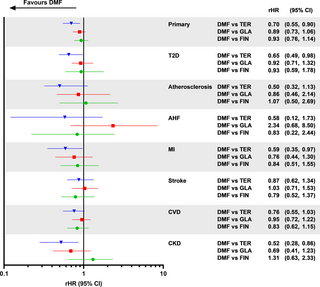
Incidence of Type 2 Diabetes, Cardiovascular Disease and Chronic Kidney Disease in Patients With Multiple Sclerosis Initiating Disease-Modifying Therapies: Retrospective Cohort Study Using a Frequentist Model Averaging Statistical Framework
Source : https://journals.plos.org/plosone/article?id=10.1371/journal.pone.0300708
Researchers are increasingly using insights derived from large-scale, electronic healthcare data to inform drug development and provide human validation of novel treatment pathways and aid in drug repurposing/repositioning. The objective...
A positive but nonsignificant trend was observed among patients treated with dimethyl fumarate toward a decreased incidence of type 2 diabetes, CVD, and CKD relative to other disease-modifying therapies.

Serum T50 Predicts Cardiovascular Mortality in Individuals With Type 2 Diabetes: a Prospective Cohort Study
Source : https://pubmed.ncbi.nlm.nih.gov/38528373/
Serum T50 improves prediction of cardiovascular and all-cause mortality risk in individuals with T2D. Serum T50 may be useful for risk stratification and to guide therapeutic strategies aiming to reduce...
Serum T50 may be useful for risk stratification and to guide therapeutic strategies aiming to reduce CV mortality in type 2 diabetes.

Patients' Perceptions of Artificial Intelligence in a Deep Learning-Assisted Diabetic Retinopathy Screening Event: a Real-World Assessment
Source : https://pubmed.ncbi.nlm.nih.gov/38404014/
During an artificial intelligence (AI)-assisted diabetic retinopathy screening event, we performed a survey on patients´ perceptions on AI. Respondents were individuals with diabetes, mostly followed in primary healthcare with a...
Although nearly 50% of participants reported that they knew what artificial intelligence (AI) was, only 14% reported having good or expert knowledge of AI but most said they felt positive about it in health care.