


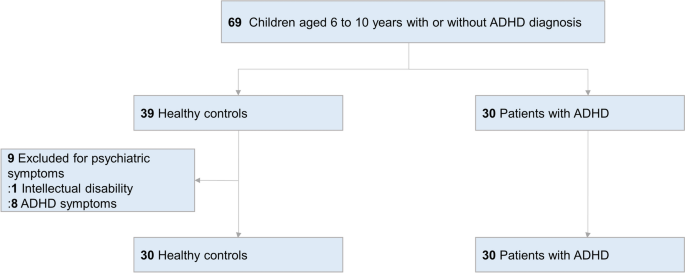
Use of eye tracking to improve the identification of attention-deficit/hyperactivity disorder in children - Scientific Reports
Source : https://www.nature.com/articles/s41598-023-41654-9
Attention-deficit/hyperactivity disorder (ADHD) is the most common neurodevelopmental disorder of childhood. Although it requires timely detection and intervention, existing continuous performance tests (CPTs) have limited efficacy. Research suggests that eye...
Discussion: Integrating eye-tracking with CPTs improved task performance at identifying ADHD compared with the use of CPTs alone. The use of eye-tracking alone also showed higher performance compare with the use of CPTs alone. Moreover, most eye-tracking indicators (e.g., FR and time, gaze ratio at the center, and gaze variability) differed...

The Efficacy of Educational Interventions in Improving School Teachers' Knowledge of Attention Deficit Hyperactivity Disorder
Background: Well-trained primary school teachers should be competent in recognizing attention deficit hyperactivity disorder (ADHD) in students and be able to assist in providing care and support. Objectives: This study...
Conclusion: Teachers play a crucial role in helping manage ADHD-affected children as they usually spend significant time with children and can promptly observe the behavioral changes in ADHD children. In this study, the teachers' knowledge regarding ADHD showed considerable improvement after implementing an educational intervention.
Neurogenetic mechanisms of risk for ADHD: Examining associations of polygenic scores and brain volumes in a population cohort - Journal of Neurodevelopmental Disorders
Source : https://jneurodevdisorders.biomedcentral.com/articles/10.1186/s11689-023-09498-6
Background ADHD polygenic scores (PGSs) have been previously shown to predict ADHD outcomes in several studies. However, ADHD PGSs are typically correlated with ADHD but not necessarily reflective of causal...
Conclusion: The AnnoPred ADHD PGS was a more developmentally specific predictor of adolescent IA symptoms compared to the traditional ADHD PGS. However, brain volumes did not mediate the effects of either a traditional or AnnoPred ADHD PGS on ADHD symptoms, suggesting that we may still be underpowered in clarifying brain-based biomarkers for...
Conclusion: In this multicohort study, adolescents’ stimulant therapy for ADHD was not associated with increased risk of later cocaine and methamphetamine use during young adulthood. Adolescents’ prescription stimulant misuse offered a signal for subsequent cocaine or methamphetamine use and warrants monitoring and screening.
Attention Deficit Hyperactivity Disorder (ADHD) and the gut microbiome: An ecological perspective
Source : https://journals.plos.org/plosone/article?id=10.1371/journal.pone.0273890
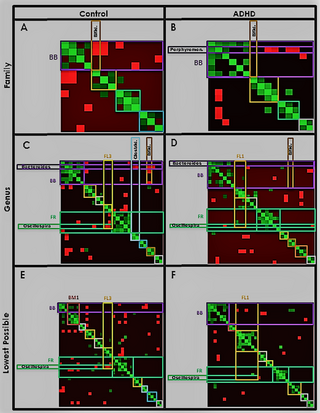
Attention Deficit Hyperactivity Disorder (ADHD) is an increasingly prevalent neuropsychiatric disorder characterized by hyperactivity, inattention, and impulsivity. Symptoms emerge from underlying deficiencies in neurocircuitry, and recent research has suggested a...
Conclusion: A more complete understanding of ADHD and the gut microbiome will best equip the community to make the right decisions when administering treatment(s). Our results, coupled with those in the literature, suggest that the gut microbiota cannot afford to be ignored when it comes to ADHD, and treatments directly targeting the gut...