



micro-community-banner
 
  • Saved
The relationship model among parent-child relationship, coping responses and behavioral problems in children with attention deficit hyperactivity disorder - BMC Psychiatry

The relationship model among parent-child relationship, coping responses and behavioral problems in children with attention deficit hyperactivity disorder - BMC Psychiatry

Source : https://bmcpsychiatry.biomedcentral.com/articles/10.1186/s12888-022-04224-3

Background Attention Deficit Hyperactivity Disorder (ADHD) constitutes a prevalent behavioral problem. The present study examined the parent-child relationship model and investigated strategies to cope with behavioral problems in children with...


Conclusions: Conclusion: Based on findings, there is a causal and significant relationship between the parent–child relationship and the extent to which coping responses are used. It is recommended that training programs be developed to strengthen communication skills, coping responses and problem-solving techniques in parents.


  • Saved
Behavioral and brain functional characteristics of children with Attention-Deficit/Hyperactivity disorder and anxiety trait - Brain Imaging and Behavior

Behavioral and brain functional characteristics of children with Attention-Deficit/Hyperactivity disorder and anxiety trait - Brain Imaging and Behavior

Source : https://link.springer.com/article/10.1007/s11682-022-00722-w

The current study aimed to explore the behavioral, daily-life executive functional, and brain functional connectivity patterns in children with attention-deficit/hyperactivity disorder (ADHD) and anxiety. A total of 246 children with...


Conclusions: In sum, anxiety in children with ADHD was associated with more social, emotional, and behavioral problems, more impaired daily-life executive function, and altered brain function. Our work provides important information on the heterogeneity of ADHD.


  • Saved
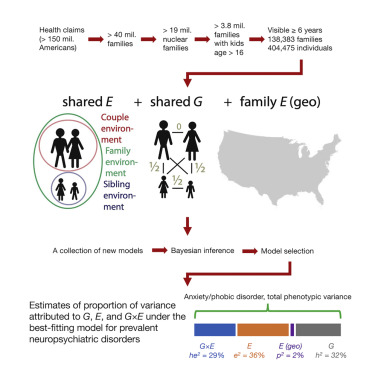
Gene-environment interactions explain a substantial portion of variability of common neuropsychiatric disorders

Gene-environment interactions explain a substantial portion of variability of common neuropsychiatric disorders

Source : https://www.cell.com/cell-reports-medicine/fulltext/S2666-3791(22)00285-3?_returnURL=https://linkinghub.elsevier.com/retrieve/pii/S2666379122002853?showall=true

Zhang et al. show that gene-environment interactions account for a significant portion of the phenotypic variance of common neuropsychiatric disorders: over 20% for ADHD, migraine, and anxiety/phobic disorder and close...


Conclusions: Conclusion: Despite being on-treatment, many patients with COPD experience persistent symptoms and exacerbations requiring hospital-related HRU. A treatable trait approach and holistic disease management may improve outcomes by deciding the right treatment for the right patient at the right time.


  • Saved
Considering a combined approach

Methylphenidate is a classic treatment for ADHD in children. Its immediate-release (IR) form lasts between 2 and 4 hours, whereas long-acting, or extended-release (XR), lasts about 8 hours. On its own, immediate-release methylphenidate can be used as a bridge to help children with evening symptoms and homework completion, but this needs to be taken every 4 hours, thus resulting in multiple daily doses.

Systematic literature reviews found IR stimulants to be more widely misused or diverted than XR stimulants, which could be a factor in selecting long-acting treatments that do not need supplementation.

For which patients would it be appropriate to use IR formulations?

What are the key attributes (or benefits) of IR and XR formulations that you consider for individual patients?

  • 3yr
    Suggest trial methylphenidate may convert to dextroamphetamine later depending on response ,also consider long acting am immediate in afternoon or meds like clonidine on guanfacine etc fir resistant cases
  • 3yr
    Suggest trial methylphenidate may convert to dextroamphetamine later depending on response ,also consider long acting am immediate in afternoon or meds like clonidine on guanfacine etc fir resistant cases

Show More Comments

  • Saved
Considering a combined approach

Methylphenidate is a classic treatment for ADHD in children. Its immediate-release (IR) form lasts between 2 and 4 hours, whereas long-acting, or extended-release (XR), lasts about 8 hours. On its own, immediate-release methylphenidate can be used as a bridge to help children with evening symptoms and homework completion, but this needs to be taken every 4 hours, thus resulting in multiple daily doses.


Systematic literature reviews found IR stimulants to be more widely misused or diverted than XR stimulants, which could be a factor in selecting long-acting treatments that do not need supplementation.


For which patients would it be appropriate to use IR formulations?


What are the key attributes (or benefits) of IR and XR formulations that you consider for individual patients?


  • 3yr
    Suggest trial methylphenidate may convert to dextroamphetamine later depending on response ,also consider long acting am immediate in afternoon or meds like clonidine on guanfacine etc fir resistant cases
  • 3yr
    Suggest trial methylphenidate may convert to dextroamphetamine later depending on response ,also consider long acting am immediate in afternoon or meds like clonidine on guanfacine etc fir resistant cases

Show More Comments