


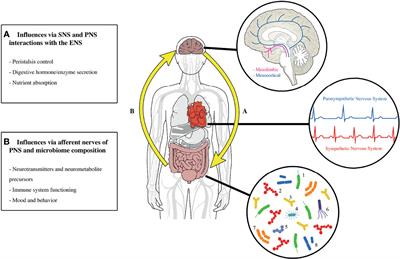
Childhood ADHD, Going Beyond the Brain: A Meta-Analysis on Peripheral Physiological Markers of the Heart and the Gut
Source : https://www.frontiersin.org/articles/10.3389/fendo.2022.738065/full
Attention-Deficit/Hyperactivity Disorder (ADHD) is the most common neurodevelopmental disorder diagnosed in children. Questions regarding its increased diagnostic rates and pharmacological treatments in developing children have led to a more holistic...
Conclusion/Relevance: Data from a total of 531 youth with ADHD and 603 youth without ADHD revealed significant small and medium effect sizes for higher Chao1 levels and Actinobacteria levels in the ADHD group, respectively, but no evidence of altered task-related HRR. Thus, further research into multi-system psychophysiological measures of...

Deficits in attention, motor control and perception childhood to age 30 years: prospective case-control study of outcome predictors - PubMed
Source : https://pubmed.ncbi.nlm.nih.gov/35301207/
Several neurodevelopmental symptoms, including ADHD severity at age 9 years, accounted for a considerable amount of the variance in terms of adulthood adverse outcome. Broad neurodevelopmental profiling irrespective of diagnostic...
Conclusion: Several neurodevelopmental symptoms, including ADHD severity at age 9 years, accounted for a considerable amount of the variance in terms of adulthood adverse outcome. Broad neurodevelopmental profiling irrespective of diagnostic thresholds should inform research and clinical practice. The study highlights the importance of...

A Systematic Review and Meta-analysis of Prenatal, Birth, and Postnatal Factors Associated with Attention-Deficit/Hyperactivity Disorder in Children - Prevention Science
Source : https://link.springer.com/article/10.1007/s11121-022-01359-3
Previous studies have shown mixed results on the relationship between prenatal, birth, and postnatal ("pregnancy-related") risk factors and attention-deficit/hyperactivity disorder (ADHD). We conducted meta-analyses to identify potentially modifiable pregnancy-related factors...
Conclusion/Relevance: A better understanding of factors that are consistently associated with ADHD may inform future prevention strategies. The findings reported here suggest that prenatal and postnatal factors may serve as potential targets for preventing or mitigating the symptoms of ADHD.

CHAMP1 disorder is associated with a complex neurobehavioral phenotype including autism, ADHD, repetitive behaviors and sensory symptoms - PubMed
Source : https://pubmed.ncbi.nlm.nih.gov/35271727/
doi: 10.1093/hmg/ddac018. Online ahead of print. 1 Seaver Autism Center for Research and Treatment, Icahn School of Medicine at Mount Sinai, New York, NY 10029, USA. 2 Department of Psychiatry,...
Relevance: This study represents the first prospective phenotyping analysis of individuals with CHAMP1 disorder. The utility of specific measures as clinical endpoints, as well as benefits and limitations of remote phenotyping, are described.
Pain sensitivity and perceptual sensitivity are associated with severity of emotional dysregulation in children with ADHD: a cross-sectional analysis using the Temperament in Middle Childhood Questionnaire
Source : https://www.tandfonline.com/doi/abs/10.1080/09638288.2022.2043946
Abstract Nearly 50% of children with attention-deficit/hyperactivity disorder (ADHD) experience emotional dysregulation or sensory over-responsiveness; this study examines their association. This cross-sectional analysis ( n = 124) used data from the...
Conclusion: Pain sensitivity was associated with the severity of emotional dysregulation in this ADHD sample. To better understand possible causal links, longitudinal studies are warranted.