



Mind-Wandering and Childhood ADHD: Experimental Manipulations across Laboratory and Naturalistic Settings - PubMed
Source : https://pubmed.ncbi.nlm.nih.gov/35247108/
doi: 10.1007/s10802-022-00912-6. Online ahead of print. 1 Center for Children and Families, Florida International University, Miami, FL, USA. [email protected]. 2 Department of Psychology, Florida International University, Miami, FL, USA. [email protected]....
Conclusion/Relevance: This study is the first to manipulate mind-wandering and assess effects among children with ADHD using a behavioral task. Results provide evidence that children with ADHD are uniquely susceptible to mind-wandering interference.
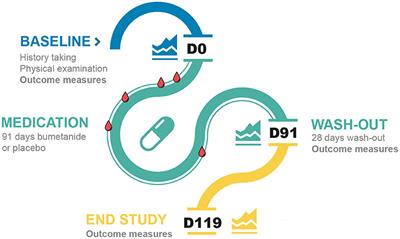
Bumetanide for Irritability in Children With Sensory Processing Problems Across Neurodevelopmental Disorders: A Pilot Randomized Controlled Trial
Source : https://www.frontiersin.org/articles/10.3389/fpsyt.2022.780281/full
BackgroundTreatment development for neurodevelopmental disorders (NDDs) such as autism spectrum disorder (ASD) and attention-deficit/hyperactivity disorder (ADHD) is impeded by heterogeneity in clinical manifestation and underlying etiologies. Symptom traits such as...
Conclusion/Relevance: Here, we have presented a pilot RCT based on a stratified trial design in which we found a superior effect (modified ITT analysis) of bumetanide on irritable behavior in children with NDD and SPD. Although the small sample size and potential functional unblinding do not allow firm conclusions or generalizability of...
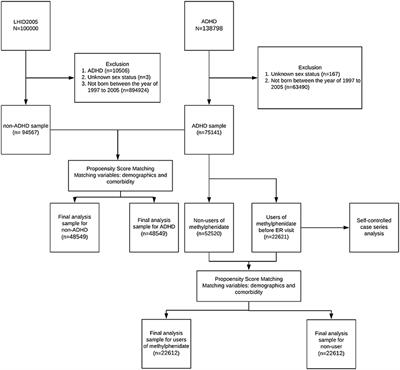
Methylphenidate Use and Infectious Diseases in Children With Attention Deficit and Hyperactivity Disorder: A Population-Based Study
Source : https://www.frontiersin.org/articles/10.3389/fmed.2021.787745/full
ObjectiveChildren with attention deficit hyperactivity disorder (ADHD) have more visits to the emergency department (ED) due to injuries than those without ADHD. However, no study has investigated whether children with...
Conclusions and Relevance: This is the first study that reported an increased risk of ID-related healthcare utilizations in children with ADHD compared to those without, and that such risks may be significantly reduced in ADHD children that received MPH treatment.

Clinical characteristics of children and adolescents with ADHD with or without methylphenidate prescription at their first diagnostic assessment - PubMed
Source : https://pubmed.ncbi.nlm.nih.gov/35211779/
doi: 10.1007/s00406-022-01386-9. Online ahead of print. 1 Department of Neuroscience, Child and Adolescence Neuropsychiatry Unit, I. R. C. C. S. Bambino Gesù Children's Hospital, Rome, Italy. 2 Department of Human...
Conclusion/Relevance: ADHD/MPH group had higher severity of non-ADHD psychopathological symptoms compared to the ADHD/noMPH group, as documented by higher scores on the Child Behavior Checklist (CBCL) subscales, higher severity of ADHD symptoms, lower average IQ and lower adaptive levels independently of IQ. More specifically, beside...

A randomized controlled study of remote computerized cognitive, neurofeedback, and combined training in the treatment of children with attention-deficit/hyperactivity disorder - European Child & Adolescent Psychiatry
Source : https://link.springer.com/article/10.1007/s00787-022-01956-1
There is an increasing interest in non-pharmacological treatments for children with attention-deficit/hyperactivity disorder (AD/HD), especially digital techniques that can be remotely delivered, such as neurofeedback (NFT) and computerized cognitive training...
Conclusion/Relevance:This study verified the training effects of NFT, CCT, and combined NFT/CCT training in children with AD/HD and revealed an objective therapeutic role for individual relative alpha activity. The verified feasibility and effectiveness of home-based digital training support promotion and application of digital remote training.
-
ADHD Connect4yrKey Points: • Source: European Child & Adolescent Psychiatry • Conclusion/Relevance: “This study verified the training effects of NFT [neurofeedback], CCT [computerized cognitive training], and combined NFT/CCT training in children with AD/HD and revealed Show More