: Key Points
• Source: Social Cognitive and Affective Neuroscience
• Conclusion/Relevance: “The current results were clear cut in finding no evidence that children and adolescents with ADHD react to anticipation of monetary loss differently from controls either in terms of contingency-related or valence-related effects. Motivational models of ADHD need to explain the specificity of motivation effects - why they show a general hyposensitivity to the positive reinforcement (monetary gain) but not negative reinforcement (monetary loss avoidance).”
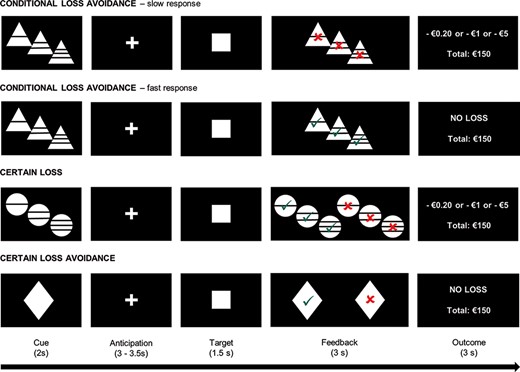
• In the current study, researchers administered the Escape Monetary Loss Incentive task in the MRI scanner to assess ADHD-related alterations in monetary loss processing. This intervention permitted the differentiation of contingency and valence effects during loss avoidance. The investigators tested 18 right-handed boys aged 8 to 12 years and 20 adolescents aged 13 to 18 years who were diagnosed with ADHD.
• Results of the current study indicate that “the ability to process contingencies between performance and negative outcomes is intact in ADHD and that individuals with ADHD are no more (or less) sensitive to negative outcomes than controls. This latter finding stands in stark contrast to recent evidence from a similar task of atypical emotion network recruitment (e.g., amygdala) in ADHD individuals to cues predicting another negative event the imposition of delay suggesting marked specificity in the way they respond to negative events.”
• Limitations of the current study include its focus on a specific subgroup of those with ADHD (i.e., right-handed boys). This focus limits generalizability. Additionally, it is challenging to examine age-related processes during puberty, with age influencing activation in the sample.
• Discussion question: Are you surprised by the results of this study? Please explain.



• Source: Social Cognitive and Affective Neuroscience
• Conclusion/Relevance: “The current results were clear cut in finding no evidence that children and adolescents with ADHD react to anticipation of monetary loss differently from controls either in terms of contingency-related or valence-related effects. Motivational models of ADHD need to explain the specificity of motivation effects - why they show a general hyposensitivity to the positive reinforcement (monetary gain) but not negative reinforcement (monetary loss avoidance).”
• In the current study, researchers administered the Escape Monetary Loss Incentive task in the MRI scanner to assess ADHD-related alterations in monetary loss processing. This intervention permitted the differentiation of contingency and valence effects during loss avoidance. The investigators tested 18 right-handed boys aged 8 to 12 years and 20 adolescents aged 13 to 18 years who were diagnosed with ADHD.
• Results of the current study indicate that “the ability to process contingencies between performance and negative outcomes is intact in ADHD and that individuals with ADHD are no more (or less) sensitive to negative outcomes than controls. This latter finding stands in stark contrast to recent evidence from a similar task of atypical emotion network recruitment (e.g., amygdala) in ADHD individuals to cues predicting another negative event the imposition of delay suggesting marked specificity in the way they respond to negative events.”
• Limitations of the current study include its focus on a specific subgroup of those with ADHD (i.e., right-handed boys). This focus limits generalizability. Additionally, it is challenging to examine age-related processes during puberty, with age influencing activation in the sample.
• Discussion question: Are you surprised by the results of this study? Please explain.