


Relationships Between the Vaginal Microbiota and Genitourinary Syndrome of Menopause Symptoms in Postmenopausal Women: the Study of Women's Health Across the Nation
Source : https://pubmed.ncbi.nlm.nih.gov/37788422/
Although close relationships exist among estrogen, CSTs, VMI, and pH, sexual pain was the only GSM symptom associated with the structure of vaginal microbiota and atrophy biomarkers.
Although close relationships exist among estrogen, community state types, vaginal maturation index, and pH, sexual pain was the only symptom of the genitourinary syndrome of menopause associated with the structure of vaginal microbiota and atrophy biomarkers.
Share




This article describes the use of fezolinetant and neurokinin B antagonists as nonhormonal therapies for menopausal vasomotor symptoms.
Share
Insights Into the Genetics of Menopausal Vasomotor Symptoms: Genome-Wide Analyses of Routinely-Collected Primary Care Health Records
Source : https://bmcmedgenomics.biomedcentral.com/articles/10.1186/s12920-023-01658-w
Vasomotor symptoms (VMS) can often significantly impact women's quality of life at menopause. In vivo studies have shown that increased neurokinin B (NKB) / neurokinin 3 receptor (NK3R) signalling contributes...
In this large study of menopausal VMS derived from primary care health records, researchers demonstrated the potential of routine health care data for deriving phenotypes not available in self-reported study data.
Share

Veozah (Fezolinetant): a Promising Non‐Hormonal Treatment for Vasomotor Symptoms in Menopause
Source : https://www.ncbi.nlm.nih.gov/pmc/articles/PMC10551868/
Vasomotor symptoms (VMS) are a common and distressing experience during menopause, affecting a significant portion of women. Hormone therapy (HT) has been the traditional treatment, but its limitations and potential...
Fezolinetant is the first nonhormonal therapy that can cross the blood‐brain barrier to inhibit neurokinin B and alleviate hot flashes in the body. Furthermore, the oral availability of fezolinetant provides a convenient option for menopausal women seeking relief from vasomotor symptoms, contributing to their overall well‐being and...
Share
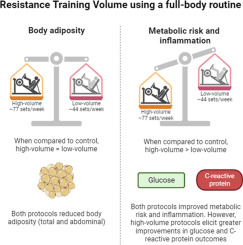
Effect of Resistance Training Volume on Body Adiposity, Metabolic Risk, and Inflammation in Postmenopausal and Older Females: Systematic Review and Meta-Analysis of Randomized Controlled Trials
Source : https://www.sciencedirect.com/science/article/pii/S2095254623000972?via=ihub
This meta-analytical study explored the effects of resistance training (RT) volume on body adiposity, metabolic risk, and inflammation in postmenopausal women.
Compared with CG, HVRT protocols elicit greater improvements in metabolic risk and inflammation outcomes than LVRT in overweight/obese postmenopausal and older females.
Share