



micro-community-banner
Profile Image
  • Saved
The effect of menopause on cardiovascular risk factors according to body mass index in middle-aged Korean women

The effect of menopause on cardiovascular risk factors according to body mass index in middle-aged Korean women

Source : https://journals.plos.org/plosone/article?id=10.1371/journal.pone.0283393

Background Menopausal status and obesity are associated with an increased risk for cardiovascular diseases. However, there are few studies on the effect of menopause on cardiovascular risk factors according to...

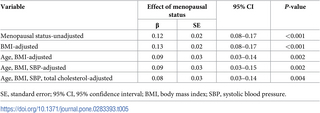
Conclusion: Menopausal status was associated with increased glucose and cholesterol levels independent of age and BMI in middle-aged Korean women. Menopausal status showed a significant relationship with increased total cholesterol levels even after adjusting for age and BMI in non-obese women but not obese women. Therefore, intensive...

Profile Image
  • Saved
Body Composition Changes over the Menopausal Transition in Women With and Without HIV

Body Composition Changes over the Menopausal Transition in Women With and Without HIV

Source : https://academic.oup.com/cid/advance-article-abstract/doi/10.1093/cid/ciad165/7088987?redirectedFrom=fulltext

Among women with HIV, the transition to menopause was associated with BMI and waist circumference trajectories that were mostly in the negative direction and op

Conclusion: In WWH, the menopausal transition was associated with BMI and WC trajectories that were mostly in a negative direction and opposite from WWOH after adjusting for age, suggesting that HIV blunts weight gain during the menopausal transition.

Profile Image
  • Saved
Leisure time physical activity and bone mineral density preservation during the menopause transition and postmenopause: a longitudinal cohort analysis from the Study of Women's Health Across the Nation (SWAN)

Leisure time physical activity and bone mineral density preservation during the menopause transition and postmenopause: a longitudinal cohort analysis from the Study of Women's Health Across the Nation (SWAN)

Source : https://www.thelancet.com/journals/lanam/article/PIIS2667-193X(23)00055-8/fulltext

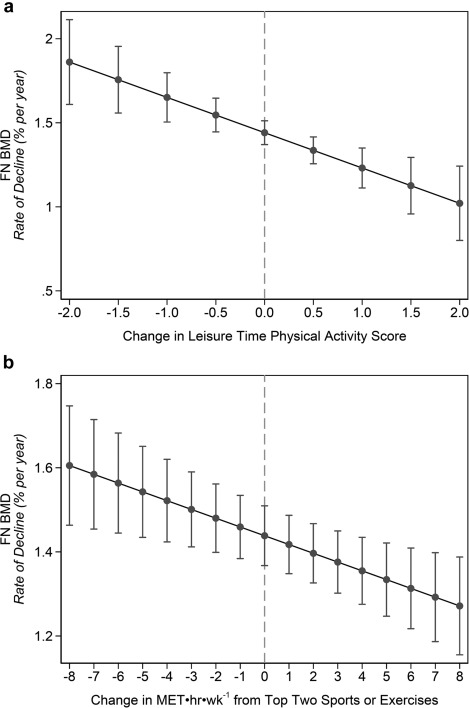
Whether greater leisure time physical activity (LTPA) is associated with less bone mineral density (BMD) loss during the menopause transition (MT) remains an open question. We hypothesized that: 1) larger...

Conclusion: Our first hypothesis, that increasing LTPA during midlife (from premenopause/early perimenopause to late perimenopause/postmenopause), would be associated with slower BMD loss in the late peri- and postmenopause, was supported by the results. The second hypothesis was also upheld: greater entire-study average levels of LTPA score...

Profile Image
  • Saved

Conclusion: PCS can be an effective intervention in PHC for improving women’s health in menopause and possibly also prevent the development of exhaustion syndrome.

Profile Image
  • Saved
Antidepressant Use to Treat Menopausal Vasomotor Symptoms

It is estimated that close to 40% of the world's 1.2 billion women will be post-menopausal or menopausal by 2030. That's nearly 50 million women and, among those, ~60-70% are likely to suffer from menopausal symptoms. Although hormone therapy (HT) is suggested for curtailing both vasomotor symptoms and mood disturbances, HT treatment continues to be controversial. Aside from breast cancer and cardiovascular concerns, research shows that HT itself might also increase the risk of depression.

In a recent discussion among OB-GYNs and primary care clinicians, about half stated they treat menopausal vasomotor symptoms with antidepressants such as SSRIs, SNRIs, and bupropion. While there was agreement that the treatment may not address all of the symptoms, research has confirmed that antidepressants are effective in treating both depression and vasomotor symptoms shortly before, during, and after menopause.

Which antidepressant(s) do you find most effective for the treatment of menopause? Have you observed whether these are the same antidepressants that work in younger women for premenstrual dysphoric disorder?

Profile Image

Show More Comments