


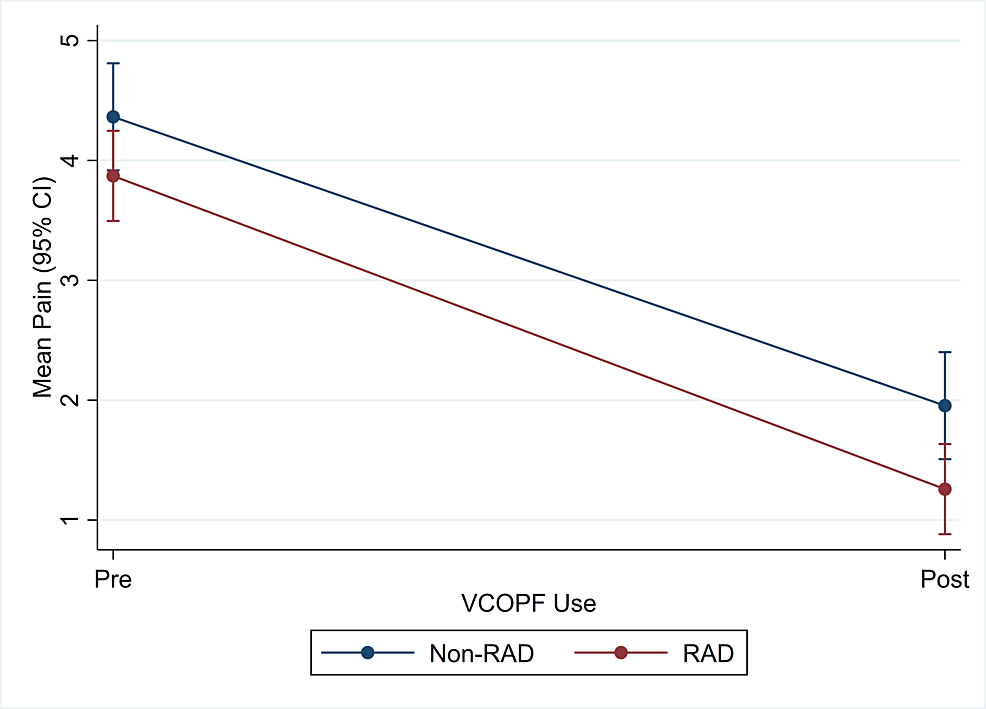
Virgin Coconut Oil in Paste Form as Treatment for Dyspareunia and Vaginal Dryness in Patients With and Without Rheumatic Autoimmune Diseases: An Efficacy and Safety Assessment Pilot Study
Introduction The use of virgin coconut oil (VCO) as an over-the-counter (OTC) treatment for vaginal dryness and dyspareunia (VDD) in the general population has increased worldwide despite the absence of...
Conclusion: A high percentage of women with VDD, with and without RAD, needlessly continue to experience quality-of-life-altering physical and psychosocial morbidity due to the underutilization and lack of awareness of VCO-containing therapy. The small sample size, non-blinded, non-randomized, pilot platform, and the use of a non-validated...
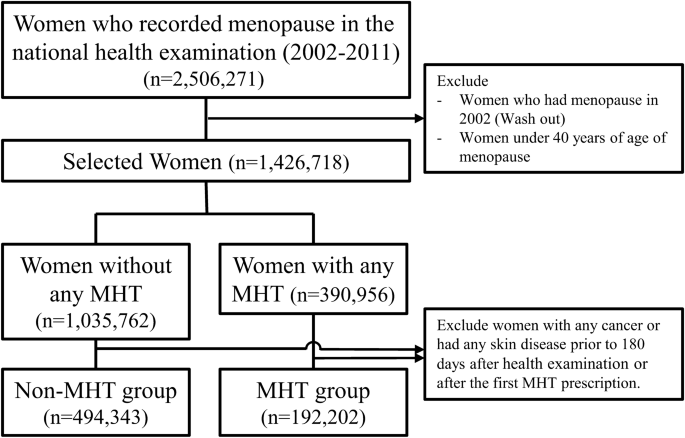
Skin cancer risk of menopausal hormone therapy in a Korean cohort - Scientific Reports
Source : https://www.nature.com/articles/s41598-023-37687-9
Conflicting studies exist on the association between menopausal hormone therapy (MHT) and skin cancers, such as melanoma and non-melanoma skin cancer (NMSC). This retrospective cohort study aimed to evaluate the...
Discussion: Overall, MHT was not associated with melanoma incidence in menopausal Korean women. Instead, tibolone and COPM were associated with a decrease in NMSC occurrence.

Menopausal hormone therapy and dementia: nationwide, nested case-control study
Source : https://www.bmj.com/content/381/bmj-2022-072770
Objectives To assess the association between use of menopausal hormone therapy and development of dementia according to type of hormone treatment, duration of use, and age at usage. Design Nationwide,...
Conclusion: Menopausal hormone therapy was positively associated with development of all cause dementia and Alzheimer’s disease, even in women who received treatment at the age of 55 years or younger. The increased rate of dementia was similar between continuous and cyclic treatment. Further studies are warranted to determine whether these...

Frequency of Thyroid Disorder in Pre- and Postmenopausal Women and Its Association With Menopausal Symptoms
Background Thyroid hormone has a significant effect on women's life. Its dysfunction is widespread, particularly among women over 50. Understanding how thyroid disease's clinical symptoms change with aging is crucial...
Conclusion: The present study concludes that thyroid disorder is common among pre- and postmenopausal age group women. Therefore, timely detection and intervention should be taken into consideration, and even if the thyroid level is found to be normal still lifestyle modification and counselling can help in improving the quality of life.
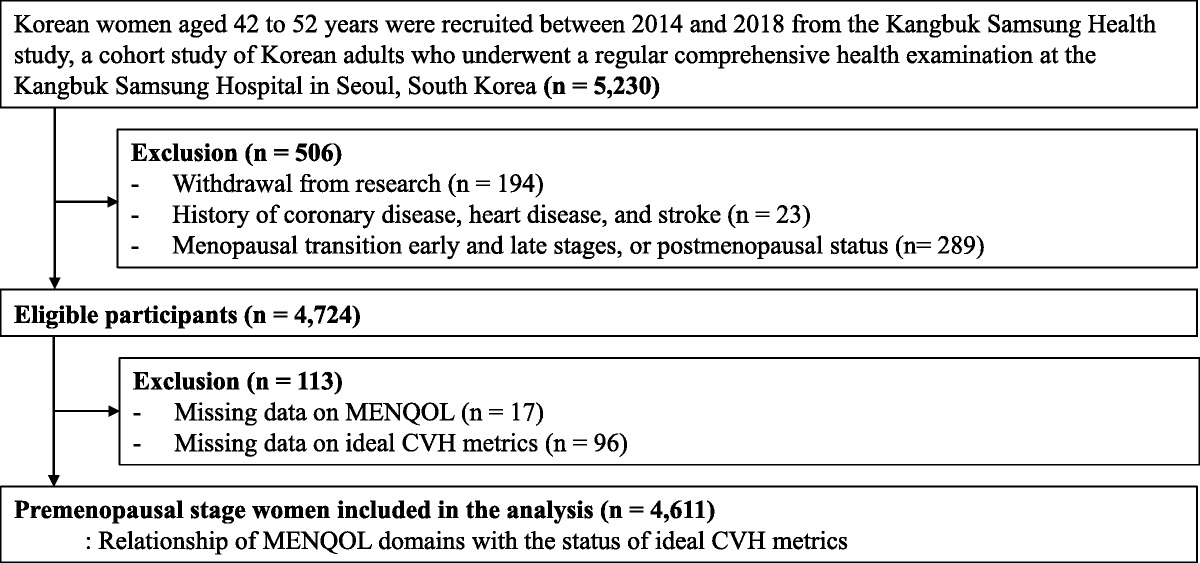
Vasomotor and other menopause symptoms and the prevalence of ideal cardiovascular health metrics among premenopausal stage women
g health screening examinations. Menopause symptoms were measured using the Korean version of the Menopause-Specific Quality of Life questionnaire. For vasomotor, psychosocial, physical, and sexual symptoms, participants were divided into...
Conclusion: Premenopausal stage women with either vasomotor or nonvasomotor menopausal symptoms have significantly higher prevalence of poor CVH metrics, compared with those without any menopausal symptoms.