



Mental health and quality of life in post-menopausal women as a function of retrospective menopause symptom severity
Source : https://www.ncbi.nlm.nih.gov/pmc/articles/PMC9178181/
Savannah C. Hooper, BA, 1, 2, * Victoria B. Marshall, BA, 1, 2 Carolyn B. Becker, PhD, 3 Andrea Z. LaCroix, PhD, 4 Pamela K. Keel, PhD, 5 and Lisa...
Conclusion: The menopausal transition is a significant change in a woman’s life and the challenges of menopausal symptoms can have lasting impacts on women’s health. It is imperative that future research seeks to further understand the lasting impacts of this transition on the lives of older women to ensure proper interventions are...
The effect of Crocus sativus L. (saffron) herbal tea on happiness in postmenopausal women: a randomized controlled trial - BMC Complementary Medicine and Therapies
Source : https://bmccomplementmedtherapies.biomedcentral.com/articles/10.1186/s12906-023-04014-8
Background Evidence suggests that menopause can be associated with a variety of negative psychological changes such as depression and anxiety, and improving the mental health status of women during menopause...
Conclusion: Saffron herbal tea had a positive effect on reducing depression and increasing the happiness score; thus, it is recommended that it should be used as a complementary treatment in consultation with the treating physician.
Factors associated with weight gain in pre- and post-menopausal women receiving adjuvant endocrine therapy for breast cancer - Journal of Cancer Survivorship
Source : https://link.springer.com/article/10.1007/s11764-023-01408-y
Purpose Weight gain after breast cancer poses health risks. We aimed to identify factors associated with weight gain during adjuvant endocrine therapy (AET). Methods Women initiating AET enrolled in a...
Conclusion: Weight gain during AET is common, especially for pre-menopausal women. Clinicodemographic features and early treatment-emergent symptoms may identify at risk individuals.
Sex and gender influence on immunity and autoimmunity
Source : https://www.frontiersin.org/articles/10.3389/fimmu.2023.1142723/full
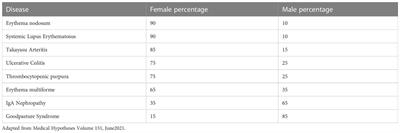
Autoimmune diseases are skewed toward one biological sex or another. This is the obvious observation of many decades, and it remains unexplained. Females predominate with most autoimmune diseases. The reasons...
Conclusion: The interplay between genetics and sex steroid metabolism within the body is how the immune response handles infections and regulates immune function. The reasons for the female predilection for autoimmune disease remains unknown but is likely due to the genetics of the X chromosome, hormonal regulation of immune cells (CD4 T...
Investigating the efficacy and feasibility of using a whole-of-diet approach to lower circulating levels of C-reactive protein in postmenopausal women: a mixed methods pilot study
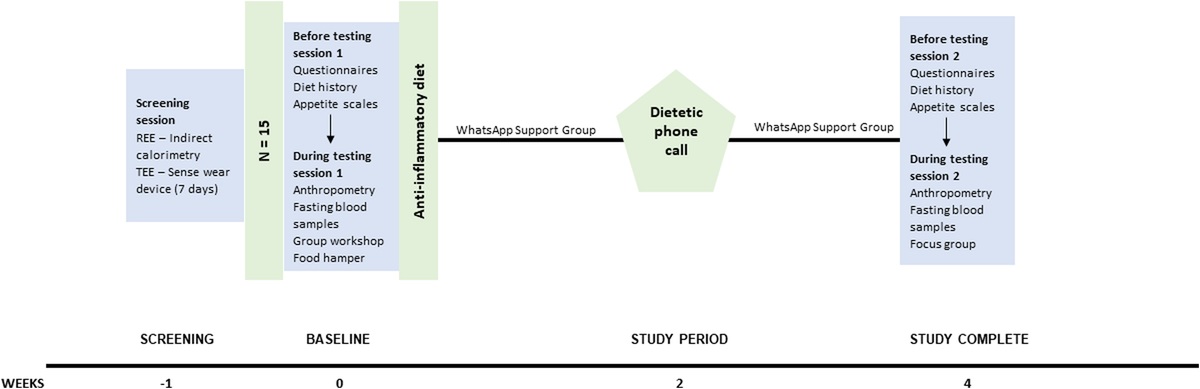
protein in weight stable postmenopausal women with abdominal obesity. Methods This mixed-methods pilot study used a single arm pre-post design. Thirteen women followed a 4-week anti-inflammatory, dietary intervention, optimizing consumption...
Conclusion: Weight-neutral dietary interventions targeting inflammation can improve metabolic markers and may be a viable strategy for CVD risk reduction in postmenopausal women. To determine effects on inflammatory status, a fully powered and longer-term randomized controlled trial is required.