


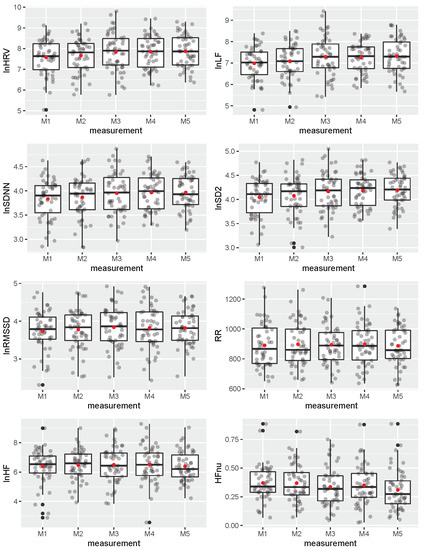
Standard Heart Rate Variability Parameters-Their Within-Session Stability, Reliability, and Sample Size Required to Detect the Minimal Clinically Important Effect
Source : https://www.mdpi.com/2077-0383/12/9/3118
Many intervention studies assume the stability of heart rate variability (HRV) parameters, and their sample sizes are often small, which can significantly affect their conclusions. The aim of this study...
Conclusion: We found significant differences in the mean values of most HRV parameters between measurements during the first 20 min compared with measurements during the last 30 min of recording. Therefore, optimal measurement protocols in a resting sitting position should be performed within the first 20 min or between 20 and 50 min after...
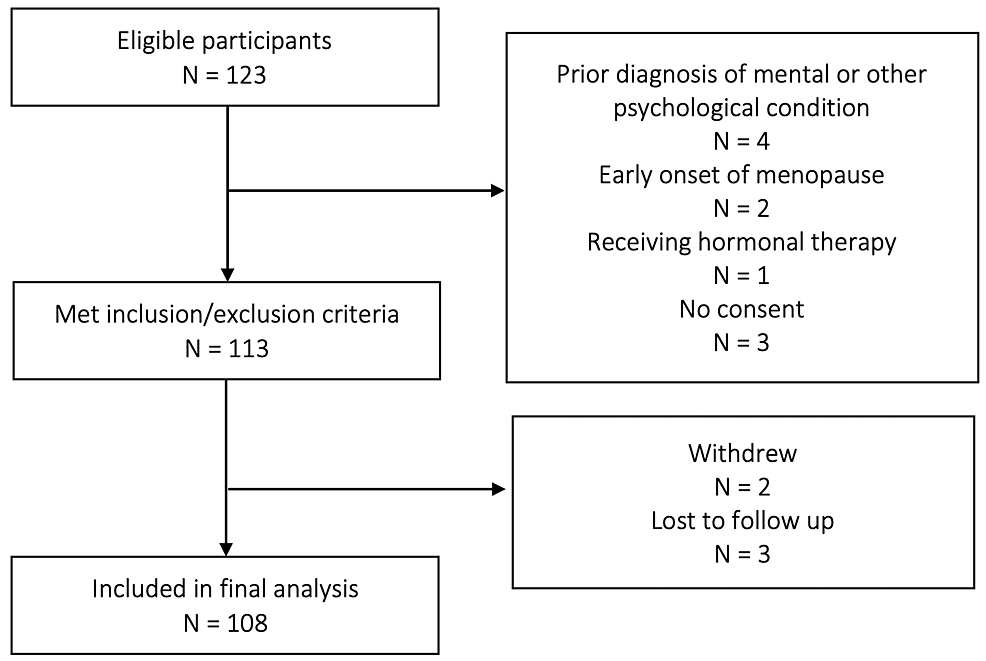
Role of Phytoestrogen in Menopausal Women With Depressive Symptoms: A Consecutive Case Series Study
Introduction During menopause, healthy women experience a diverse aggregate of clinical manifestations and symptoms that relate to hormonal and aging changes. These alterations are strictly associated with psychological disorders, mainly...
Conclusion: Phytoestrogen administration to menopausal women is indicated to reduce depression symptoms. More research in the area is needed to reach definite conclusions.
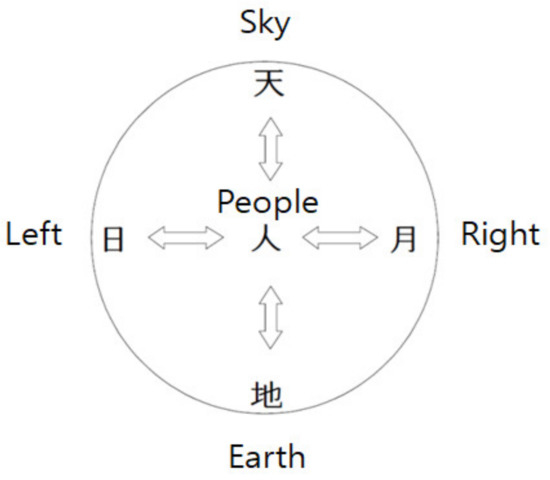
Effectiveness of SaBang-DolGi Walking Exercise Program on Physical and Mental Health of Menopausal Women
Source : https://www.mdpi.com/1660-4601/17/18/6935/htm?ref=tomecontroldesusalud.com
Objective: We investigated the effectiveness of a 12-week SaBang-DolGi walking exercise program on the physical and mental health of menopausal women and aimed to provide the basic data needed to...
Conclusion: he results of this study indicate that the SaBang-DolGi walking exercise program has a positive effectiveness on the physical and mental health of menopausal women. Moreover, the proposed protocol is associated with variables of physical health (body composition, flexibility, grip strength and abdominal muscle strength) and...

Inverse Correlation Between Bone Mineral Density and Systemic Immune Inflammation Index in Postmenopausal Turkish Women
Aim: In this study, the correlation between the change in bone mineral density (BMD) and the numerical value of the systemic immune inflammation index (SII) in postmenopausal Turkish women was...
Conclusion: PMO is a global public health problem and it is extremely important to reveal biomarkers that can be used in its early diagnosis for its prevention. In addition, the simple, cost-effective, and accessible biomarkers to be used will pave the way for their more widespread use, thus enabling a wider assessment of the population at...

Chronic conditions in women: the development of a National Institutes of health framework - BMC Women's Health
Source : https://bmcwomenshealth.biomedcentral.com/articles/10.1186/s12905-023-02319-x
Rising rates of chronic conditions were cited as one of the key public health concerns in the Fiscal Year (FY) 2021 U.S. Senate and House of Representatives appropriations bills, where...
Conclusion: A review of NIH research activities on chronic conditions in women, completed in preparation for the congressionally directed “Advancing NIH Research on Women’s Health” conference, revealed multiple opportunities to align the NIH research agenda with the health needs of women. Social determinants of health, including factors...