


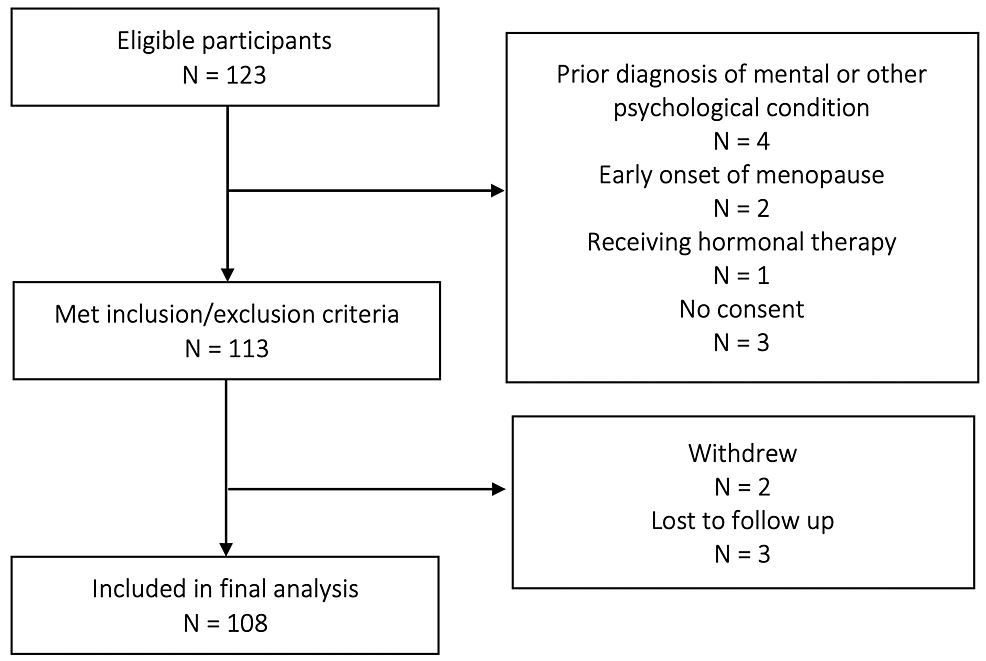
Role of Phytoestrogen in Menopausal Women With Depressive Symptoms: A Consecutive Case Series Study
Source : https://www.cureus.com/articles/104965
Introduction During menopause, healthy women experience a diverse aggregate of clinical manifestations and symptoms that relate to hormonal and aging changes. These alterations are strictly associated with psychological disorders, mainly...
Conclusion: Phytoestrogen administration to menopausal women is indicated to reduce depression symptoms. More research in the area is needed to reach definite conclusions.
Conclusion: In this study, females exhibited higher tau compared with age-matched males, particularly in the setting of elevated Aβ. In females, earlier age at menopause and late initiation of HT were associated with increased tau vulnerability especially when neocortical Aβ elevated. These observational findings suggest that subgroups of...
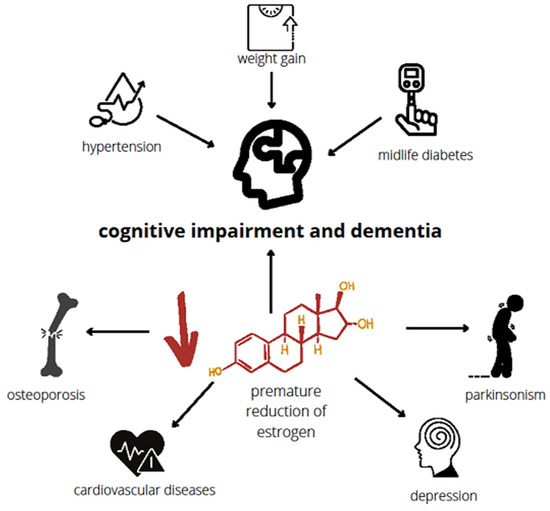
Cognitive Decline in Early and Premature Menopause
Source : https://www.mdpi.com/1422-0067/24/7/6566
Early and premature menopause, or premature ovarian insufficiency (POI), affects 1% of women under the age of 40 years. This paper reviews the main aspects of early and premature menopause...
Conclusion: There are associations between the risk of dementia and the age of menarche, the age of menopause, and the time between first menstruation and menopause. Another interesting problem regards the sex-specific differences in the architecture of the brain. Differences found in the structural and functional connections of a woman’s...
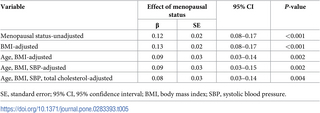
The effect of menopause on cardiovascular risk factors according to body mass index in middle-aged Korean women
Source : https://journals.plos.org/plosone/article?id=10.1371/journal.pone.0283393
Background Menopausal status and obesity are associated with an increased risk for cardiovascular diseases. However, there are few studies on the effect of menopause on cardiovascular risk factors according to...
Conclusion: Menopausal status was associated with increased glucose and cholesterol levels independent of age and BMI in middle-aged Korean women. Menopausal status showed a significant relationship with increased total cholesterol levels even after adjusting for age and BMI in non-obese women but not obese women. Therefore, intensive...

Body Composition Changes over the Menopausal Transition in Women With and Without HIV
Among women with HIV, the transition to menopause was associated with BMI and waist circumference trajectories that were mostly in the negative direction and op
Conclusion: In WWH, the menopausal transition was associated with BMI and WC trajectories that were mostly in a negative direction and opposite from WWOH after adjusting for age, suggesting that HIV blunts weight gain during the menopausal transition.