


Early Insight Into the Retrospective Data of a Case Series on Type 2 Diabetes Mellitus on Alternate-Day Dosing of Oral Semaglutide: Utopia or Reality?
Introduction Oral semaglutide, with a long half-life of seven days, is the first oral-based peptide drug and is used as an antidiabetic for the reduction of glycosylated hemoglobin (HbA1c). Oral...
Conclusion: Throughout the period of observation, the glycemic metrics (TIR, TAR, and TBR) remained steady with a 14 mg alternate-day oral semaglutide regimen.
Share




Glucagon-like peptide-1 therapy in people with obesity restores natural killer cell metabolism and effector function - PubMed
Source : https://pubmed.ncbi.nlm.nih.gov/37157931/
The .gov means it's official. Federal government websites often end in .gov or .mil. Before sharing sensitive information, make sure you're on a federal government site. The site is secure....
Conclusions: The restoration, by GLP-1 therapy, of NK cell functionality in PWO may be contributing to the overall benefits being seen with this class of medication.
Share
Evaluating the Long-Term Cost-Effectiveness of Once-Weekly Semaglutide 1 mg Versus Liraglutide 1.8 mg: A Health Economic Analysis in the UK - Diabetes Therapy
Source : https://link.springer.com/article/10.1007/s13300-023-01408-2
Introduction Glucagon-like peptide-1 (GLP-1) receptor agonists represent highly efficacious treatment options for type 2 diabetes. Liraglutide was amongst the first authorised for use in 2010, but once-weekly semaglutide represents the...
Conclusion: Once-weekly semaglutide 1 mg is likely to represent a dominant treatment option versus liraglutide 1.8 mg for the treatment of type 2 diabetes in the UK, even with the liraglutide price reduced by 33%.
Share
Higher burden of cardiometabolic and socioeconomic risk factors in women with type 2 diabetes: an analysis of the Glycemic Reduction Approaches in Diabetes (GRADE) baseline cohort
Source : https://drc.bmj.com/content/11/2/e003159
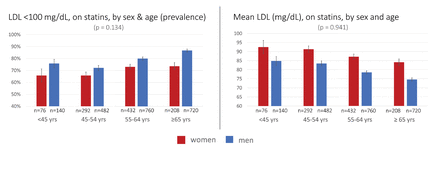
Introduction Type 2 diabetes mellitus (T2DM) is a powerful risk factor for cardiovascular disease (CVD), conferring a greater relative risk in women than men. We sought to examine sex differences...
Conclusions: This contemporary cohort demonstrates that women with T2DM continue to have a greater burden of cardiometabolic and socioeconomic risk factors than men, particularly younger women. Attention to these persisting disparities is needed to reduce the burden of CVD in women.
Share
A Comprehensive Review on Weight Loss Associated with Anti-Diabetic Medications
Source : https://www.mdpi.com/2075-1729/13/4/1012
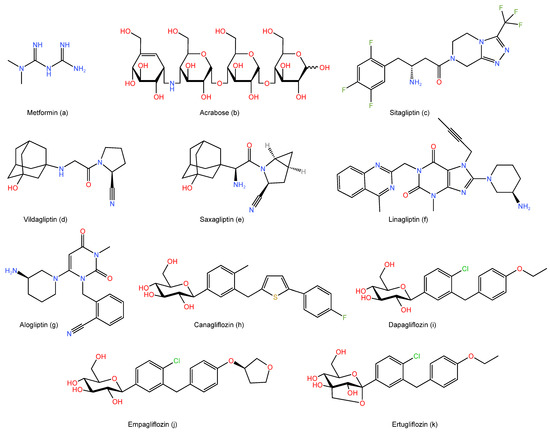
Obesity is a complex metabolic condition that can have a negative impact on one’s health and even result in mortality. The management of obesity has been addressed in a number...
Conclusions/Relevance: Many clinical studies have revealed that some antihyperglycemic medications can help people lose weight, while others either cause weight gain or neutral results. Acarbose has mild weight loss effects and metformin and sodium-dependent glucose cotransporter proteins-2 (SGLT-2) inhibitors have modest weight loss effects;...
Share