

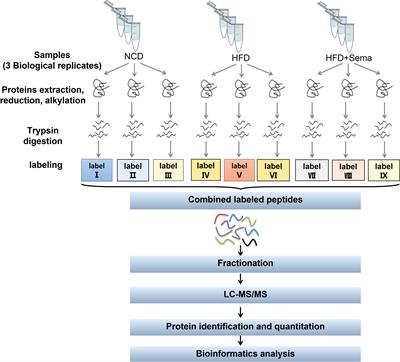
Proteomic analysis reveals semaglutide impacts lipogenic protein expression in epididymal adipose tissue of obese mice
Source : https://www.frontiersin.org/articles/10.3389/fendo.2023.1095432/full
Background and objectivesObesity is a global health problem with few pharmacologic options. Semaglutide is a glucagon-like peptide-1 (GLP-1) analogue that induces weight loss. Yet, the role of semaglutide in adipose...
Conclusion: Semaglutide can effectively reduce visceral fat and blood lipids and improve glucose metabolism in obese mice. Semaglutide treatment might have beneficial effects on adipose tissues through the regulation of lipid uptake, lipid storage, and lipolysis in white adipose tissue.
Share




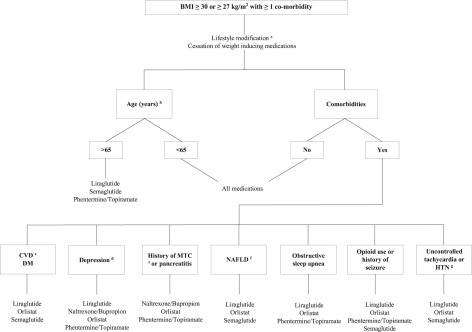
Pharmacotherapy of obesity: an update on the available medications and drugs under investigation
Source : https://www.thelancet.com/journals/eclinm/article/PIIS2589-5370(23)00059-7/fulltext
Obesity is an epidemic and a public health threat. Medical weight management remains one of the options for the treatment of excess weight and recent advances have revolutionized how we...
Conclusions/Relevance: The choice of the anti-obesity medication needs to take into consideration the patient's clinical and biochemical profile, co-morbidities, and drug contra-indications, as well as expected degree of weight loss and improvements in cardio-renal and metabolic risk. It also remains to be seen whether precision medicine may...
Share
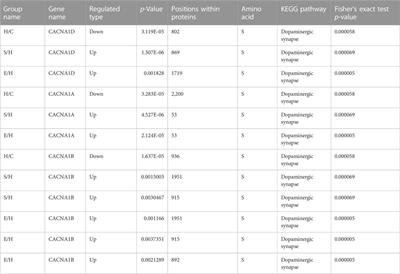
Effect of semaglutide and empagliflozin on cognitive function and hippocampal phosphoproteomic in obese mice
Source : https://www.frontiersin.org/articles/10.3389/fphar.2023.975830/full
Objective: Based on the 4D label-free phosphoproteomic technique, we examined the differences in cognitive function and hippocampal phosphorylated protein expression in high-fat diet-induced obese mice after the intervention of semaglutide...
Conclusion: We found for the first time that a high-fat diet decreased CACNA1D, CACNA1A, and CACNA1B protein serine phosphorylation, which may affect neuronal development, synaptic plasticity, and cognitive function in mice. Notably, semaglutide and empagliflozin increased the phosphorylation of these proteins.
Share
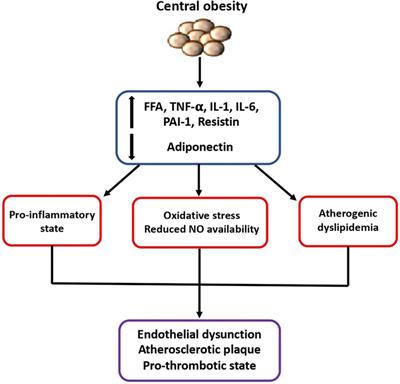
Obesity and cardiovascular disease: An executive document on pathophysiological and clinical links promoted by the Italian Society of Cardiovascular Prevention (SIPREC)
Source : https://www.frontiersin.org/articles/10.3389/fcvm.2023.1136340/full
The prevalence of obesity worldwide has increased in recent decades not only among adults, but also in children and adolescents. This phenomenon contributes to an increased risk of cardiovascular diseases...
Relevance: The present executive paper is aimed to increase knowledge on the relationships between obesity and CVD, to raise the perception of this condition which is currently insufficient and to support the clinical practice management.
Share

Health Status Across Major Subgroup of Patients with Heart Failure and Preserved Ejection Fraction - PubMed
Source : https://pubmed.ncbi.nlm.nih.gov/36974746/
Health status in patients with HFpEF is impaired, especially in elderly, women, and those with obesity and comorbidities. Empagliflozin improved health status among all key subgroups studied with a greater...
Conclusion: Health status in patients with HFpEF is impaired, especially in elderly, women, and those with obesity and comorbidities. Empagliflozin improved health status among all key subgroups studied with a greater effect in obese patients.
Share