


Cardiometabolic risk factors efficacy of semaglutide in the STEP program - PubMed
Source : https://pubmed.ncbi.nlm.nih.gov/36691308/
People with overweight or obesity often suffer from associated cardiometabolic diseases and comorbidities. Current therapies for obesity include lifestyle intervention, bariatric surgery, and pharmacotherapy. The magnitude of weight loss achieved...
Conclusions/Relevance: Overall, across the STEP trials, treatment with semaglutide 2.4 mg versus placebo improved cardiometabolic risk factors associated with obesity, illustrating an effective treatment option for people with overweight (and associated comorbidities) or obesity.
Share





Two-year effect of semaglutide 2.4 mg on control of eating in adults with overweight/obesity: STEP 5 - PubMed
Source : https://pubmed.ncbi.nlm.nih.gov/36655300/
The .gov means it's official. Federal government websites often end in .gov or .mil. Before sharing sensitive information, make sure you're on a federal government site. The site is secure....
Conclusions: In adults with overweight/obesity, semaglutide 2.4 mg improved short- and longer-term control of eating associated with substantial weight loss.
Share
Semaglutide treatment attenuates vessel remodelling in ApoE−/− mice following vascular injury and blood flow perturbation
Source : https://www.sciencedirect.com/science/article/pii/S2667089522000165?via=ihub
Randomized clinical studies have shown a reduction in cardiovascular outcomes with glucagon-like peptide 1 receptor agonist (GLP-1RA) treatment with t...
Conclusions: Semaglutide treatment reduced vessel remodelling following electrical injury and blood flow perturbation in an atheroprone mouse model. This effect appears to be driven by anti-inflammatory and -proliferative mechanisms independent of GLP-1 receptor-mediated signalling in the resident vascular cells. This mechanism of action may...
Share

Efficacy of Semaglutide in Treating Obesity: A Systematic Review of Randomized Controlled Trials (RCTs)
Obesity is a major health problem worldwide resulting in numerous health conditions such as heart disease, stroke, type 2 diabetes (T2D), and certain types of cancer which are among the...
Conclusions: We assessed the use of oral and subcutaneous semaglutide in our article. Most of the studies included demonstrated a positive effect of semaglutide for obesity treatment. Some studies also revealed a dose-dependent effect of the therapy in those with poorly controlled diabetes. Hence, the result seems to be overwhelmingly in favor...
Share
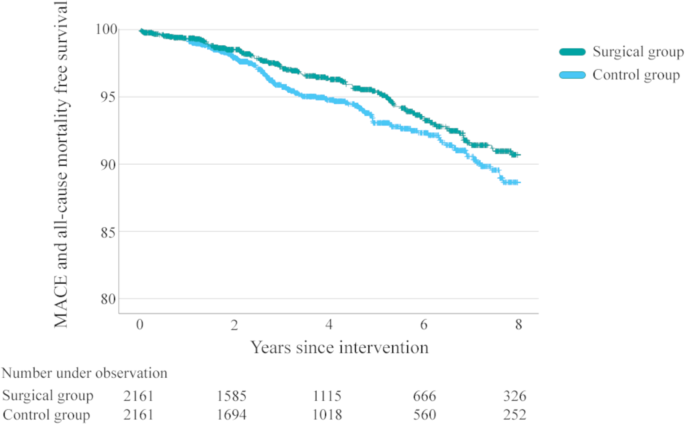
Major adverse cardiovascular events among patients with type-2 diabetes, a nationwide cohort study comparing primary metabolic and bariatric surgery to GLP-1 receptor agonist treatment - International Journal of Obesity
Source : https://www.nature.com/articles/s41366-023-01254-z
Glucagon-like Peptide-1 receptor agonists (GLP-1 RA) and metabolic and bariatric surgery (MBS) both improve cardiovascular outcomes in patients with severe obesity and type-2 diabetes (T2D). The aim of the present...
Conclusion: In this matched cohort study, MBS was associated with lower risk for MACE compared to treatment with early GLP-1 RA in patients with T2D.
Share