


Glucose-Lowering Effects of Semaglutide Compared With Dulaglutide Using Professional Continuous Glucose Monitoring in Outpatients With Type 2 Diabetes Mellitus: a Pilot Study
Source : https://pubmed.ncbi.nlm.nih.gov/37781464/
The online version contains supplementary material available at 10.1007/s13340-023-00640-2.
Switching from 0.75 mg DG to 0.5 mg SG in patients with T2DM improved glycemic variability, mean glycemic index, and daily variability without increasing the hypoglycemic index. The results suggest that switching to SG may be a useful option in patients experiencing inadequate glycemic control with DG.
Share




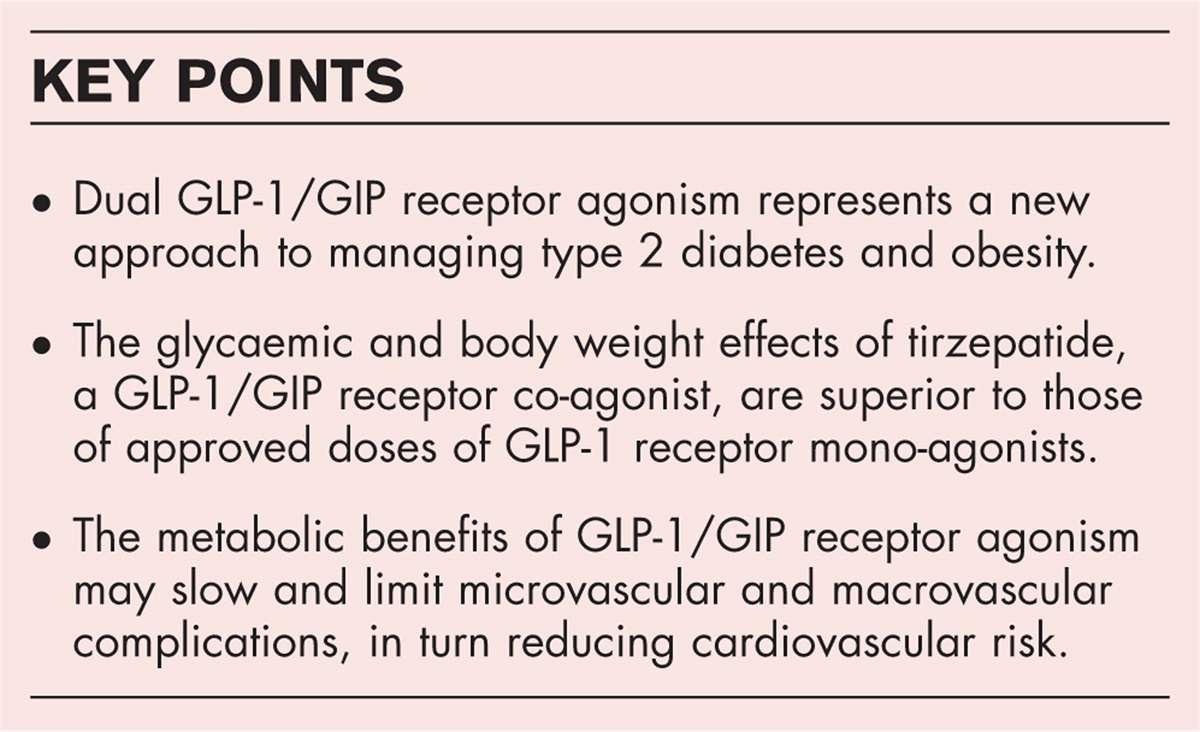
Glucagon-Like Peptide-1/Glucose-Dependent Insulinotropic Polypeptide Receptor Co-Agonists for Cardioprotection, Type 2 Diabetes and Obesity: a Review of Mechanisms and Clinical Data
GIP receptor co-agonists are in development to capitalize on the synergism of GLP-1 and GIP agonism. We review the mechanisms of action and clinical data for GLP-1/GIP receptor co-agonists in...
GLP-1/GIP receptor co-agonists are a novel addition to the diabetes and obesity armamentarium. The cardiorenal-metabolic benefits position them as promising multiprong tools for metabolically complex individuals with chronic vascular complications.
Share
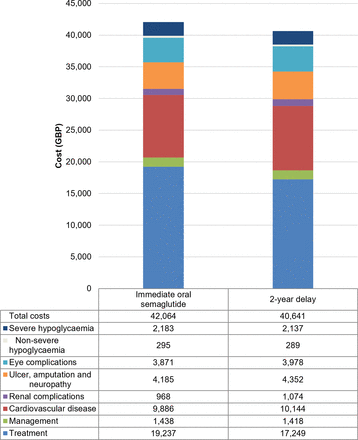
Early Use of Oral Semaglutide in the UK: a Cost-Effectiveness Analysis Versus Continuing Metformin and SGLT-2 Inhibitor Therapy
Source : https://bmjopen.bmj.com/content/13/9/e070473
Objectives Many people with type 2 diabetes experience clinical inertia, remaining in poor glycaemic control on oral glucose-lowering medications rather than intensifying treatment with a glucagon-like peptide-1 receptor agonist, despite...
Many people with type 2 diabetes experience clinical inertia, remaining in poor glycaemic control on oral glucose-lowering medications rather than intensifying treatment with a glucagon-like peptide-1 receptor agonist, despite an efficacious, orally administered option, oral semaglutide, being available. The present study evaluated the...
Share

Semaglutide Treatment of Excessive Body Weight in Obese PCOS Patients Unresponsive to Lifestyle Programs
Source : https://pubmed.ncbi.nlm.nih.gov/37762862/
In spite of the widespread use of lifestyle modifications programs, many patients with PCOS are obese and prevalence of obesity in PCOS remains high. In this study, we present the...
In conclusion, treatment with semaglutide, at low doses, significantly reduces body weight in almost 80% of obese PCOS patients who were unresponsive to a previous lifestyle plan. It is often associated with the normalization of menstrual cycles, and these important results are obtained with very few side effects.
Share

Positive additive interaction effects of age, sex, obesity, and metabolic syndrome on left ventricular dysfunction - PubMed
Source : https://pubmed.ncbi.nlm.nih.gov/37743094/
The MetS is independently associated with LVDD and impaired GLS. From the public health implications, prevention of MetS in women, elderly, and obese individuals might result in a greater reduction...
The MetS is independently associated with LVDD and impaired GLS. From the public health implications, prevention of MetS in women, elderly, and obese individuals might result in a greater reduction of LVDD and LVSD risk in cardiovascular high-risk population.
Share