

Asma Shaukat, MD, Professor of Medicine at NYU Grossman School of Medicine and outgoing Chair of the Clinical Practice Section for the AGA Council, discussed 13-year Nordic trial findings showing reduced colorectal cancer incidence with colonoscopy screening, along with emerging data on GLP-1 therapies in fatty liver disease and cirrhosis. Bruce Sands, MD, Chief of Gastroenterology and Professor of Medicine at the Icahn School of Medicine at Mount Sinai, presented findings from the DUET-CD study evaluating combination therapy in Crohn’s disease.
Dr. Nanette Rowley, General Program Chair for ACOG 2026 (Washington, DC), highlighted strong engagement across sessions on menopause, emergency obstetrics, and perinatal mental health, alongside robust well-being programming. The first-place research award (McClain et al., Henry Ford Health) revealed diagnostic imprecision in intra-amniotic infection, with poor concordance between clinical criteria and placental pathology underscoring the need for standardized protocols. A Penn State study by medical student Arisha Tariq found 45% of THC-exposed neonates required NICU admission, citing prematurity, respiratory distress, and neonatal abstinence syndrome as key concerns.
-
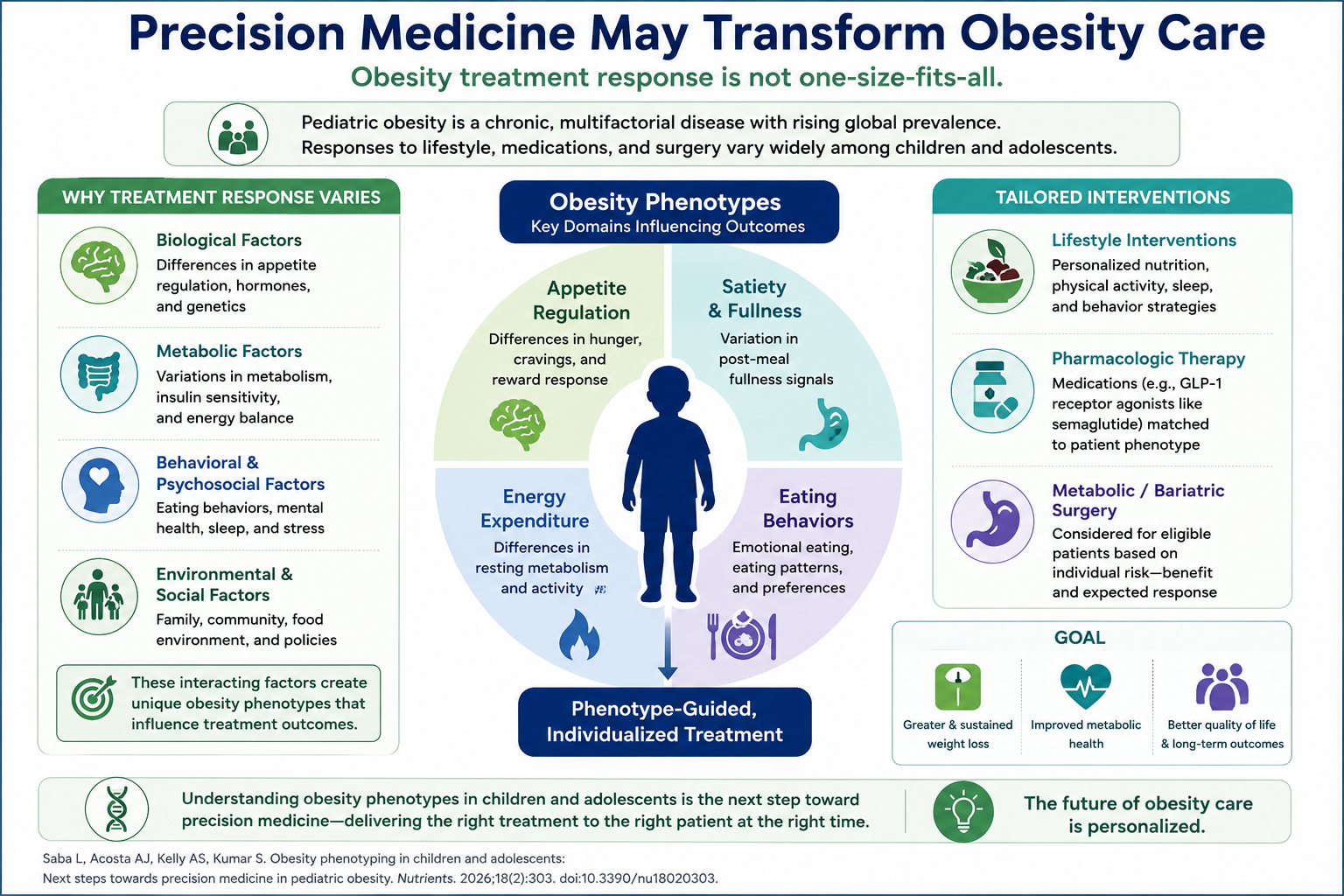
BRETT NILE2moyes it will, We have crossed the Rubicon on obesity treatment. We have new tools and now it's time to learn how to use them. -
Temeki Hill2moObesity care should be personalized anyways for each individual person whether child, teenager, adult or the elderly. As stated above many factors influence obesity, social factors are huge because Show More
Show More Comments
Longitudinal analysis of short-chain fatty acid profiles in stool of sleeve gastrectomy patients. - PubMed
Source : https://pubmed.ncbi.nlm.nih.gov/42276984
Discover how sleeve gastrectomy affects gut microbiota, altering SCFA profiles over 12 months and influencing metabolic and psychological outcomes.
Sleeve gastrectomy alters faecal SCFA profiles over 12 months, with decreased major SCFAs and increased branched SCFAs, suggesting gut microbiota shifts.
Physical activity and anthropometric factors as predictors for postural stability in children - PubMed
Source : https://pubmed.ncbi.nlm.nih.gov/42203825/
To determine whether anthropometric factors and different domains of physical activity are associated with postural stability outcomes in children. Ninety-five children aged 7-18 years were enrolled in a cross-sectional observational...
Cross-sectional study found that postural stability in children is influenced by age, physical activity, physical education performance, and body weight, with overweight/obesity associated with poorer balance measures and sports participation potentially mitigating some deficits.